
The Cirque du Soleil Wheel of Death artist on adrenaline, invention, and controlling the uncontrollable
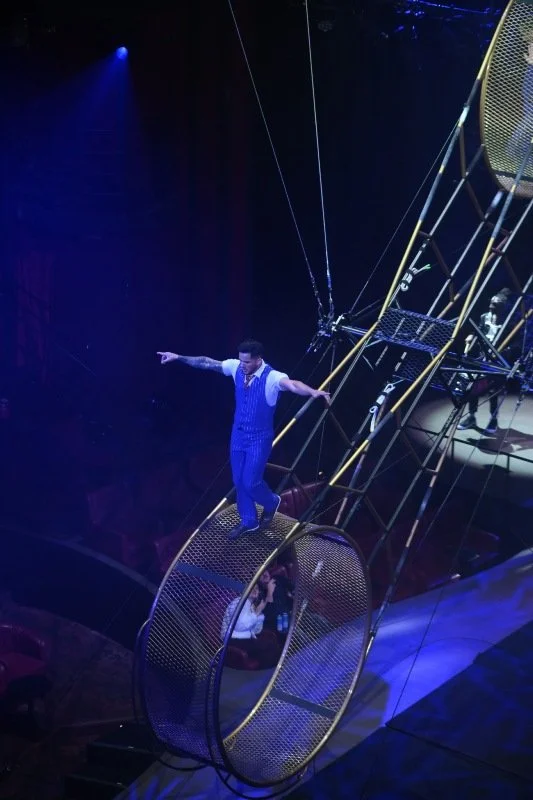
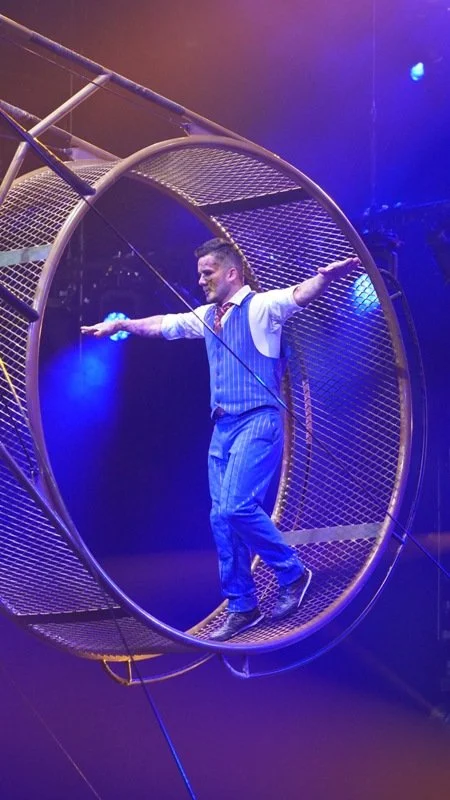
Editor's Note: Mauricio Vanegas reached out to FC from Las Vegas, where he currently performs with Cirque du Soleil. The “wheel of death” instantly got our attention. What follows is our Q&A with the artist.
Enjoy. -Mike
What's your name, where are you from, and how long have you been performing?
My name is Mauricio Vanegas. I am Colombian, and I am 38 years old. I was born on July 19, 1988. I have been working with the Wheel of Death for many years, performing internationally across Asia, Europe, North America, and South America.
How did you first get into circus arts, and what led you specifically to the Wheel of Death?
I started in the circus world through a girlfriend I had in Colombia who was also part of the circus world. She took me to watch the shows, and little by little I became interested. From the beginning, the act that caught my attention the most was the Wheel of Death because of the adrenaline and the risk involved.
Before I started with the Wheel of Death, I trained in acrobatics and practiced parkour. I have always enjoyed jumping, acrobatics, and everything related to adrenaline. So when I first saw the Wheel of Death, I immediately felt that it was something I wanted to learn. Over time, I developed a good relationship with the owner of the circus, who gave me the opportunity to start training. I began training approximately three or four hours every day, mainly in the mornings.
Did you have any formal training, or did you learn mostly on the job?
There was no formal school for this. Everything I learned came from training every day on the apparatus itself, watching other artists, and learning from experience. The circus owner gave me the opportunity and the space to train, but the real education happened on the wheel.
The Wheel of Death looks terrifying from the outside. What does it actually feel like from the inside?
The most impressive thing about the Wheel of Death is what happens when you first start training. You feel an incredibly strong adrenaline rush because seeing the wheel from the ground is one thing, but being up there is completely different. From the ground, it does not look as high, but once you are on top, everything looks much higher, and the adrenaline is very strong.
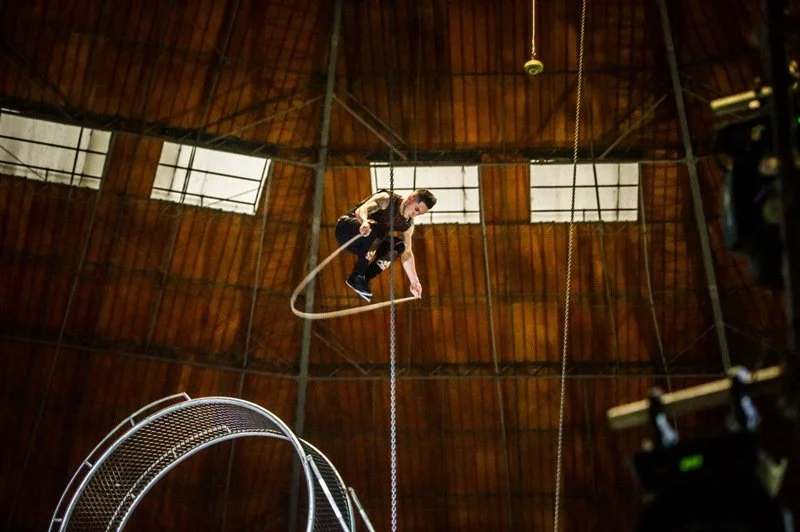
At first, you are inside the wheel, running and getting used to its movement. But then comes the moment when you step outside the wheel, and there is nothing protecting you. You simply have to walk, keep your balance, and not let the wheel control you. You have to learn how to control the wheel instead of allowing the wheel to control you.

You've performed across Asia, Europe, North and South America. What's been your most memorable experience on the road?
Of all the countries and cultures I have had the opportunity to experience throughout my career, one of the experiences I enjoyed the most was my tour in Japan. I loved the culture, and it was an experience that I truly enjoyed. I even started studying the language and learned some Japanese.
Las Vegas also holds a very important place in my career. For me, Las Vegas is one of the most important places in the world for entertainment and circus performances. Being here has motivated me to continue growing and to constantly look for ways to improve my work. I have been able to perform for people from many different countries and cultures, and that has helped me learn how to better understand and connect with an audience. Every audience is different, and every person reacts in a different way.
You've had some serious injuries during your career. How do you handle the pressure of knowing how dangerous this is every time you perform?
After many years of experience, I had an accident. While performing a somersault on the outside of the wheel, I had a hard fall and suffered two fractures in my back. Thankfully, the injuries were not more serious, but because of the strong impact, I had to stay away from the stage for approximately four months.
The experience strengthened my determination and reinforced the importance of discipline, preparation, and trust in this discipline. After so many years in this career, I still feel that I have a lot to learn and many new things to create. That is exactly what motivates me the most: continuing to evolve, looking for new challenges, and taking my work further and further.
You've created original tricks that other performers have tried to copy. Where do new ideas come from for you?
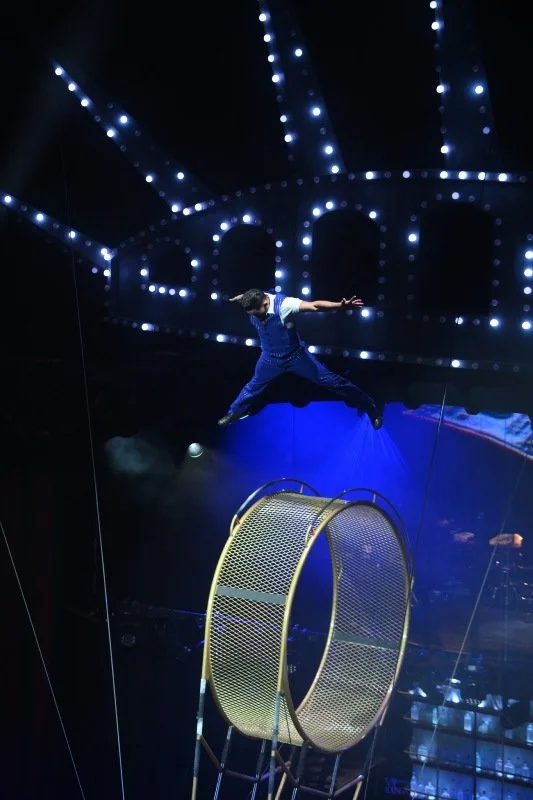
One day, I was at a training session. The wheel was standing still and ready for training, but I stayed there watching it and thinking about what other things I could do. I have always enjoyed looking for different tricks and trying to create new things. At that moment, I came up with an idea: performing a trick I call the Double Drop.
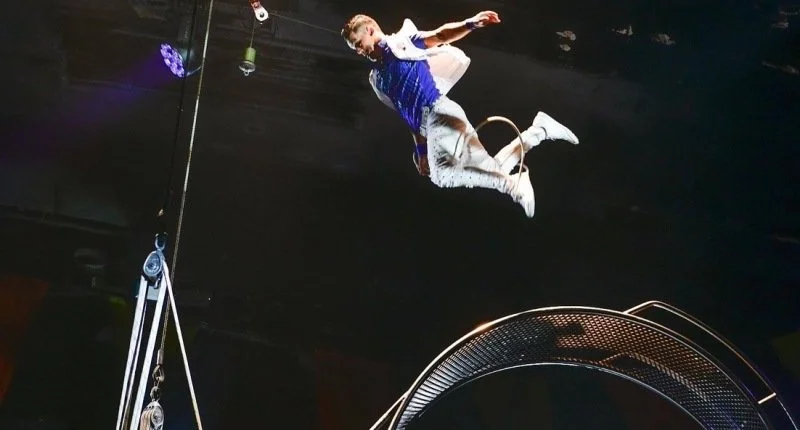
I was already performing the two movements that make up this trick, but I was doing them individually. Then I thought, why not try to do them at the same time, with both partners? I started analyzing the movement and realized that the timing could work if the wheel was moving at the right speed and if the flyer also had the necessary level to perform the trick. I tried it several times in Colombia, but I was not able to completely perfect it. Later, when I arrived at Cirque du Soleil, I shared the idea with my partner, and together we worked on it until I was able to perfect the trick. Today I have been performing it for more than three and a half years.
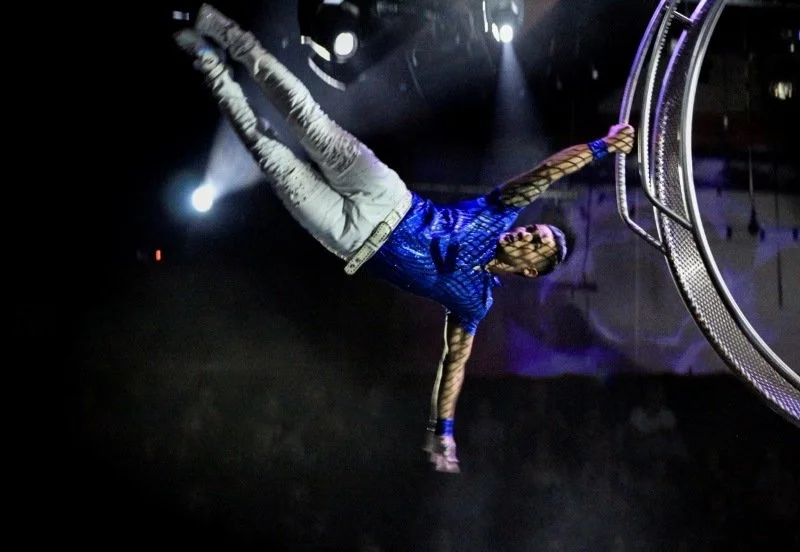
Another trick that I consider an important part of my career is the Cat Jump. This movement came to me in a very natural way. I was walking and doing some handwork on the outside of the wheel, but because of the speed of the wheel, it started taking my hands away, and I began to feel as if I were floating in the air. So instead of continuing to walk on my hands, I started throwing myself into the movement. It began to look like the way a cat jumps, and that is how I decided to call it the Cat Jump. I have been performing this trick for more than ten or twelve years. Over time, it became one of the movements that people recognize me for the most.
You now perform with Cirque du Soleil in Las Vegas. What did that moment feel like when it came together?
For me, being in Las Vegas and performing with Cirque du Soleil has been a very important stage of my professional growth. It has allowed me to improve my technique, work in a much safer way, improve my presentation, and continue developing as an artist. Here I have been able to perfect my performance, not only when it comes to the tricks themselves, but also in terms of safety, control of every movement, and the way I present my act to an international audience.
You also coach and train other artists. What's the hardest thing to teach someone about the Wheel of Death?
During my time in Japan, I had the opportunity to start training other Wheel of Death artists. That is when I discovered that teaching this act is completely different from performing it yourself.
The most difficult part of training another person is helping them overcome their fear while also learning how to listen. When someone is afraid, even if they want to listen to the instructions, it can be very difficult for them to do so properly. That is why it becomes a process where you have to find different methods to distract the brain, help the person relax, and allow them to gradually lose their fear while walking on the wheel. The goal is for the body to begin moving naturally without thinking too much about every movement.
What do you want people to feel when they watch you perform?
It is very special for me to see the audience's reaction during the show. Some people get extremely excited, some hold their hands because they are nervous, and others simply stare with expressions of surprise and fear.
Many times, after finishing the act, I have heard children tell their parents, 'I want to be like him when I grow up.' For me, hearing something like that is one of the most beautiful things that can happen after a performance. It means that, besides entertaining people, you can also become a source of motivation for someone.
The Wheel of Death is not simply a performance. It has been a very important part of my life. It has allowed me to travel to different countries, experience different cultures, meet many people, overcome difficult moments, learn from my accidents and mistakes, train other artists, and, above all, continue searching for new ways to develop this art and take it further.
About Mauricio Vanegas
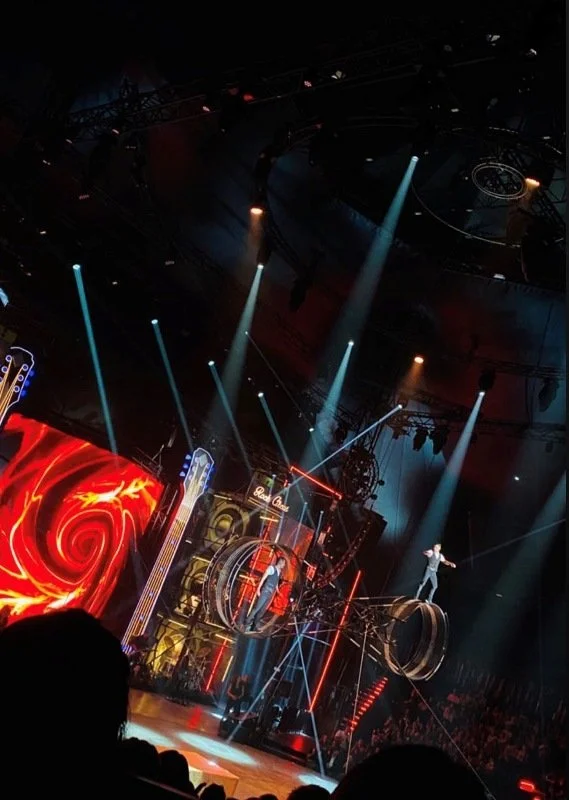
Mauricio Vanegas is a Colombian circus artist specializing in the Wheel of Death. Over a career spanning more than fifteen years, he has performed internationally across Asia, Europe, North America, and South America, trained other artists, and created original tricks including the Double Drop and the Cat Jump. He currently performs with Cirque du Soleil in Las Vegas, where the Wheel of Death serves as the closing act of the show.
Recommended Reading: From Ukraine to the Las Vegas Strip
