Terrifier 3 grossed nearly 90 million dollars on a 3 million dollar budget without an MPAA rating. We’re talking about a gory clown killer movie here…and there’s a lot of gore. And a chainsaw.
The Terrifier franchise and ultra-violent gore-fests aren’t everyone’s favorite category in the horror world…and I’ll admit, it isn’t mine. I watched Terrifier 3 (and 2 for that matter a few years before), and spent most of it impressed by the audacity and slightly nauseated, which is probably exactly what Damien Leone was going for. Art the Clown is genuinely one of the great modern horror villains, and I say that while acknowledging that his films operate at a level of graphic brutality I don't necessarily need more of.
But here’s the thing…what's happened around this franchise is one of the most interesting stories in independent film (and horror) in years. Not just the box office numbers, though those are extraordinary. The lawsuits, the contracts, the ripple effect on Hollywood's approach to the whole genre. That's where it gets fascinating.
The Numbers First
The original Terrifier was made in 2016 for roughly $35,000. It became a cult hit on home media and streaming, the kind of thing horror fans passed around to each other like mp3 files on Napster.
Terrifier 2, made for $250,000, grossed $15.7 million worldwide. That's 63 times its budget. And just imagine, if it was 30 minutes shorter (it’s 138 min runtime was ridiculous), that budget could have been even lower.
Terrifier 3, released in October 2024, cost $3 million and grossed $90.3 million worldwide without an MPAA rating. Not PG-13. Not R. No rating at all. The MPAA would have given it NC-17, which kills theatrical distribution at most chains. Leone and distributor Cineverse bypassed the system entirely and went unrated. Theaters showed it anyway. That $90.3 “gross” (yeah, pun intended) is theatrical worldwide estimated gross. Audiences showed up in massive numbers…to see a killer clown and a lot of blood and guts, on the big screen.
It proved something the studios didn't want to admit: a rabid fanbase and genuine word-of-mouth are more powerful than any marketing budget or studio greenlight. Compare that to Megalopolis, Francis Ford Coppola’s $120 million epic, stalled out at roughly $7.3 million.
The Ripple Effect
Terrifier didn't just succeed. It terrified the studios into rethinking everything.
Hollywood's default horror model for years was safe PG-13 IP, familiar franchises, known quantities. Terrifier demonstrated that audiences were hungry for something the studios had decided was too risky to make. Extreme content. No stars. No safety net.
Eli Roth saw all of this happening and drew his own conclusions. In 2025, the director behind Hostel and Cabin Fever launched The Horror Section, a crowdfunding initiative that raised over $6 million directly from gore-loving fans to finance extreme, uncompromising horror outside the studio system entirely. He partnered with Bloody Disgusting, the same distribution infrastructure that helped Terrifier find its audience, specifically to bypass Hollywood notes and make the films he wants to make rather than the ones a studio would greenlight. Fans are literally paying to fund the movies they want to exist. That's a fundamentally different relationship between filmmaker and audience than anything the traditional studio model ever produced. The fact that you can invest directly in that kind of filmmaking says something significant about where the genre is headed.
The lesson Hollywood drew wasn't to make more splatter films. It was more interesting than that: they realized they didn't need to develop horror from scratch. They just needed to find creators who already had audiences and get out of the way.
Enter Curry Barker. A 26-year-old YouTuber who made Obsession for $750,000 in 20 days. Focus Features acquired it out of TIFF for $14 million after a studio bidding war. It has since grossed over $403 million worldwide, shattering the record for the highest-grossing film made under $1 million. He's already attached to write and direct the new Texas Chainsaw Massacre that you didn’t know we needed…for A24. I still must wonder how much freedom he’ll be given to make it the right way.
And Kane Parsons, who turned his viral Backrooms YouTube series into a feature for A24 that opened to $118 million globally, the largest opening ever for a first-time director with an original film.
Would either of those deals have been possible without Art the Clown proving that extreme independent horror could cross over to mainstream box office? Probably not. Terrifier didn't just succeed for itself. It changed the conversation about what kind of horror Hollywood was willing to bet on.
The Physical Cost
Here's where the success story gets complicated.
In October 2025, Catherine Corcoran, who played Dawn in the original Terrifier and appears in its most iconic scene, suspended upside down while Art does what Art does, filed a federal lawsuit against Leone and producer Phil Falcone.
Her allegations are significant. She claims she was hung upside down by her ankles for over ten hours in below-freezing temperatures in a condemned building during filming. She alleges she experienced cranial swelling and eardrum damage as a result. She further alleges that Leone placed prosthetics containing actual rat feces on her skin as part of the practical effects process, and that she was filmed topless without the required SAG written consent, insisting on the day that she be allowed to wear underwear but claims the scene was shot otherwise.
On the financial side, she alleges she was promised 1% of all net profits from the Terrifier franchise and merchandise. She claims she received roughly $8,300 total, with payments stopping abruptly in July 2024. With the franchise collectively grossing over $105 million, she argues that figure represents a fraction of what she's owed.
Leone and Falcone have denied all of Corcoran's allegations.
The lawsuit is still currently active. The lesson it illustrates is real regardless of how it resolves: when you're shooting for $35,000 in condemned buildings with no studio infrastructure, safety protocols and contract oversight can vanish. Scrappy filmmaking and exploitation of actors are not always clearly separated, especially when nobody involved expects the film to ever become a franchise worth hundreds of millions of dollars.
The $5,000 Mistake
The Corcoran lawsuit is complicated. The Ruthless Studios situation is arguably more so.
In June 2026, a company called Ruthless Studios filed a federal lawsuit against Leone's production companies Dark Age Cinema and Art the Clown LLC, claiming they own the rights to the entire Terrifier franchise.
Here's how: in 2013, Leone was trying to get an anthology film called All Hallows' Eve made. To secure the financing, he signed over the rights to his original Terrifier and The 9th Circle short films, along with all related copyrights, trademarks, sequel rights, and derivative works, to Ruthless Pictures for $5,000. Ruthless financed and produced All Hallows' Eve, which incorporated both shorts and helped establish Art the Clown as a recognizable horror character.
According to the lawsuit, Ruthless later gave Leone permission to make the first Terrifier feature as a one-time exception, with Leone allegedly acknowledging their ownership in writing. Then, as the franchise exploded with Terrifier 2 and 3, Ruthless claims they were cut out entirely, receiving nothing from the sequels, the merchandise empire, the video game adaptations, or the live events.
Their lawsuit claims they own the copyrights to Terrifier 2, Terrifier 3, and all related derivative works. They're seeking damages, an accounting of profits, and a court declaration of ownership.
Leone and his companies have not yet responded publicly to the allegations.
A 2013 contract signed for $5,000 to get a short film anthology made could, if Ruthless prevails, entitle them to a significant portion of a franchise that has grossed over $100 million. Selling your character for a few thousand dollars seems like a lifeline when you're a broke filmmaker trying to get anything made. It looks very different a decade later when that character becomes an empire.
The Indie Horror Playbook
What does all of this add up to?
You don't need Hollywood to make a massive horror hit. The Terrifier franchise proved it…thanks Art. Obsession confirmed it. Backrooms cemented it. The old gatekeeping model is genuinely dead and high-concept, low-cost is the new gold rush.
But you definitely need a good entertainment lawyer before you sign anything. You need safety protocols on set, even when the budget makes them feel impossible. And you need to think clearly about what you're building and who owns it, before the character you created for a cult audience becomes something worth fighting over in federal court, and you need to take care of your cast and crew…especially since you’re probably not paying them enough (or anything).
As terrifying they may be, the monsters on screen might not be the scariest part of making an independent horror film.
About The Author
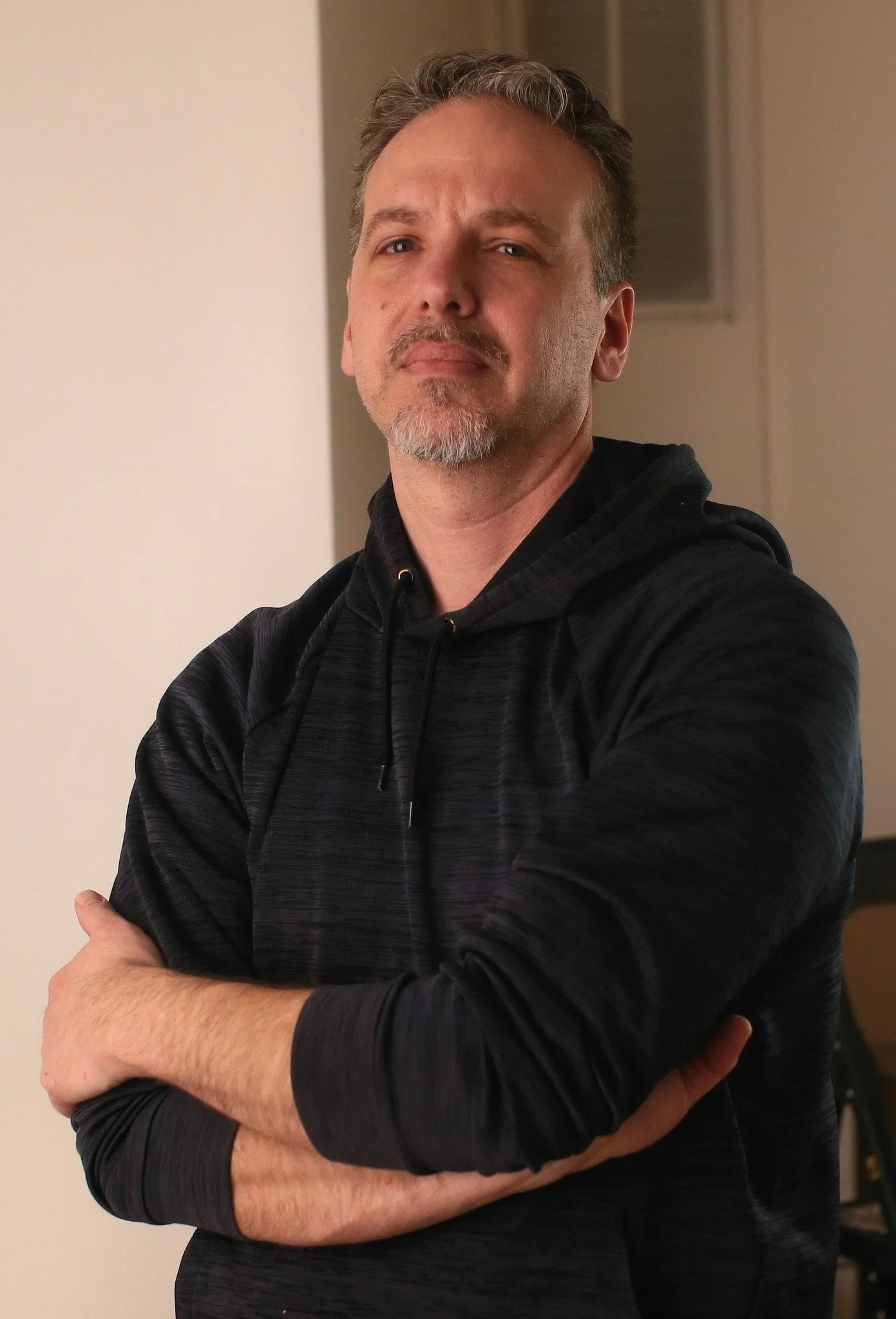
Mike Meyerson is the founder of FEELING CREATIVE?, and has been a horror nut ever since Alien and The Exorcist gave him nightmares as a boy. Currently located in NY’s Hudson Valley Region, is always looking to build the network, find a new cool trail to hike and a new horror movie to watch.
Read Mike’s other articles - HERE.