Technology Is Returning Us to Ancient Storytelling
Artist Statement: As a high school English Teacher for nearly 20 years, I have seen a pronounced decline in writing ability from a vast majority of students. That is not really news and it is not surprising, but what are the reasons for this?
It isn’t a decline in intelligence. It isn’t a result of that tired cliché about the younger generation being lazy. (That has been a complaint for thousands of years).
I believe we are leaving behind the written tradition and entering, or circling back to, the Oral Tradition of Human Communication. It is a major cultural shift back to the oral rendition of storytelling. Technology has been the catalyst that drives this shift back to the original storytelling tradition.
In this short article, I take a look at this phenomenon as we return to dynamic, not static, communication vehicles.
For the past few decades, poetry slams and spoken word performances have sprung up around the country. Podcasts and Social Media posts with audio fill our days. This ascending art form is not new. In fact, its origins pre-date the Western Canon and even suggest that we have come full circle. Perhaps we are leaving behind the written tradition and entering, or circling back to, the Oral Tradition of Human Communication.
In John Foley’s book, How to Read an Oral Poem, he stresses how a poem comes alive in the voice of the reader. (Foley, 27). As a scholar in the Oral Traditions of World Cultures, Foley points out that the oral performance of the poem is dynamic rather than static. Foley tells us that oral poems do not subscribe to the same parameters as a written poem, “they differ in the composition, performance and reception.” (38). To this end, Foley does not divide his book by “chapters.” Instead, he uses the term “Word” as his organizational mechanism. He does this so the reader breaks free of the preconceived notions of what a chapter is. Rather, he wants to suggest a unit of performance.
One of Foley’s main points is that all cultures, and all people within those cultures, have their own story to tell. These stories have healing properties when they are spoken and respected. It is the act of uncovering and telling one’s story that is at the heart of healing. The person reciting the poem becomes his own storyteller; he is telling HIS story, unfiltered and raw.
Dynamic vs Static
Also crucial to Foley’s work is understanding that written text creates a separation between the artist and the audience. This separation does not exist in the oral tradition. This crucial point is also essential to keep in mind when reading Chaucer’s Canterbury Tales. A section on Chaucer as Oral Tradition was included in Teaching Oral Traditions, a collection of studies edited by Foley. The whole premise of the tales is that they were a medieval story telling contest. By understanding this, readers can better understand the characters and their motivation. For example, “The Wife of Bath’s prologue” must be read aloud. The essence of this emerging feminist character cannot be fully realized without doing so.
The Old Way Returns Anew
All around us are PODCASTS, short video clips, soundbites – these are all examples of the modern age of Oral Communication. The written forms are being de-emphasized. X, with its 280-character limit, is an example. Few people want to read anything longer. Attention spans are being trained to want instant verbal entertainment and feedback.
At the heart of this discussion, however, is that the oral tradition is not new. It’s treatment has changed due to technology. But its roots are ancient. In the Navajo culture, for example, stories are told, not read, to kids. The oral tradition also allows the teller to employ repetition, use pauses, change voice projection and modulation—even personalizing the story by changing details to suit the audience. These aspects are not available in the written tradition.
With the storyteller the tale is malleable, fluid and versatile. It is quite simply alive. Even Socrates refused to write his lessons down. He didn’t want to limit them. Of course, that rebel student Plato wrote them down later in the day and so we have them now. But Socrates would have scolded Plato for limiting his vision.
Author’s Bio:
Phil Allard has a B.A. in English Literature from Central Connecticut State University, where he also taught English Composition and did graduate work in Irish Literature. His M.A. is in Oral Traditions in World Cultures from the Graduate Institute.
Phil is a full-time High School English Teacher for the Georgia Cyber Academy.
Before embarking on his teaching career, Phil worked as an online columnist for WCBS News Radio 880 in New York City, covering the NY Yankees. He also worked as freelance boxing scriptwriter and researcher for ESPN’s Ringside series. During that time, he was also a writer of historical position papers for Issues and Controversies Online, specializing in 19th century American politics. He has published two non-fiction books that can be accessed on InfoBasePublishing.com.
In earlier days he worked as a copywriter for the Taunton Press, publishers of Fine Woodworking and Fine Homebuilding magazines.
Phil lives in Western North Carolina, where the fireflies drift in the soft random air.
Read Phil’s articles: HERE
Please follow Phil on: LinkedIn / Instagram / X
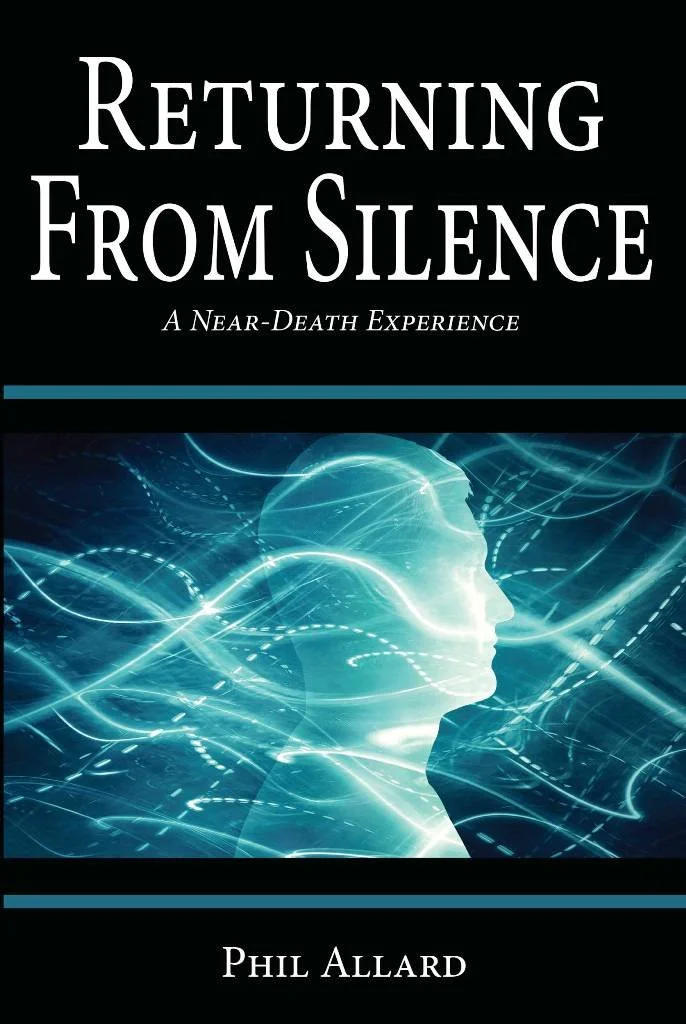
Phil’s debut novel, Returning from Silence, is now available on Amazon.