
The Architecture Behind Ildiko Aydin’s Dark Minimalism
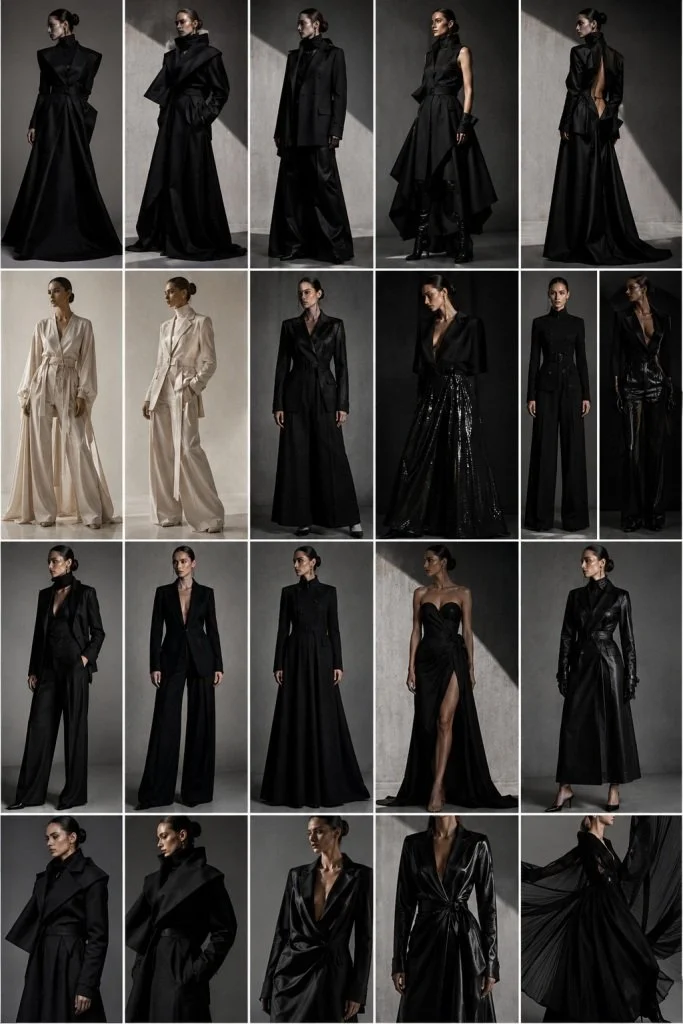
The Hungarian-born, Istanbul-based fashion designer builds womenswear around three studio concepts…SILENCE, ECLIPSE and BLACK, and treats black not as a color choice but as a discipline.
Aydin studied fashion design in Nyíregyháza and then in Budapest, began exhibiting collections early in her career, and spent years away from the industry before returning to serious design work in 2025. She now works from Istanbul, where she lives with her husband, running her studio toward the international fashion house she is building, one carefully finished piece at a time.
We asked her six questions….
You trained in Hungary but you work in Istanbul. How did that move change how you design?
Istanbul came into my life through my husband, not through fashion. We met in 2022, married in Istanbul on 14 December 2023, and the city simply became home. My design training is entirely Hungarian.
What surprised me is how much the city changed how I work. Istanbul is loud, crowded and fast, and it is impossible to be neutral here. That pushes you toward decision rather than refinement. You commit to a silhouette and you make it work, because the city gives you nothing quiet to hide in. My Hungarian training gave me the construction. Istanbul taught me to stop negotiating with a design.
There is also something practical. In Istanbul the supply chain is right there — the fabric, the beading, the tailors, the atelier — all within a few streets. In Hungary I would have had to order and wait. Here I can hold the cloth before I decide anything about it.
You spent years away from fashion before returning in 2025. What happened during that time, and what did it leave in the work?
I did not stop designing. I designed for myself, on paper, with no outcome attached to it — and I worked in construction as an interior designer. That turned out to matter more than I expected.
Designing interiors is the same discipline as designing a garment: you work to a real body, a real site, a real budget, and nothing decorative survives if the structure underneath cannot carry it. So when nothing of my own could be produced, I lost the deadline and kept only the question. It was the same one, over and over: does this shape stand on its own?
Coming back in 2025 felt less like a return than like finally being allowed to finish a sentence. The notebook had years in it. What changed was that I could now cut the cloth.
I would not trade those years. I have met designers who went straight from school to studio and their work is often very current. Mine is not current. It is deliberate, because it had time to become clear, and because I spent those years building things that had to stand up.
Your collections are built around black. Why?
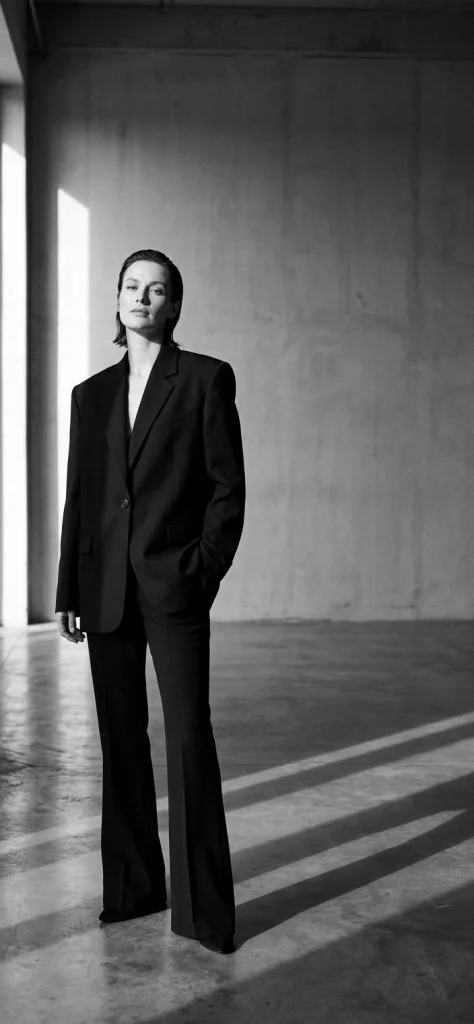
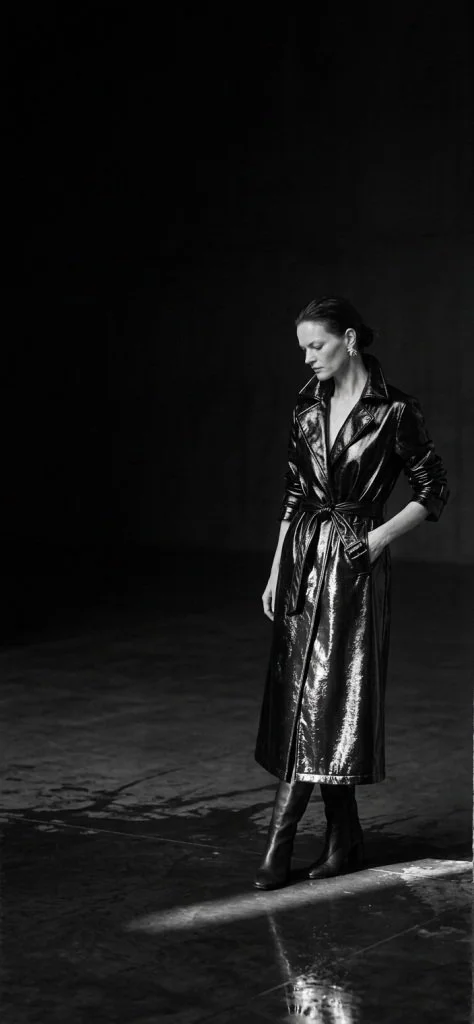
The honest answer is that black is unforgiving, and I want the work to be judged on the part I can control.
In black there is nowhere to hide a bad proportion. No print to distract from a twisted seam, no colour to carry a weak roll line. If the shoulder is wrong, you see it across the room. So working in black forces me to solve the actual problem instead of decorating around it, and that is the whole reason my practice is organised around restraint.
Ornament has its place, and the rule I have never broken is this: decoration is allowed only where the structure underneath can hold it. On the STARDUST corset the boning comes first, always. The crystal is applied by hand afterwards, one stone at a time, and if the internal structure were weak, the weight of the beading would pull the garment out of line and dictate the fit instead of the body. A trim sewn onto a weak seam is not embellishment. It is a correction that will not survive its first wearing.
Walk us through how a piece starts.
Every piece begins as a silhouette, on paper, before any fabric exists. I draw the shape of the shoulder — that is where I start — and I draw it from the side, because the side view is where a garment tells the truth.
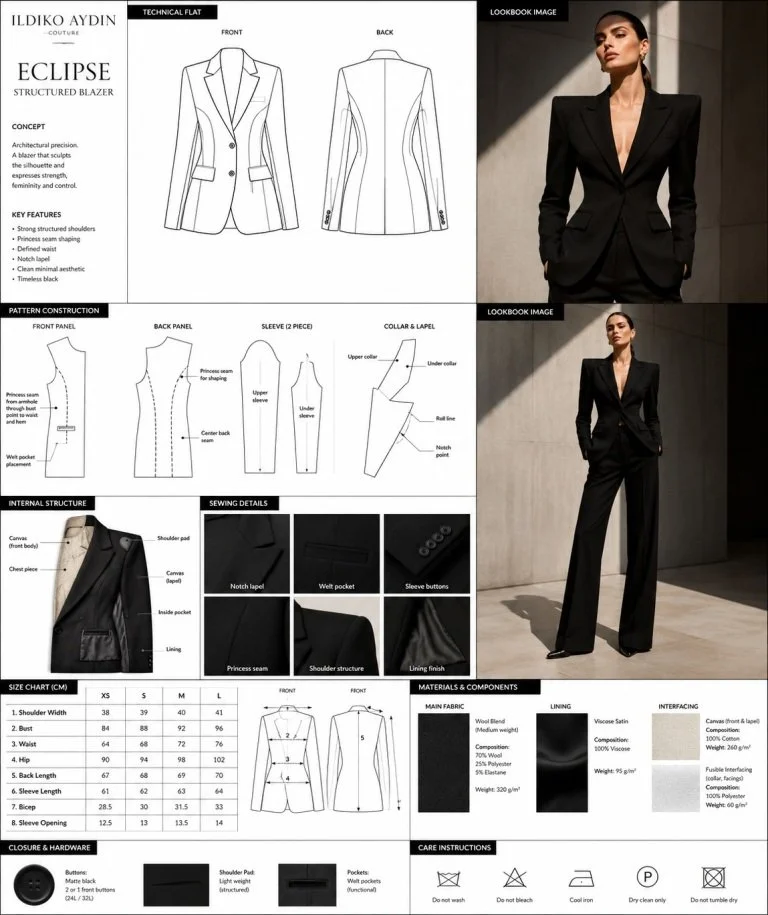
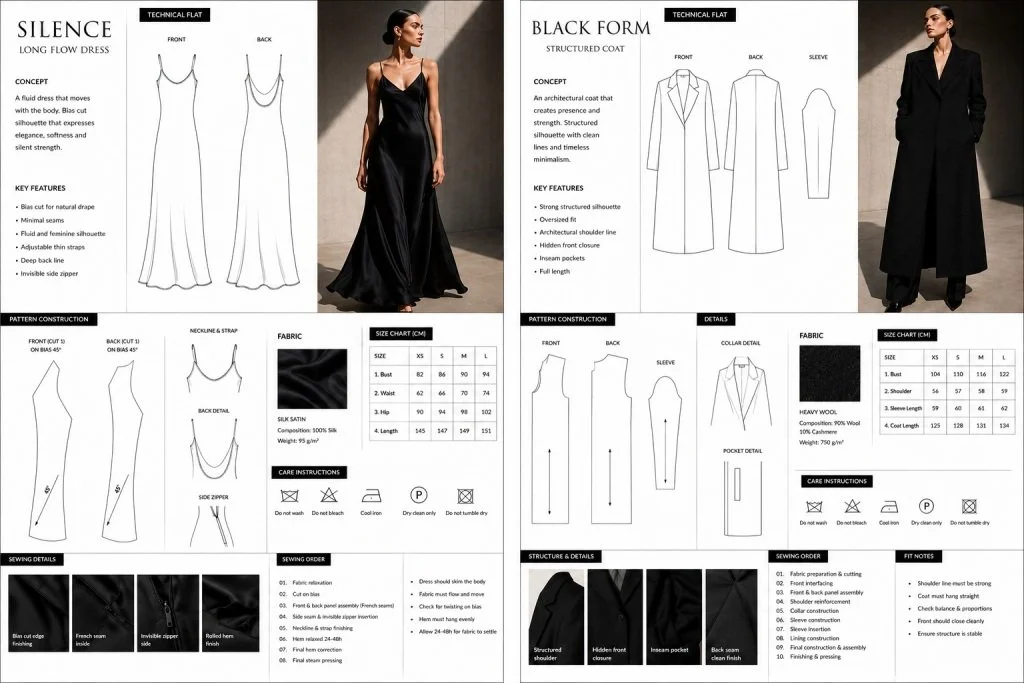
From there the drawing becomes a technical flat: front, back, sleeve. Then pattern construction, where the silhouette becomes panels — a princess seam from armhole through bust to waist to hem, a two-piece sleeve, a collar with roll line and notch point. Then a materials panel: main fabric, lining, interfacing, canvas, buttons. Then a seam order, ten steps, ending with pressing, because the press is what sets the line.
Only after all of that does the cloth get cut. The drawings are not decoration. They are the decisions. If I get to the fabric without a decision already made, the garment will be mediocre and I will have wasted a very expensive cloth.
Who are you designing for?
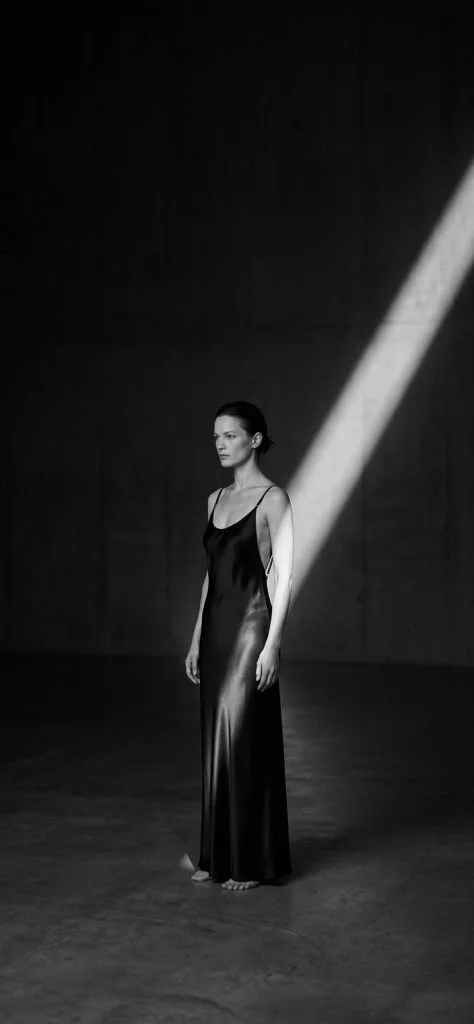
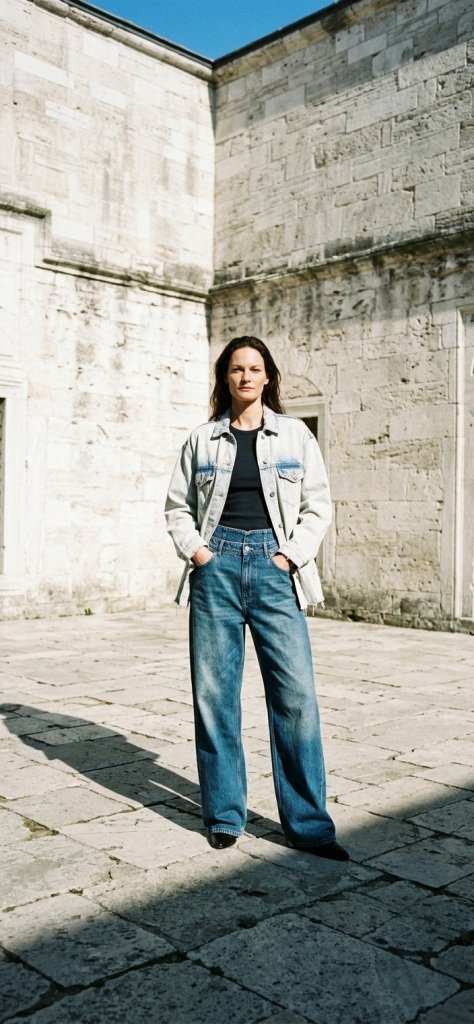
I design for a woman who does not want to manage her clothes. Presence, not performance. She is not dressed to be looked at. She is dressed to be finished.
That has a very concrete meaning in the making. The shoulder stands on its own so she does not have to keep correcting it. The waist is defined by a seam rather than by compression, so she can sit and eat and breathe. The hem falls where it was cut to fall. The coat closes with a hidden front so the surface is unbroken and nothing needs adjusting.
She is not a particular age. She is a woman who has decided what she sounds like, and wants the clothes to agree with it.
What comes next?
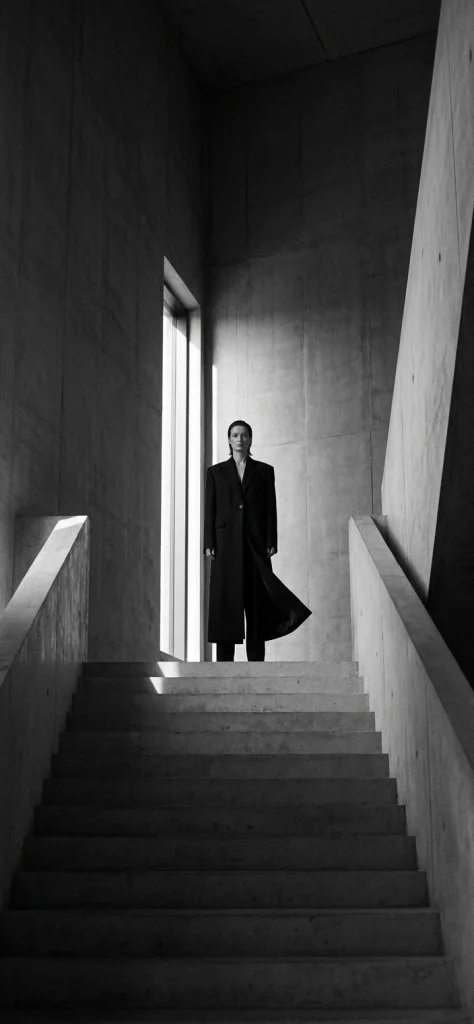
The next real step is not a runway and not a bigger collection. It is one perfectly finished physical piece — a BLACK FORM coat, made to the technical package as it stands, in the real cloth, on a real body, worn long enough to know if the line holds.
After that: a small number of pieces carried by a handful of boutiques rather than many pieces carried by nobody. I would rather be in three shops that understand the work than in thirty that treat it as stock.
The international house is the horizon, not the next milestone. What it looks like when it arrives is a studio that can make any piece in the collection repeatably — the same coat, the same line, the same result, every time. That is what separates a designer with talent from a fashion house, and it is the part I am building toward now.
BIO:
Ildiko Aydin is a Hungarian-born fashion designer based in Istanbul, Turkiye. Her studio work explores dark minimalism, architectural tailoring and understated elegance in contemporary womenswear through the concepts SILENCE, ECLIPSE and BLACK. Her current collections are VITA LUMINOSA (evening and occasion wear) and FREEDOM (denim), both made in Istanbul in limited runs with premium fabrics and custom sizing available. Find her on Instagram at @ildikoaydin and on Behance at behance.net/aildiko.
