
By Marianne Drenthe
The relative impermanence of our existence in this material world is something that persists as part of who I have evolved to be and what I have become fascinated with. Once upon a time, what feels like a lifetime ago, I nearly died during one of the “happiest” days of my life — after an emergent C-section which caused me to nearly hemorrhage to death, necessitating a life-saving hysterectomy. At the time I was working as a Registered Nurse, caring for the nearly dying and critically ill in a busy suburban Chicago hospital’s ICU. Noble work — though at times it felt like my soul was being crushed. Being surrounded by those facing death has that effect on many. Recognizing this weight, I sought to reconnect with an aspect of life that could bring joy. I wanted to heal, and I felt it near impossible as a nurse in that setting. As you can imagine, this was a heavy time in my life, when I grieved what I had lost and the hope of potential future children.
It is far from ironic to believe that photography saved me. Learning the light, how to capture what captivates momentarily, the ability to see what others often miss — it was a rush. Ultimately: capturing a normally fleeting moment in permanent form is what redeemed me, giving me the outlook to move forward when the grief of what I nearly lost — and what I actually did lose — was nearly drowning the idea of who I was.
This, my friends, is the power of creativity. The power of art.
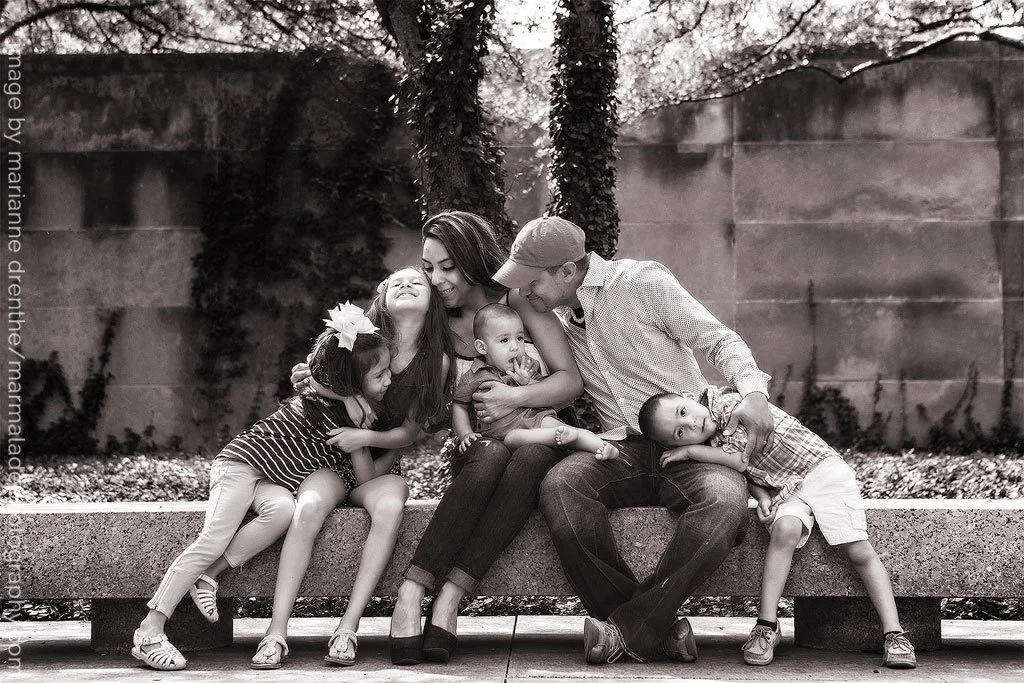

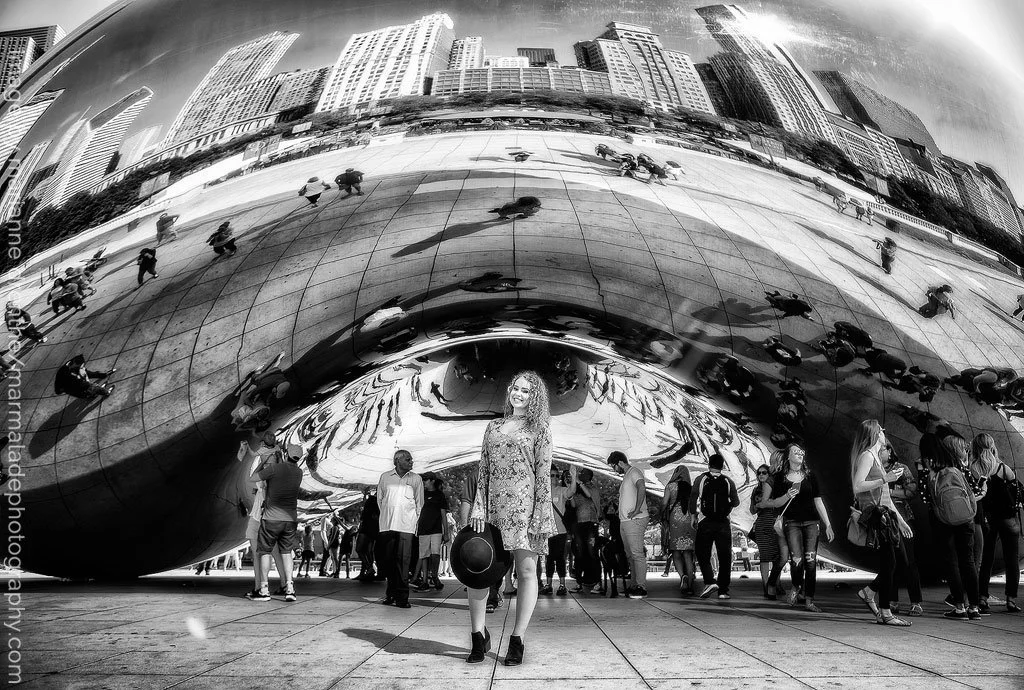
Perhaps I was always marked for photography. My brother, 17 years my senior, was an avid amateur photographer during my childhood, and my very first time holding a camera was his single lens reflex 35mm Canon. The roughness of the strap and the weight of the camera body in my hands left a sort of permanent imprint on me. Long before I officially became a photographer I would take my 110 camera to school to photograph my classmates at 12, 13, 14 — making permanent what most people never think of as fleeting. Looking back, I am certain I was already imprinted.
Fast forward to becoming what most would refer to as a professional photographer — as if the mere statement is something I just waved a magic wand at one day and became. It wasn’t like that at all. I worked with families creating permanence out of impermanence. I formulated a style of work that was part Mary Cassatt, part wedding photographer, part documentary photographer. Documenting impermanence became my life’s work rather than caring for the impermanent nature of life. And I did so very well — garnering press recognition, features, podcast mentions, national and international press — and then…
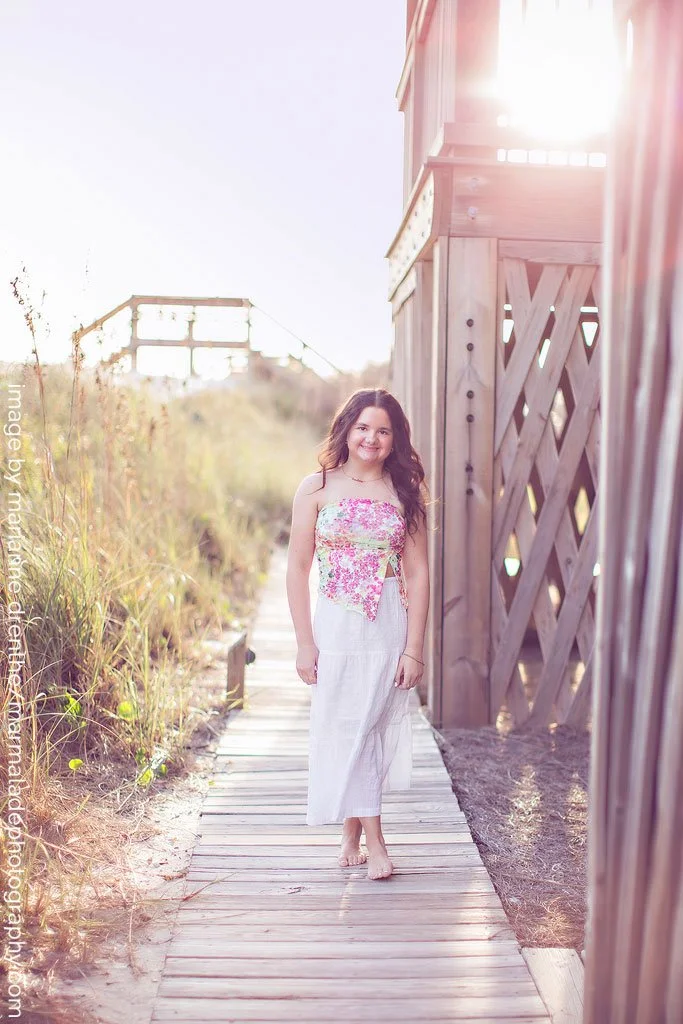
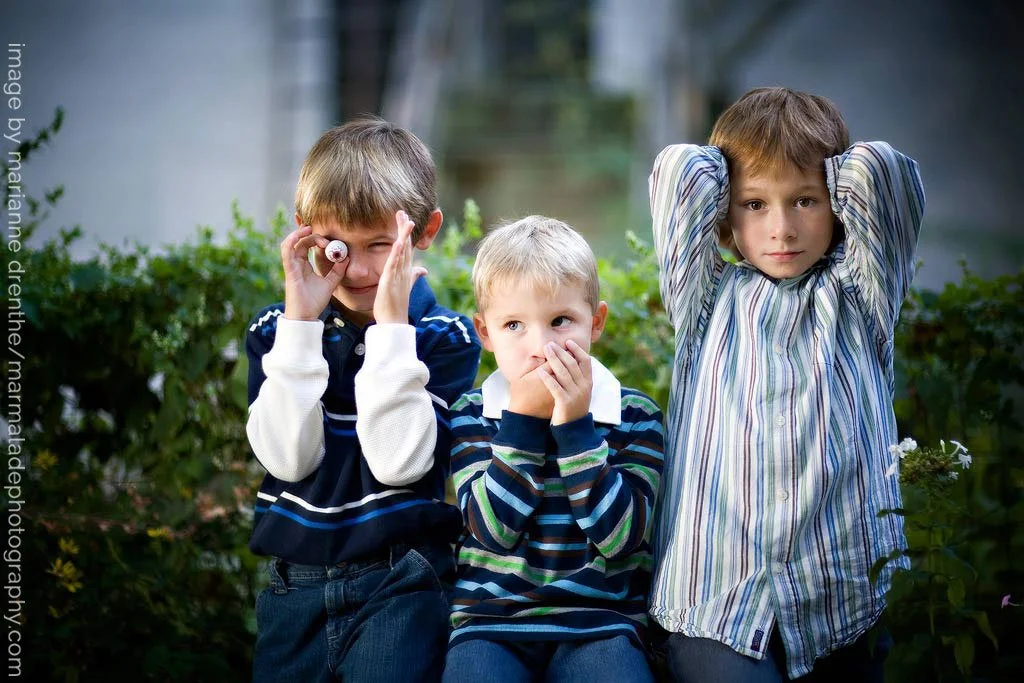
Then the unthinkable derailed me. The impermanence of life hit my family hard. My parents both passed away within 10 months of one another, and I was designated as the one to pick up the pieces. The busy-ness of a photography business gave way to estate settlements, renovations, and navigating complicated family dynamics. Then my own personal family dramas sent me spiraling for a considerable amount of time. Something had to give. My business? My sanity? My personal life? The boat that kept my life afloat was taking on water and all I had was a little medicine cup to empty it with.
Chaos. That’s a perfect word for the past decade-plus of my life.
My business stayed afloat, treading water. My clients: tried and true and wonderful, and I produced great client work. But for my creativity? My artistry? I came up so very short. The lack of desire to create for the love of creating was very real — not for want of caring, but from sheer depletion. For clients I could produce work that rivaled my very best. For myself? Nothing. Between photography sessions my multiple cameras sat, accumulating dust.
During the pandemic I took part in an art challenge with one of my photography mentors. One challenge involved a cardboard box — I took the giant box from a Chewy dog food delivery and created one of my most favorite works, done with an iPhone of all things. I call it THE FUTURE — BOXED: a warm B&W toned photo of a crystal ball inside a cardboard box. There was probably close to a year during the pandemic that I didn’t pick up my “real camera” — but I had zero problem picking up my iPhone to create. I had no desire to create with the big equipment, but something about the iPhone camera sparked absolute fascination for me. “What are the limits? Do the limits bring on further creativity? Can I exploit this limitation further?”
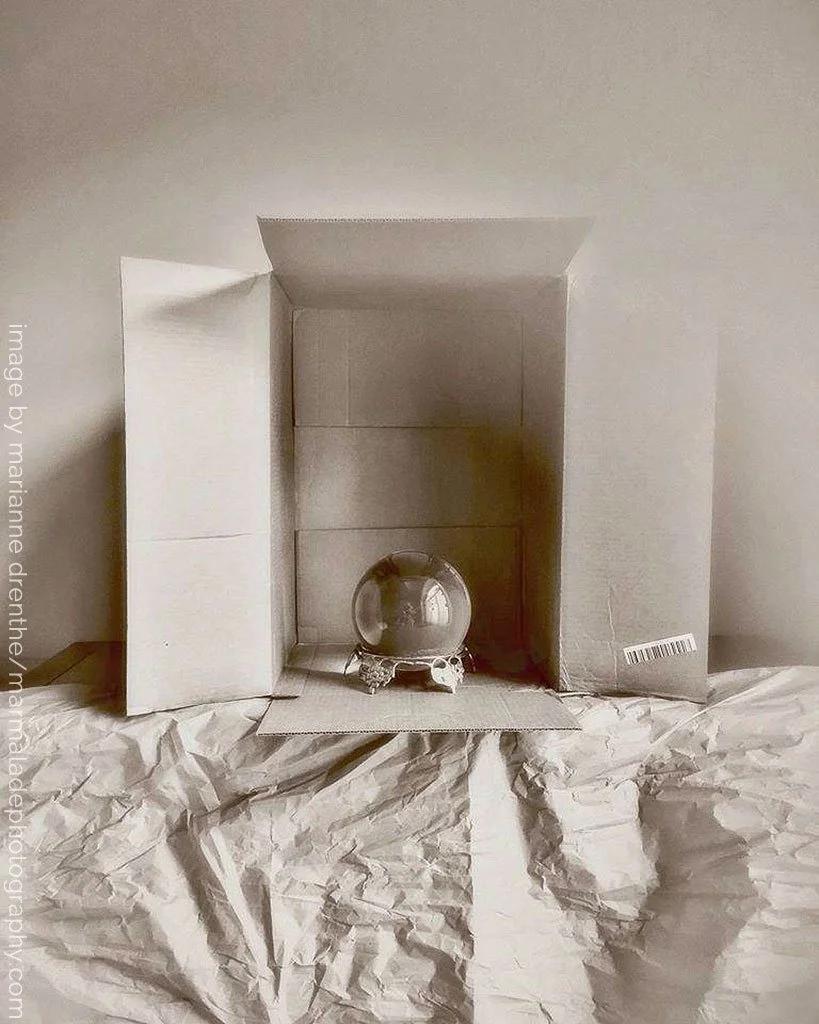
I started creating on a whim. And I discovered something: I enjoyed using the iPhone as a simple tool. A mentor I eventually parted ways with asked me something that stuck: “Why not just create your iPhone images within the B&W setting instead of editing them to B&W?” Which made me think — why not? Some of our most valuable lessons come from sources we don’t always agree with.
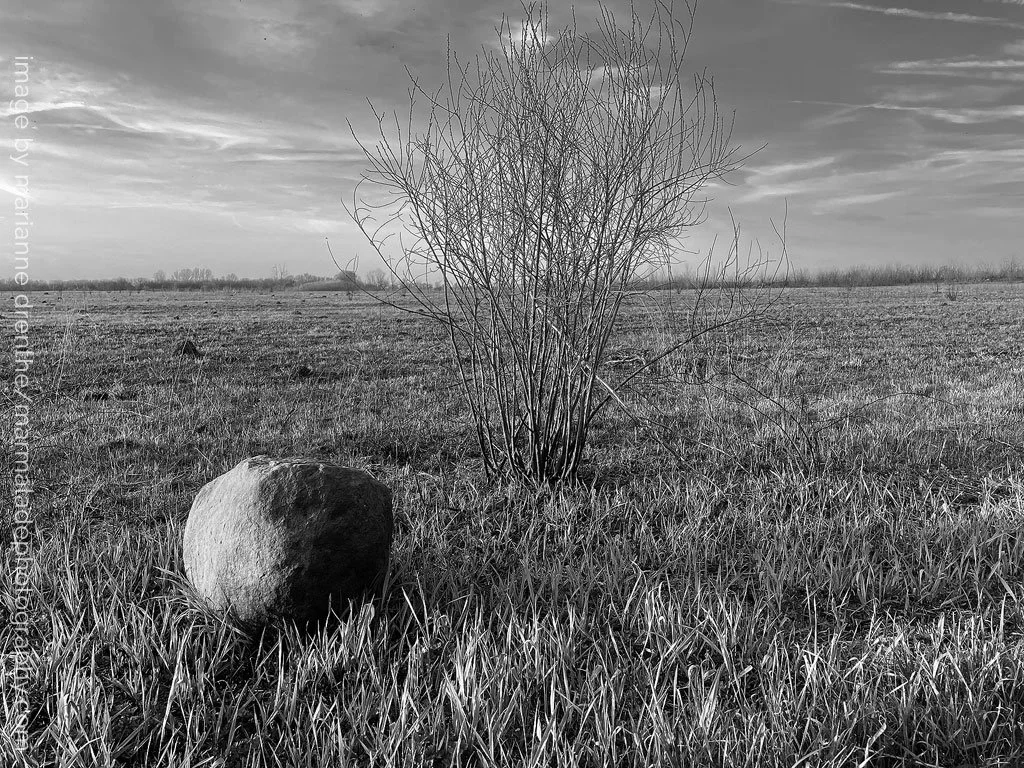
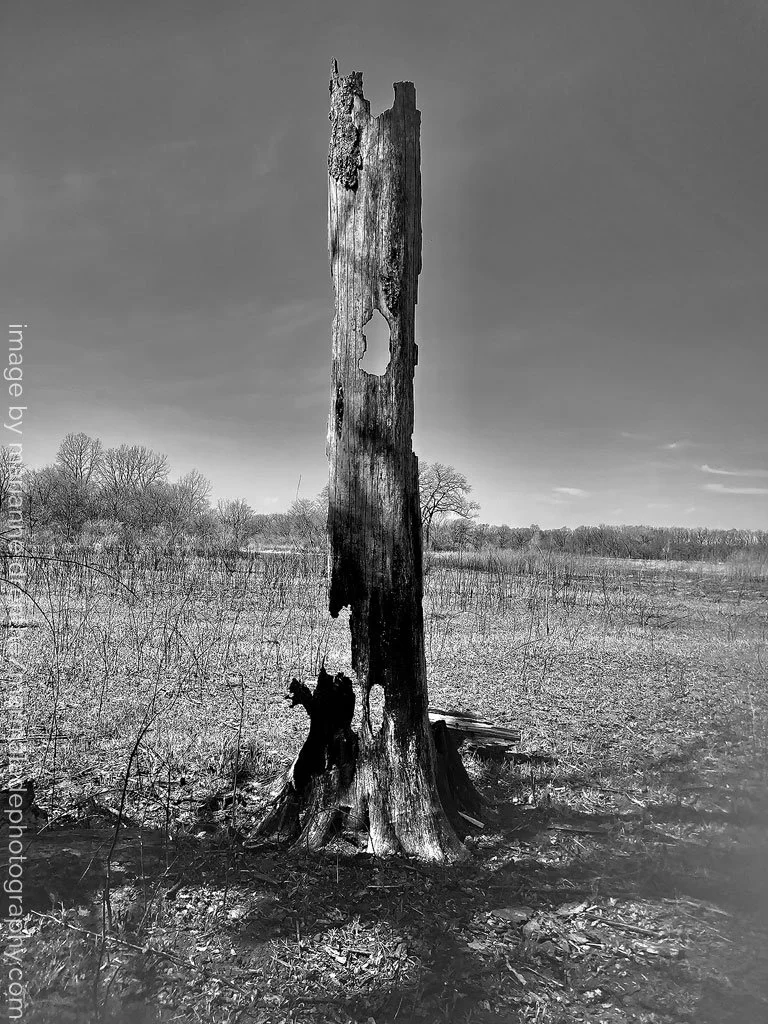
I started photographing scenes natively in B&W — creating the image as I imagined the world. Spring of 2023. Eliminating variables was so… freeing. Absolute freedom. I credit that mentor with some of the very best advice I have ever received as a photographer.
The truth? I had so many options — various Canon and Fuji bodies, adapters, lenses. But I found my way back to my creative self by limiting my options. B&W mode. On my iPhone. This started my current path.
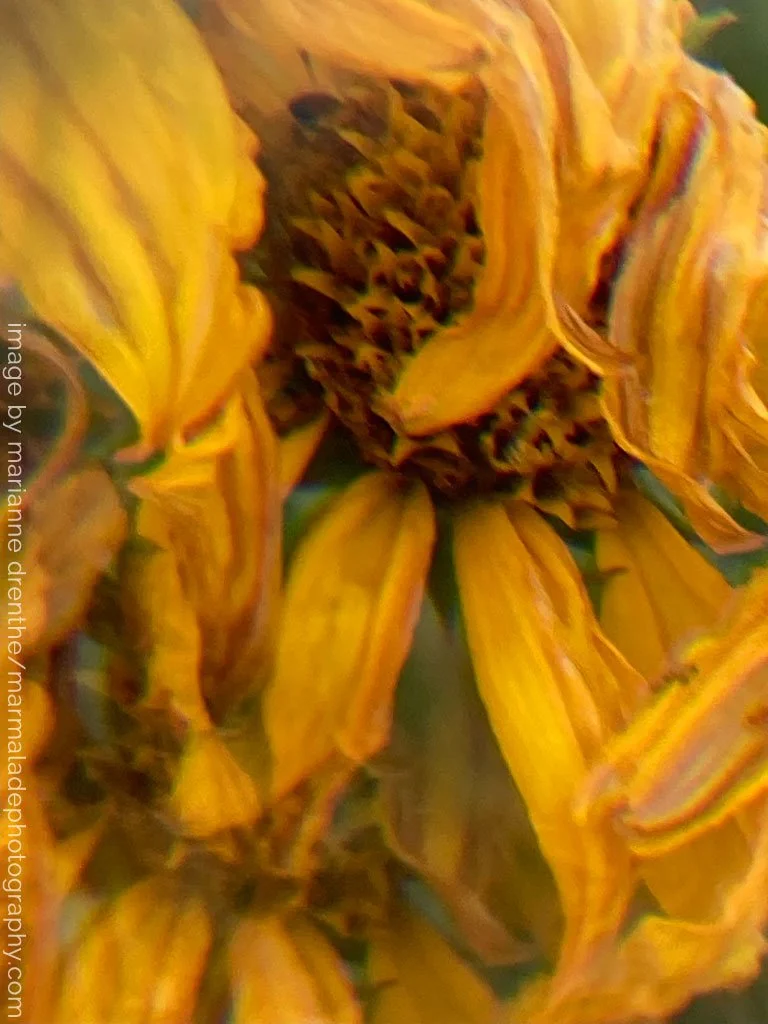
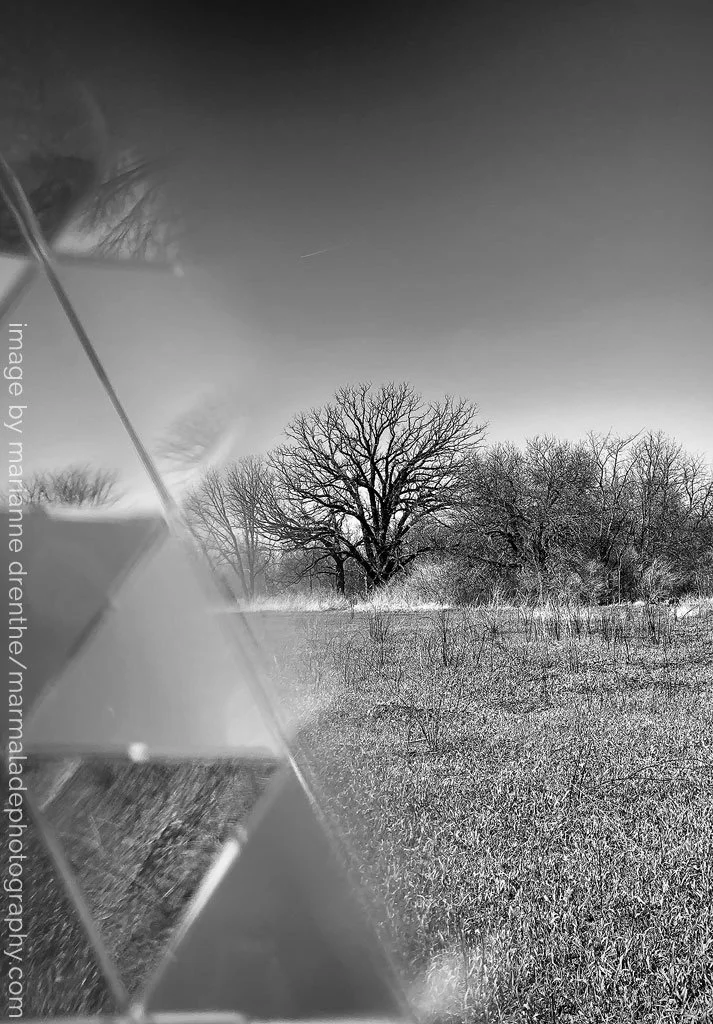
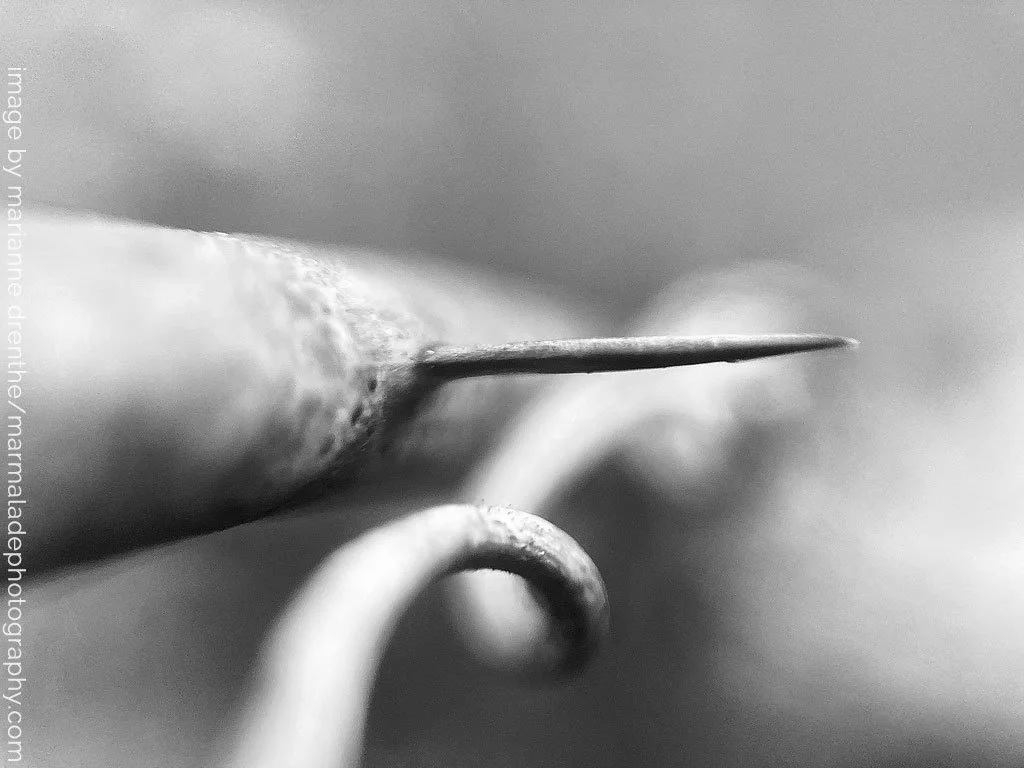
From there I experimented — crystal pendants held to the lens, prisms, scotch tape pinholes, even spittle for refraction effects (when you’re in the field and inspired, you do what you need to do). Each constraint opened something new within me. Then I came across an old children’s microscope toy at a flea market. The lens had come apart from age — I had no need for anything but that little plastic domed lens. To call it a microscope lens is being gracious; it does no microscopic work whatsoever. But what it does do — it turns my iPhone into something that has allowed me to produce some of my most creatively satisfying work in 21 years: The Impossible Plane of Focus.
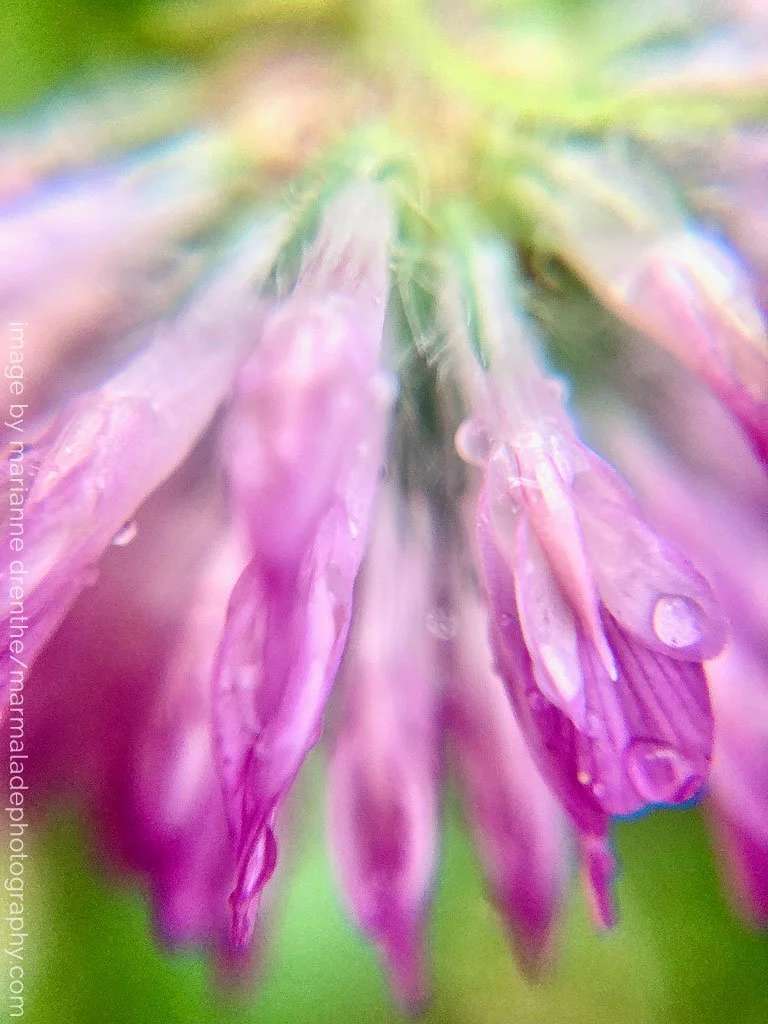
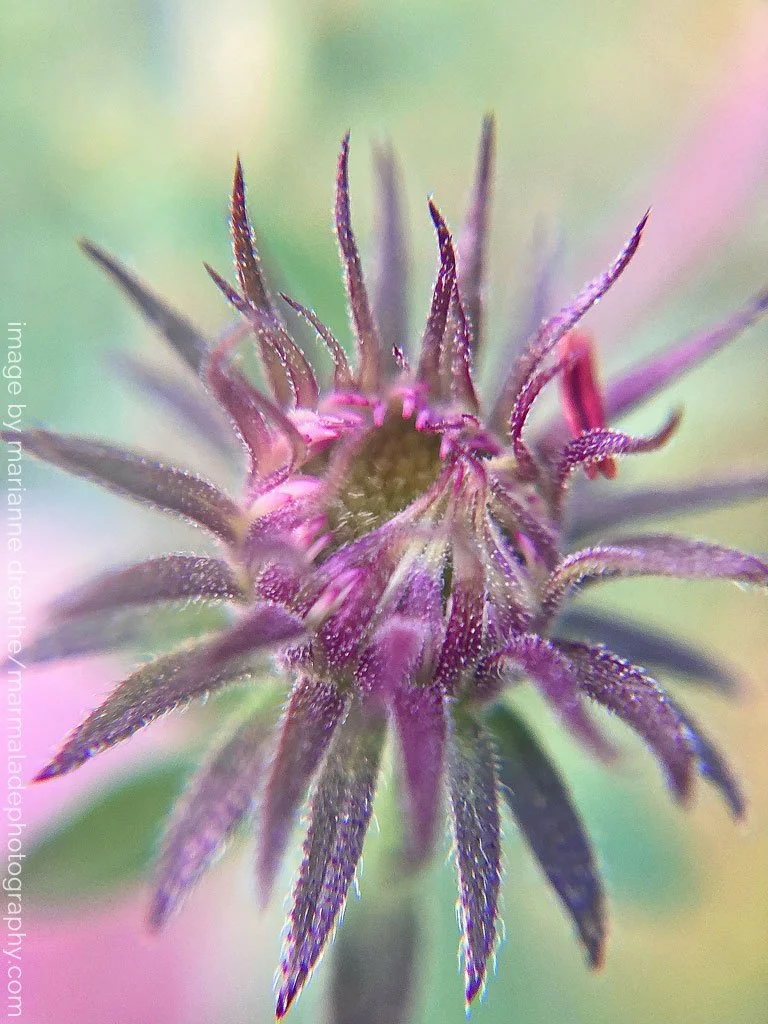
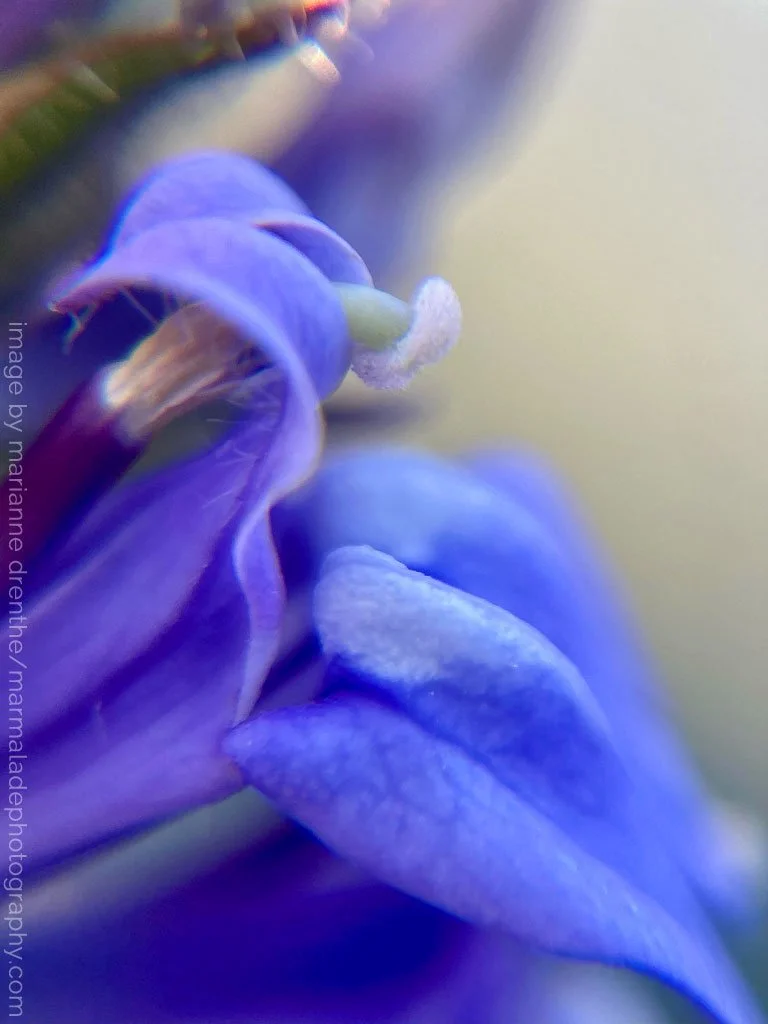
During daily walks with my dogs I carry my iPhone and the little lens, photographing scenes in nature — especially the progression of seasons, the impermanence and cyclical nature of life. With an effective aperture of f/0.05–f/0.08, the focus falls in a razor-thin sliver while everything else dissolves. My peers describe the images as appearing to float. That’s exactly what it feels like in the depths. It’s what it feels like when you grieve, also when you are in depression — like you’re barely head above water. These images resonate to me on that emotional level.
Who knew that limiting yourself — with the tool, with the technique — could spur an artist in a multitude of directions? This project set me on fire and gave me something uniquely mine.
Kind of like life: if you look closely enough you may find yourself delighted.
About the Author
Marianne Drenthe is a Chicago-based family and senior photographer with over 21 years of experience documenting the lives of families throughout the Chicagoland area. Her work has been featured in National Geographic Traveler, Rangefinder Magazine, and Professional Photographer Magazine, and she is a photographic contributor to Photographing Children by Wiley, both first and second editions. When Marianne isn’t photographing families she can be found walking her dogs with an iPhone and a plastic lens from a flea market microscope, looking for impossible planes of focus in the ordinary world.
Professional work: MarmaladePhotography.com
Educational resource: ProfessionalChildPhotographer.com
