
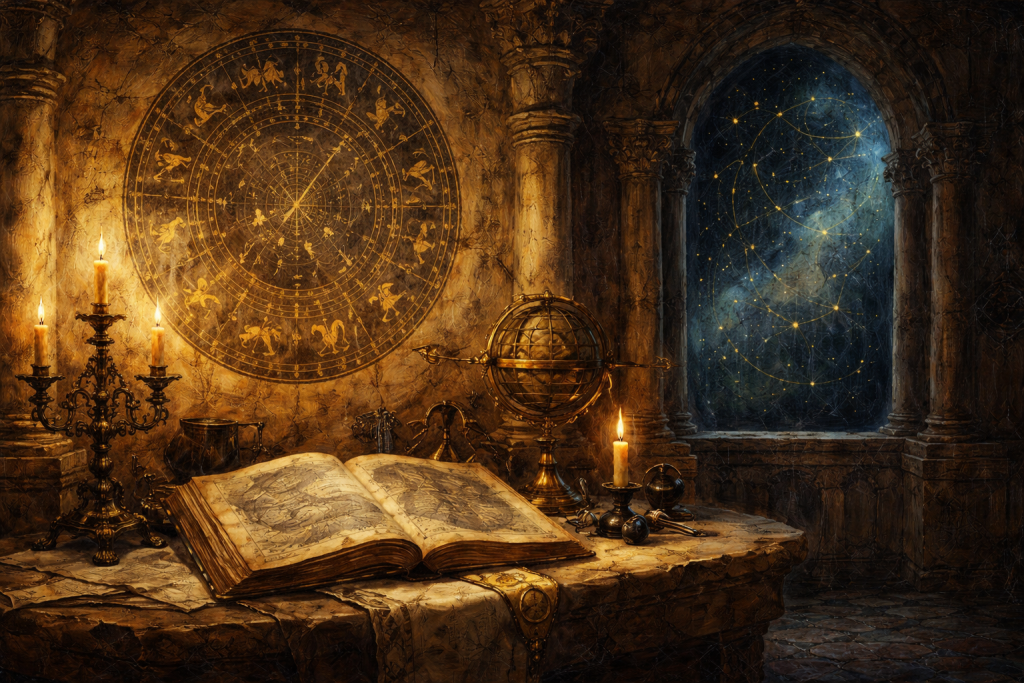
Long before astrology became a social media trend, it was a living language spoken by painters, sculptors, and visionaries. From the marble halls of Renaissance Florence to the fever-dream studios of 20th-century surrealism, the stars were never just decoration. They were a creative blueprint.
We tend to think of astrology and art as two separate worlds: one mystical, one aesthetic. But history tells a very different story. Some of the greatest creative minds who ever lived, Sandro Botticelli, Leonardo da Vinci, Albrecht Dürer, Salvador Dalí, and Andy Warhol, were deeply fascinated by the cosmos. Their birth charts, zodiac symbols, and planetary beliefs did not just inform their private lives. They shaped the very works hanging in the world's most prestigious museums today.
This is that story.
Sandro Botticelli — Venus, the Planets, and the Medici Sky
To understand Botticelli's relationship with astrology, you first need to understand the world he lived in. 15th-century Florence was not merely an art capital. It was an intellectual cosmos. Under the patronage of the powerful Medici family, astrologers and artists worked side by side. Horoscopes were commissioned like paintings. Celestial charts decorated chapels. The stars were considered as real and influential as any earthly king.
Botticelli moved through this world with open eyes. His most iconic painting, The Birth of Venus (c. 1485), is far more than a mythological scene of a goddess emerging from the sea. Art historians and astrologers alike have long noted that Venus here represents the astrological planet Venus, the cosmic force of beauty, love, and creative harmony. The painting was almost certainly commissioned within the astrological belief system of the Medici circle, where planetary Venus was understood as a divine feminine energy that could be invoked through art itself.
His painting La Primavera (Spring) is similarly layered with planetary symbolism. The three Graces, Mercury, Venus, Cupid — each figure maps to a celestial body with specific astrological meaning. Botticelli was not painting myths for entertainment. He was painting the sky in human form, inviting viewers into a cosmological understanding of beauty and the seasons of life.
For those curious about the astrological blueprint behind Botticelli's genius, his natal chart reveals a richly creative soul shaped by a powerful Venus placement, fitting for the man who made Venus immortal on canvas.
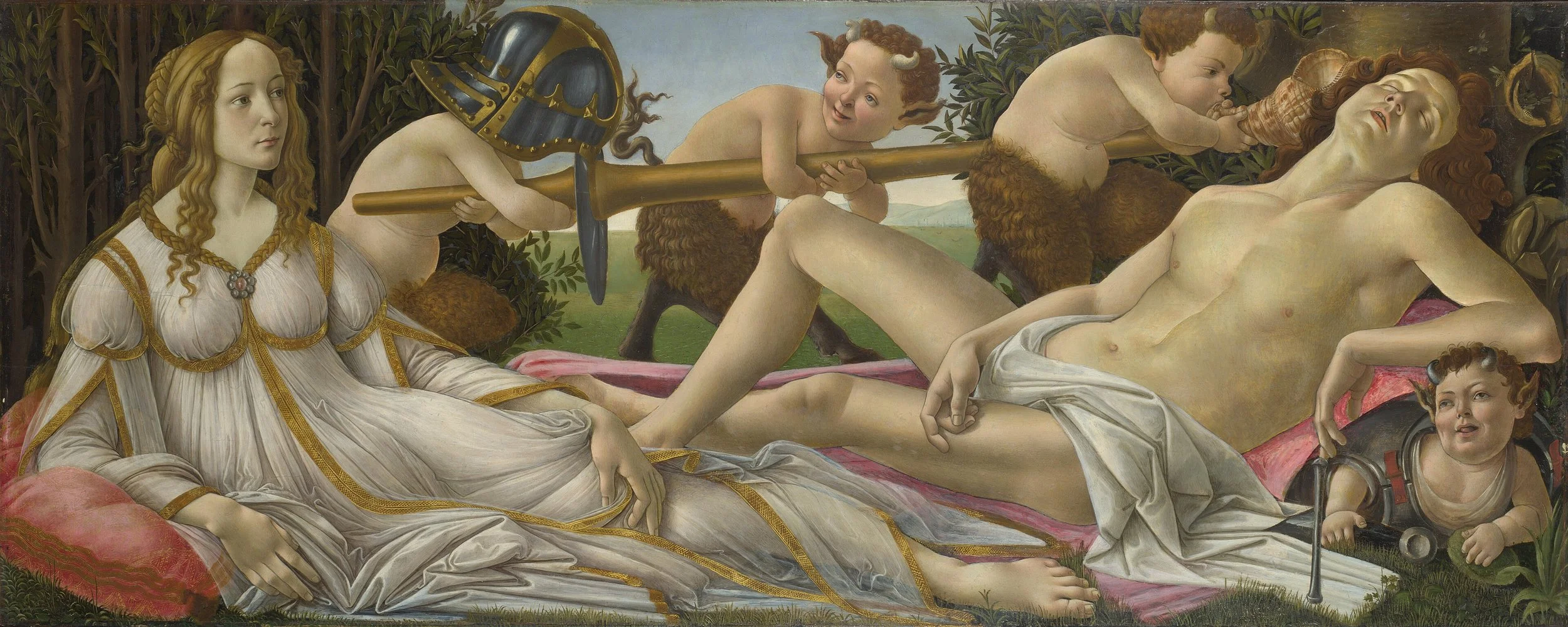
Sandro Botticelli - Venus and Mars (1485)
Leonardo da Vinci — The Hidden Zodiac in The Last Supper
Leonardo da Vinci is celebrated as perhaps the greatest polymath in human history, painter, inventor, scientist, anatomist, engineer. What is far less discussed is that he was also deeply versed in astrology, which he viewed not as superstition but as a serious system of understanding human nature and cosmic order.
His most studied work, The Last Supper (1495–1498), has puzzled art historians for centuries. Why are the twelve disciples arranged the way they are? Why the particular gestures, groupings, emotional expressions? The answer, according to researchers who take astrology seriously, is that Leonardo painted the twelve signs of the zodiac into the twelve disciples, a hidden cosmic portrait in plain sight within a Christian scene.
Leonardo and fellow Renaissance masters like Titian and Raphael were reportedly members of esoteric philosophical circles, and they deliberately encoded astrological meaning into their works in ways only the initiated could read. Leonardo even famously wrote in mirror script, a habit that ensured only a select few could follow his private thoughts. His art was designed on multiple levels: the surface for the patron, the deeper layer for the cosmos.
In the Medici Chapel of San Lorenzo in Florence, a complete horoscope is painted above the altar, dated July 4, 1442. No one is entirely sure whose chart it is. But its very presence tells you everything about how seriously the Renaissance took astrology: it belonged not in a back room, but at the heart of sacred space.
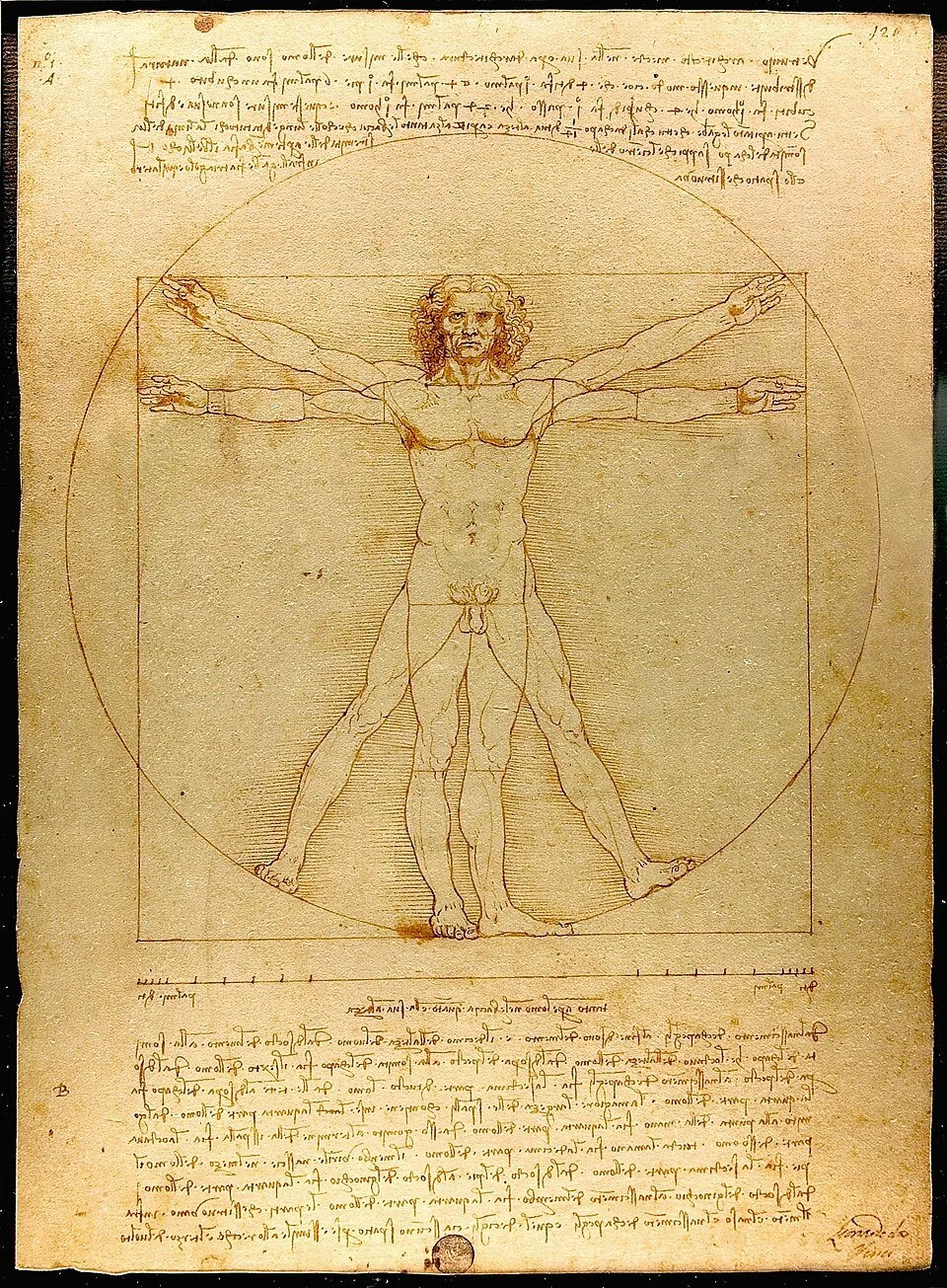
Leonardo da Vinci - Vitruve Luc Viatour (1490)
Albrecht DUrer — Melancholia and the Saturn Chart
Across the Alps in Germany, Albrecht Dürer was wrestling with the cosmos in his own way. His famous engraving Melencolia I (1514) is one of the most analyzed images in Western art history, and at its center is a deeply astrological meditation on the planet Saturn.
In Renaissance astrology, Saturn governed melancholy, introspection, time, and the darker gifts of creative genius. Artists, philosophers, and scholars were believed to be born under Saturn's heavy influence. Dürer's engraving is filled with astrological and mathematical symbols: a magic square, geometric solids, measuring instruments, and the figure of a winged genius sitting in frustrated contemplation. It is a portrait of the creative mind caught between inspiration and limitation, Saturn's eternal gift and curse.
Dürer regarded astrology as an important source of inspiration throughout his career, and his works are frequently cited by scholars studying the intersection of Renaissance science, mysticism, and visual art. He understood that the planets were not distant rocks but forces that shaped the inner weather of the human soul.
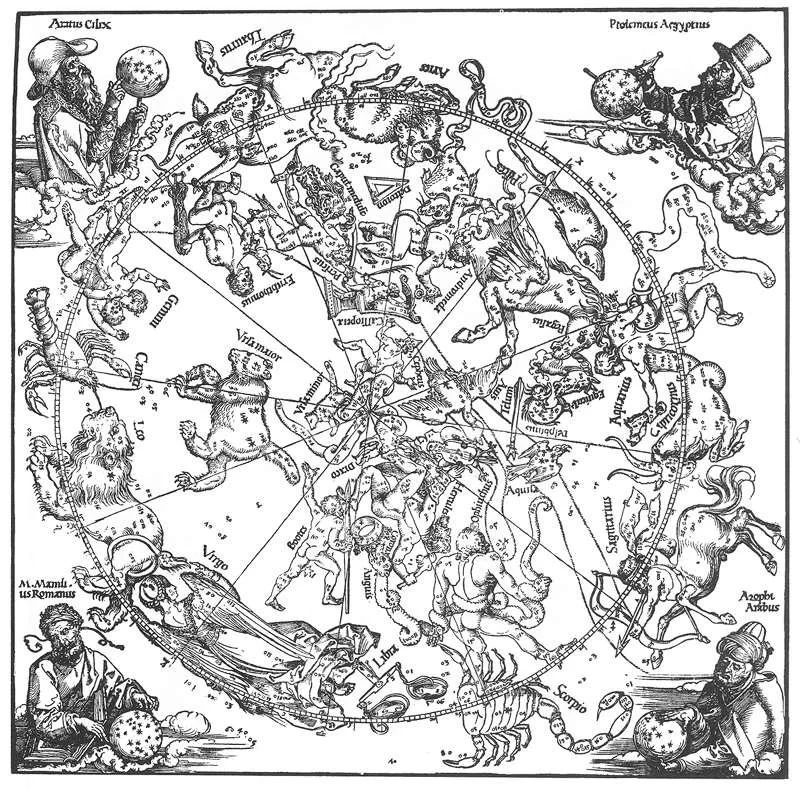
Albrecht Dürer - The Northern Hemisphere of the Celestial Globe (1515)
Salvador DalI — The Zodiac in Dreamtime
Fast-forward four centuries, and the relationship between astrology and great art had not dimmed. It had transformed. Salvador Dalí, the Spanish surrealist who melted clocks and populated dreamscapes with impossible creatures, found in astrology a perfect companion to his art: a system that insisted the inner world was as real as the outer one.
Dalí's fascination with the cosmos was lifelong. In 1967, he created The Twelve Signs of the Zodiac, a series of lithographs in which each zodiac sign was rendered in his signature surrealist style, distorted, symbolic, alive with subconscious imagery. For Dalí, the zodiac was a map of the human psyche, a framework for understanding the irrational forces that drove both art and existence.
His broader Surrealist movement, shaped by the psychology of Carl Jung, increasingly aligned with astrology's evolution in the 20th century. As Jung himself explored archetypes and the collective unconscious, astrology underwent a parallel shift, from predicting events to mapping personality and inner life. Dalí lived at the exact intersection of these currents.
Dalí was a Taurus, earthy, sensual, deeply connected to material beauty yet drawn to the mystical. His Sun in Taurus combined with a powerful Neptune, the planet of dreams, illusion, and art, speaks directly to the surrealist vision that made him iconic. His natal chart is a fascinating study in the tension between the grounded and the transcendent, the very tension that animates every melting clock and every impossible landscape.
Andy Warhol — Leo Rising in a Factory Full of Stars
Andy Warhol was born on August 6, 1928, a Leo Sun, ruled by the planet most associated with fame, performance, self-expression, and the desire to be seen. If ever a birth chart matched a career, it was Warhol's.
Warhol's art was, in many ways, an act of astrological theater. He turned celebrity into high art, mirroring Leo's obsession with stardom and the spotlight. His Factory, the famous studio-salon where artists, socialites, and cultural rebels gathered, was itself a kind of cosmic stage, with Warhol as the Sun at its center, everything orbiting around his quiet, watchful charisma.
His Cancer ascendant gave him profound sensitivity beneath the cool Pop Art surface, an ability to absorb and reflect culture back to itself, which is precisely what made his work so magnetic. The man who said everyone will be famous for fifteen minutes was, in astrological terms, a Leo dreaming in Cancer's mirror.
What the Stars Tell Us About Creative Genius
Across five centuries and wildly different artistic movements, a thread connects Botticelli's planetary Venus to Dalí's zodiac lithographs: the belief that human creativity does not happen in isolation. We are shaped by forces larger than ourselves, by the time and place of our birth, by the invisible architecture of the cosmos that surrounds us.
This is not mysticism for its own sake. It is a serious, ancient, and surprisingly consistent tradition of understanding that the greatest artists have long taken seriously. Art historians who ignore astrology, as scholar Aby Warburg noted a century ago, are working with an incomplete picture. Many great works simply cannot be fully understood without it.
Whether you believe in astrology or simply find it a fascinating lens through which to view history, one thing is undeniable: from Renaissance Florence to 20th-century New York, the stars have always had a seat in the studio.
Curious about your own creative blueprint? Explore your natal chart and discover the planetary influences that may be shaping your artistic voice and creative vision at NatalZone.com.
About the Author
Sajib is a zodiac specialist and the founder of NatalZone.com, a platform dedicated to helping modern creators understand their astrological blueprint. NatalZone offers free natal chart tools, sign deep-dives, and cosmic resources for anyone ready to align their creative life with the stars.
