
Artist Spotlight: Melissa Friendlich
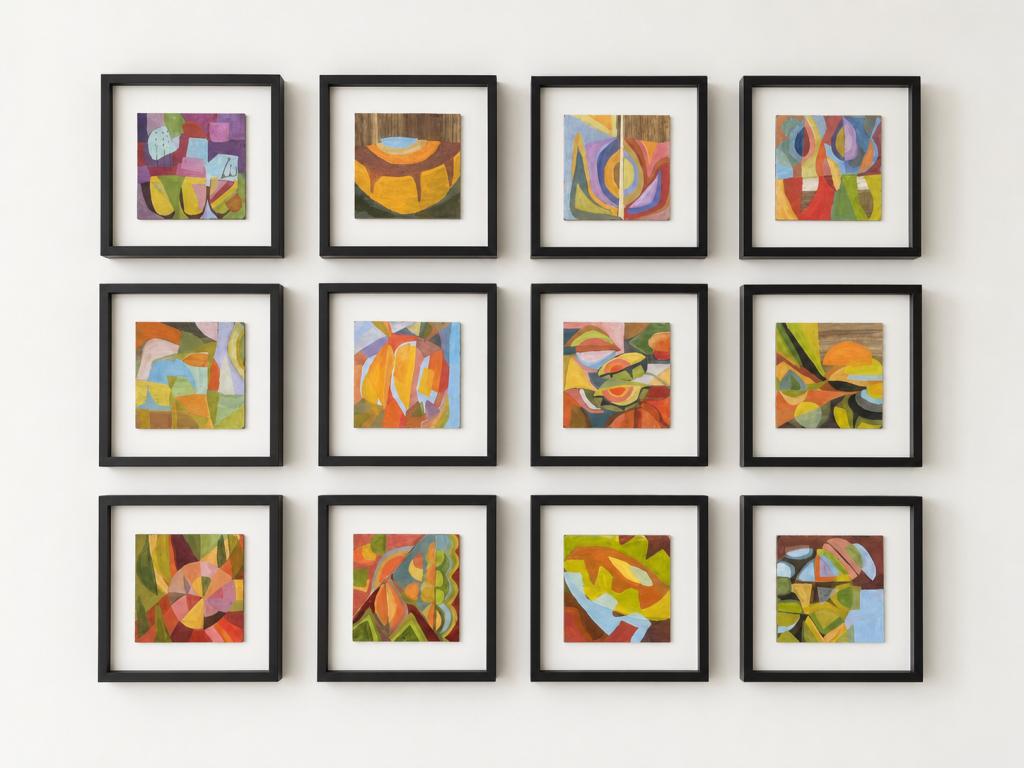
Painting starts where words stop. It is my attempt to express that which resists language. Georgia O'Keeffe expressed it perfectly when she said,
"I found I could say things with color and shapes that I couldn't say any other way, things I had no words for."
Painting is my return to the nervous little girl who spent hours filling pages with impossibly detailed drawings. Tiny patterns, bright colors, and losing all sense of time. Looking back, I realize I was not simply drawing. I was calming my mind. It was flow before I knew that word. It was meditation before I understood meditation. It was a compulsion.
Creating was never just a hobby. It was how I made sense of the world. Like many people, I drifted away from that instinct. Some time around the age of ten, we begin comparing ourselves to others. We stop seeing possibilities and begin seeing mistakes. Instead of creating freely, we begin judging ourselves. I never stopped making art, but I became convinced that being a great artist meant becoming a great draftsman. That belief led me through years of rigorous training.
I studied with remarkable teachers from attending high school at George Washington Carver Center for Arts and Technology, to The Art Institute of Chicago, and finally at the Maryland Institute College of Art. My formal education gave me something invaluable.
I learned discipline, composition, color, design, and craftsmanship. Technical skill matters. It gives an artist a visual language. But somewhere along the way, I confused mastering the language with finding something worth saying.
Then life happened. I had children and, like so many artists, survival came first. Between raising a family, and years of burnout from trying to create technically perfect work, I slowly stopped painting. When I did paint, it felt forced. Looking back, I think I forgot why I ever loved making art in the first place. More importantly, I forgot who I was.
Then came 2020. As the world grew more uncertain, I found myself becoming that frightened little girl again. I no longer understood the world around me, and I instinctively returned to the one thing that had always helped me make sense of it. I painted. Not because I had a plan, but because I needed to understand what I could not put into words.
For the last two years, I have painted almost every night. I rarely begin with a plan. I begin with a line, a shape, or a color. They begin interacting with one another until something starts to emerge. I move in and out of conscious thought. Sometimes I am making technical decisions about balance, rhythm, movement, composition, and color.
At other times, I enter a meditative flow state where it almost feels as though I am observing rather than creating. Those are the moments I trust most.
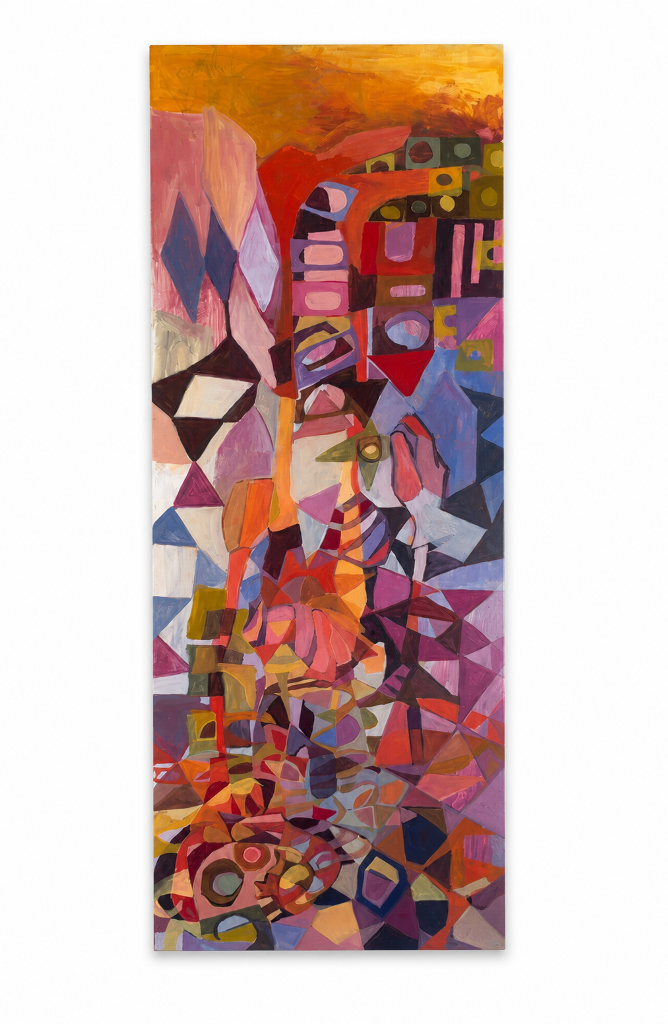
People often ask what my paintings mean. On one level, the work is about painting itself. It is about color, line, shape, movement, balance, rhythm, value, composition, and all of the technical decisions that make a painting work. Those things matter deeply to me. But the work is also about me. It is how I make sense of the world. It is how I process uncertainty, curiosity, memory, joy, fear, and all of the things I struggle to put into words.
I don't expect viewers to feel exactly what I felt during the process of creation. My hope is simply that they feel something. If the work resonates with someone on an emotional, intellectual, or even purely visual level, then it has done its job.
Abstract art requires a small leap of faith from the viewer because there isn't always a recognizable image or object to ground you. Without that familiar point of reference to latch onto, there may not be obvious beauty. Instead, the beauty emerges, unfolding through relationships formed by color and line, movement and texture, balance and composition, emotion and provocation. The work itself is anything but ungrounded. It is built on the same technical foundation as any representational painting.
Composition, color, value, line, rhythm, movement, and balance still matter just as much. The only difference is that the painting is free to explore ideas, emotions, memories, or experiences that cannot always be described with words.
For centuries, artists were expected to record the visible world. They painted royalty, religious stories, portraits, landscapes, and historical events because there were no cameras to preserve those images. When photography arrived, painting was no longer tethered to that purpose. Suddenly, artists had the freedom to ask different questions.
Instead of, What do I see? Now they can ask, What do I feel? What does memory look like? What does grief look like? What does joy, fear, or spirituality look like? Photography was not the only reason abstraction emerged, but it changed the role of painting. Once a camera could record the observable world with greater accuracy than paint, artists were no longer limited to that task. The greatest paintings have never been defined by what they depicted.
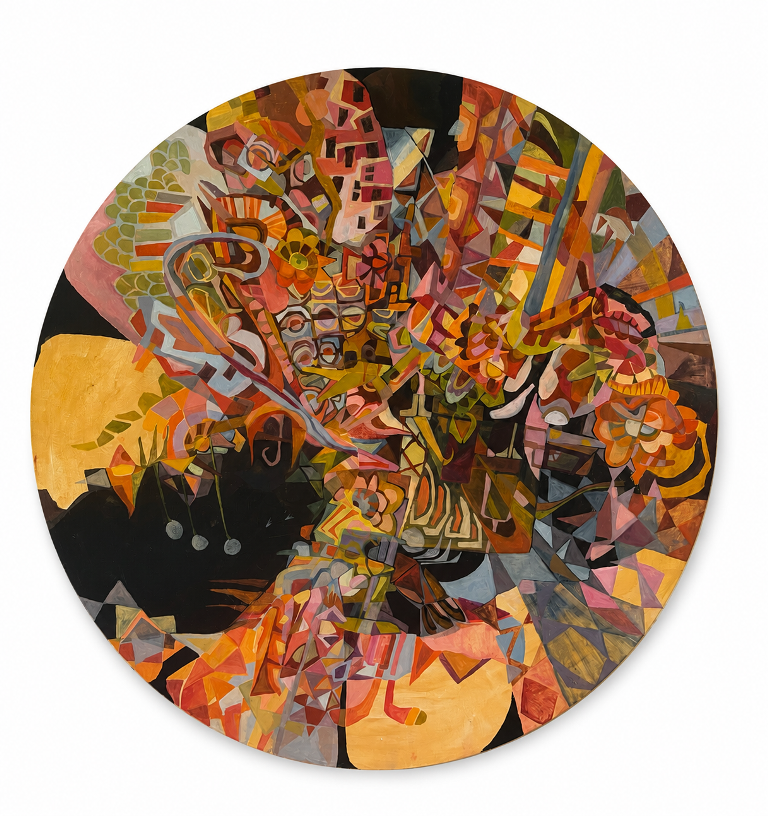
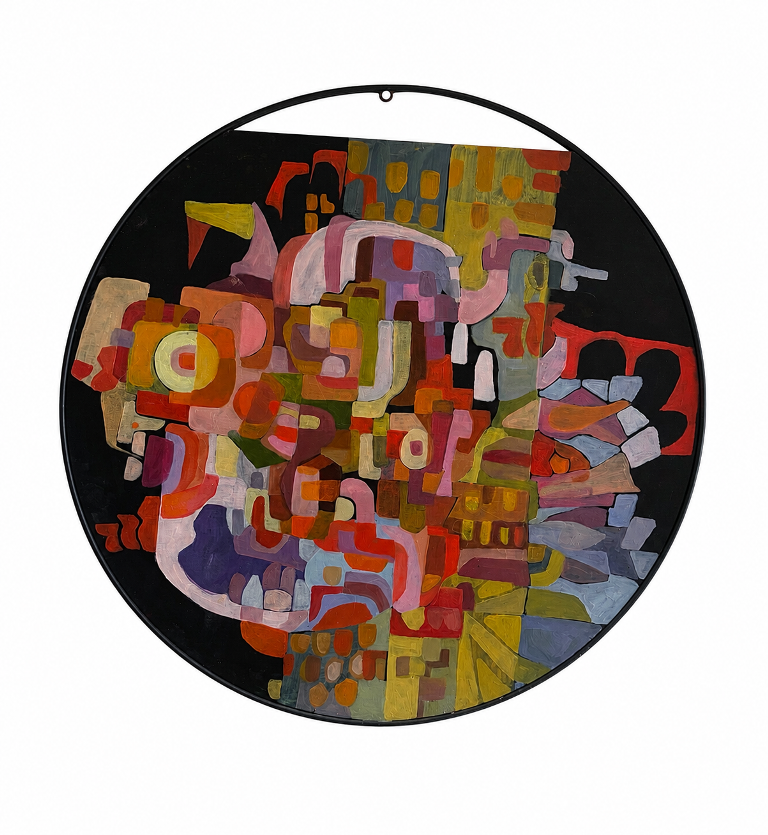
Beneath every portrait, landscape, or still life was an artist's way of seeing, questioning, feeling, and making sense of the world. Those concepts have always been integral to artwork. Photography didn't create that inner voice. It simply gave artists the freedom to allow their voices to rise from beneath the surface and become the subject itself. This does not mean recognizable images disappear from my paintings. Quite the opposite. They often emerge on their own. Birds have come to represent motherhood. Bridges have become sadness, depression, or longing. Stars suggest the unknown. Water often represents fear. Octopuses and fish seem to rise from somewhere beneath conscious thought. Flowers, fruit-like forms, and wings appear again and again.
I rarely decide these symbols in advance. Sometimes, I understand them months later. Sometimes, I never fully understand them at all. I have learned not to force an explanation. I have come to believe the subconscious often understands something long before the conscious mind is ready to name it. In many ways, I have ended exactly where I began. I am once again the little girl making marks because she has to, not because she knows where they are leading. The years of training are ever present. They give structure to my work, but they no longer control it.
Every art form asks something of the artist. A novelist pours themselves into a story. A musician into a song. An actor into a performance. A poet into a few carefully chosen words. I believe painting asks for the same kind of honesty. Technique gives us the vocabulary, but vulnerability gives the work its meaning. For me, abstraction became the language that allowed me to make sense of the world.
Bio:
Melissa Friendlich is an abstract oil painter born and raised in Baltimore, Maryland, where she lives with her husband, two teenage sons, Gwen the cat, and, more often than not, an elderly foster dog. She is happily back in the art world, painting with borderline fanaticism. When she isn’t in the studio, she sells real estate, primarily to keep her teenagers in the lifestyle to which they’ve become accustomed.
Recommended Reading: Artist Spotlight: Ilya Black
