
Indie Author Spotlight: Rocky Johnson
How a hand-drawn map, a leather bracelet, and a little help from my family brought the world of Children of Lamentation closer to reality.
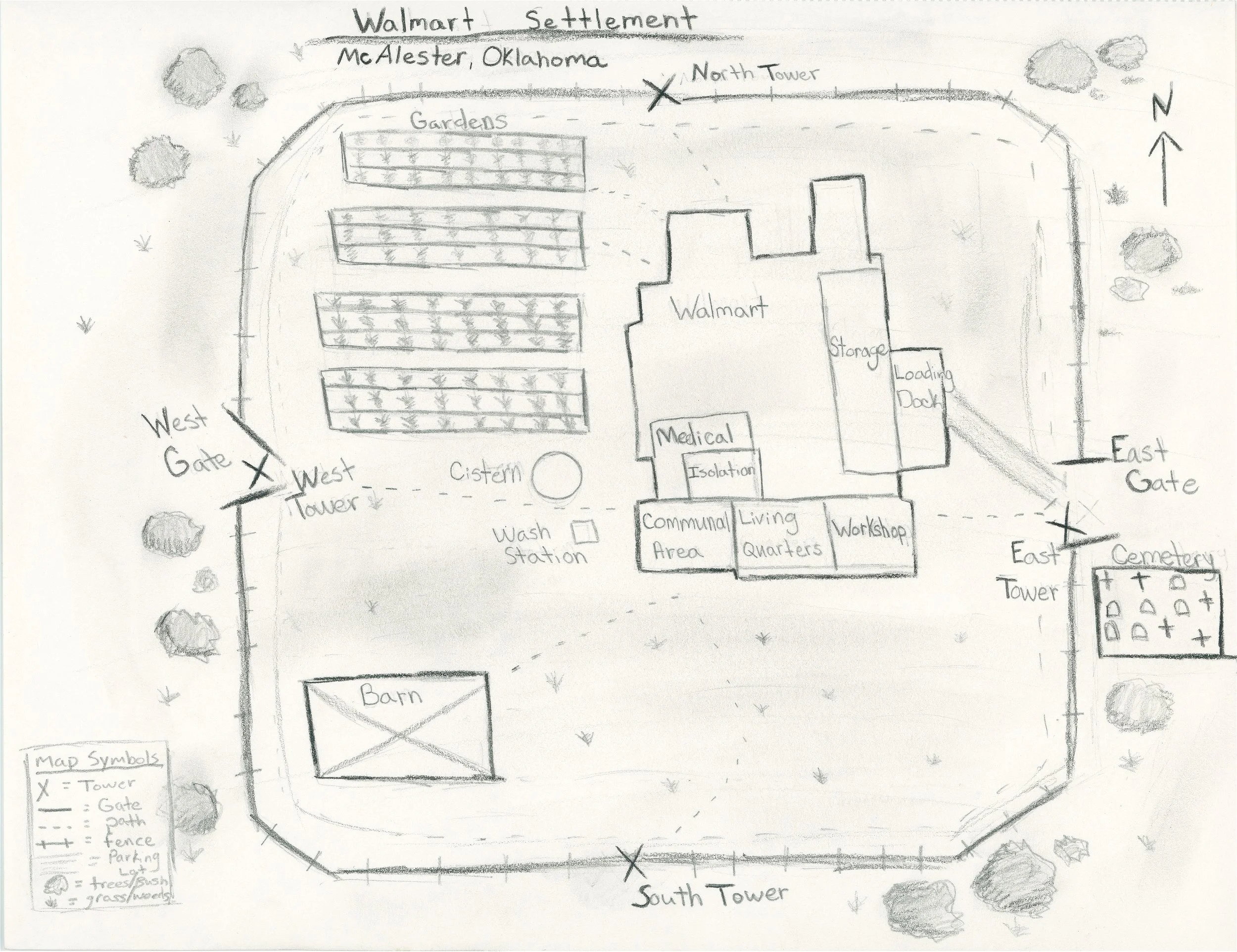
When I asked my oldest daughter to draw a map of a fictional settlement I’d created, I deliberately avoided telling her exactly what it should look like. She had already read and loved my novel, and I wanted to see the place as she imagined it rather than have her reproduce what was in my head.
I had no idea the two versions would match so closely.
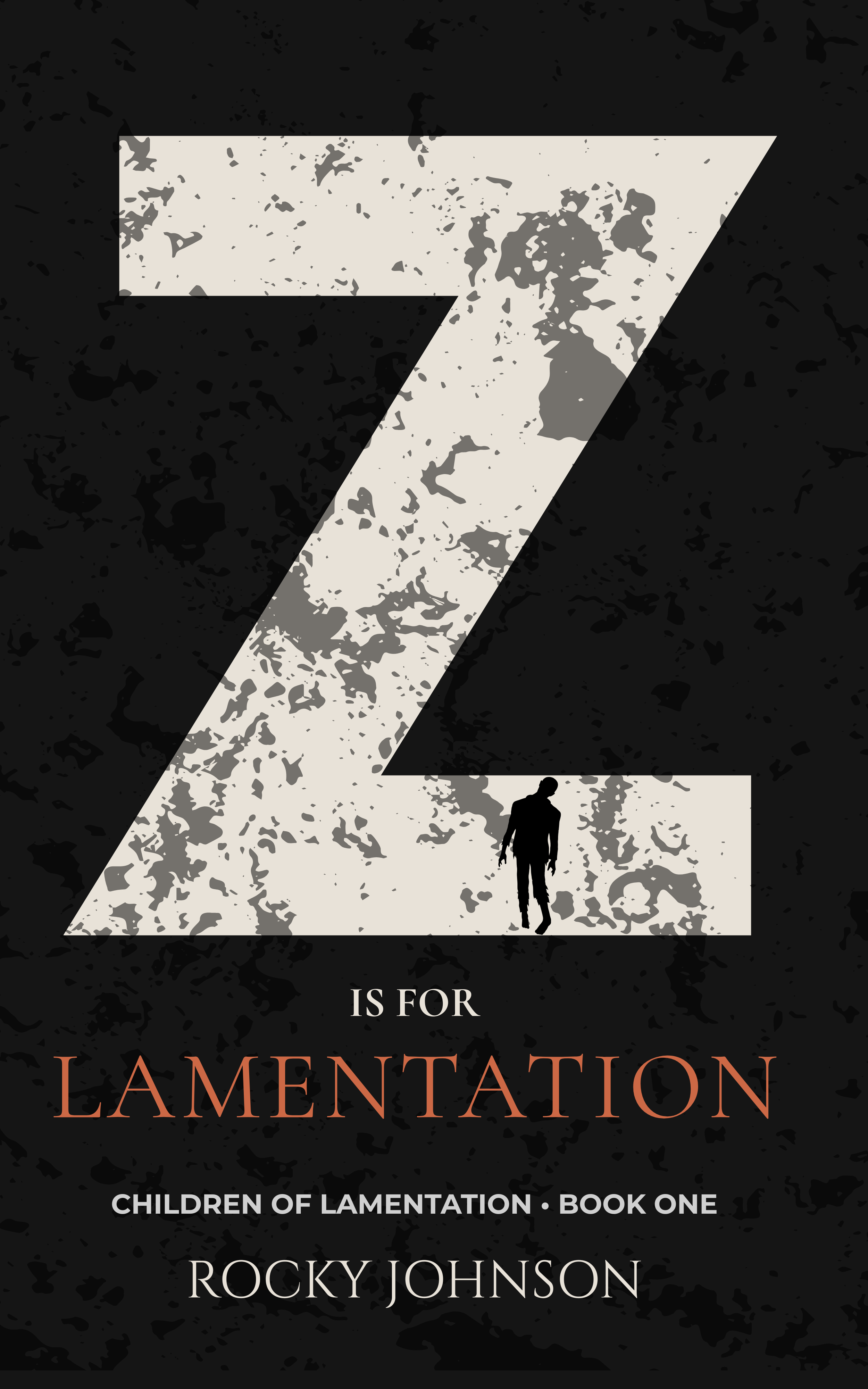
That experience captured something I’ve become increasingly interested in since publishing Z Is for Lamentation, the first novel in my post-apocalyptic horror series, Children of Lamentation. As a writer, I know these characters and their world intimately. I can picture their surroundings, imagine their conversations, and understand the relationships that shape their decisions. But when someone reads my work, they bring their own imagination. The people and places they envision may differ from mine, and that’s part of what makes fiction such a personal experience.
I’ve always wanted readers to connect with my characters, to care about what happens to them, and to become invested in the world they inhabit. I also love sharing some of what I’ve imagined without taking away their freedom to see things differently. As I began preparing for author events, that interest led me to create physical objects inspired by the novel—things that might have come directly from the fictional world itself.
A Settlement Through Someone Else’s Eyes
In Children of Lamentation, civilization has collapsed under the threat of the dead, known as the Lost. Yet the story has never been exclusively about zombies. What interests me most is how people respond when the world they know disappears, the relationships they build, and what they’re willing to do to protect the people they love.
One central location is a fortified survivor settlement built around a former Walmart in McAlester, Oklahoma. The property has become a functioning community, with gardens, living quarters, watchtowers, and the everyday routines that help its residents survive.I’ve spent considerable time developing the settlement, and I have a clear picture of how everything fits together.
When I decided to create a map, I wanted something that felt authentic to that world. Rather than a polished architectural illustration, I envisioned a rough field map—the kind a survivor might sketch to document the settlement. The main building's outline follows the actual Walmart in McAlester, but the surrounding structures and layout are fictional.
My daughter, Emmy Feyth Johnson, is artistic, and I was curious to see how she’d interpret the settlement based on my descriptions. I called her and asked her to draw what she’d pictured while reading, capturing as much detail as possible without losing the rough appearance of a survivor’s sketch.I didn’t provide a blueprint or dictate where every feature belonged.
When she showed me the result, I was amazed at how closely it matched what I’d imagined. The layout was spot on. The only changes I requested involved the line work and shading—adjustments needed to scan the artwork at high resolution and reproduce it as a quality print.
Another reason Emmy’s involvement means so much to me goes back to the first novel I ever tried to write.
In college, I started developing a fantasy story that included a character named Feyth. I became attached to that name—so much that when my daughter was born not long afterward, her mother and I chose Feyth as her middle name. I eventually shelved the fantasy novel, but I couldn't bear to leave Feyth behind.
When I began writing Z Is for Lamentation in 2010, I decided to give the name another life. I started the novel by writing the ending scene; then I had to figure out how to get the story there. As the characters and their relationships developed, Feyth became part of this new world, rather than remaining confined to the manuscript I’d put aside.
Years later, the daughter who shares that name helped me bring a piece of this world into reality. The map is especially meaningful because Emmy created it from her own experience as a reader.I didn’t have to tell her how I saw the settlement; she showed me how she saw it.
We turned her artwork into a limited run of numbered Settlement Maps, designed to resemble an artifact from the fictional community. For now, it’s a piece of that world readers can hold in their hands. But sometimes a map has more to it than the places it shows.
When an Object Carries a Story
The map wasn’t the only piece of Children of Lamentation I wanted to bring into the real world. Another idea came from something much smaller, but with a different kind of significance.
In Z Is for Lamentation, Feyth gives Lamentation Stone, known as Lam, a hand-stitched leather bracelet with his name pressed into it for his birthday. It’s a simple gift between two characters whose relationship is central to the novel.
I wanted to recreate that bracelet because I know how much a seemingly ordinary object can mean when you’re emotionally invested in a story. Someone unfamiliar with Lam and Feyth might see nothing more than a handmade bracelet.But for a reader who cares about those characters and understands what the gift represents, it becomes something considerably more personal.
Turning that idea into an actual bracelet was another matter. Writing about a handmade object is easy enough; producing one that looks the way you imagined takes a completely different set of skills. Fortunately, I had help. My wife, Delona, and two of my children, Aleric and Alyssa, worked alongside me making them. Between cutting the leather, pressing the lettering, and putting everything together, we discovered that fictional objects are considerably easier to manufacture when all you need is a keyboard.
I’ve also begun creating other items inspired by the settlement, including designs reflecting the rules its survivors live by. My intention isn’t simply to put a book title on merchandise. I want what we make to feel like it belongs to the story, with a purpose or history readers can recognize.
Bringing the World to Readers
In October 2026, I attended my first author event, the Van Buren Book Fair in Arkansas. I brought copies of Z Is for Lamentation, the Settlement Maps, and the bracelets, curious to see how people would respond.
Until then, I'd introduced the novel to readers mostly online. Meeting people face-to-face felt different, and I enjoyed every conversation, including those with visitors who told me they didn’t usually read zombie fiction. Some were interested in the premise, others asked about the characters, and the map gave us something tangible to discuss.
One young woman stopped by and spent several minutes talking with me about zombies, the novel, and the settlement. She purchased a copy of Z Is for Lamentation, and our conversation eventually turned to upcoming comic conventions. When she mentioned that she planned to attend River Valley Comic Con and Texoma, I invited her to stop by my booth at one of those events and tell me what she thought of the book.
I hope she does. I'm looking forward to hearing what readers think of the characters I've spent so much time getting to know.I’m curious about who they connect with, what places they remember, and what details stay with them after they finish reading.
Although writing often involves spending long hours alone with a manuscript, bringing Children of Lamentation into the world has become a true family effort. I’m a father of five, and all of my children have contributed in their own ways to the story or the events surrounding it. Delona has been my biggest fan and supporter, and having my family involved in something I care so deeply about has made the experience even more rewarding. They’re a large part of why I do this in the first place.
I’m currently writing Testament, the next installment in the series, and preparing for River Valley Comic Con in Fort Smith, Arkansas. I’ll bring the books, maps, bracelets, and other settlement-inspired creations, hoping they’ll spark a few conversations and introduce new readers to the story.
I can’t know exactly how someone else pictures the world I’ve created, and I wouldn’t want to control that experience. What I can do is share a little of what I see, offer a few objects that belong to that world, and invite readers to discover the rest for themselves.
After all, I didn’t create an entire apocalypse just to keep it to myself.
About the Author
Rocky Johnson is the author of Z Is for Lamentation, the first novel in the post-apocalyptic horror series Children of Lamentation. He is currently writing the sequel, Testament, and collaborating with his family on creative projects inspired by the series.
Learn more at RockyJohnsonBooks.com
