
Making Art From the Chaos of Epilepsy
My creative life is split into two entirely different realities. When I am building a large-scale public campaign or a gala invitation, I live by strict design principles. Every margin is calculated, the visual hierarchy is intentional, and legibility is king. I am the architect, and I have total control. Elements of creativity are a big part of the process. But underneath it all, the explicit guidelines remain.
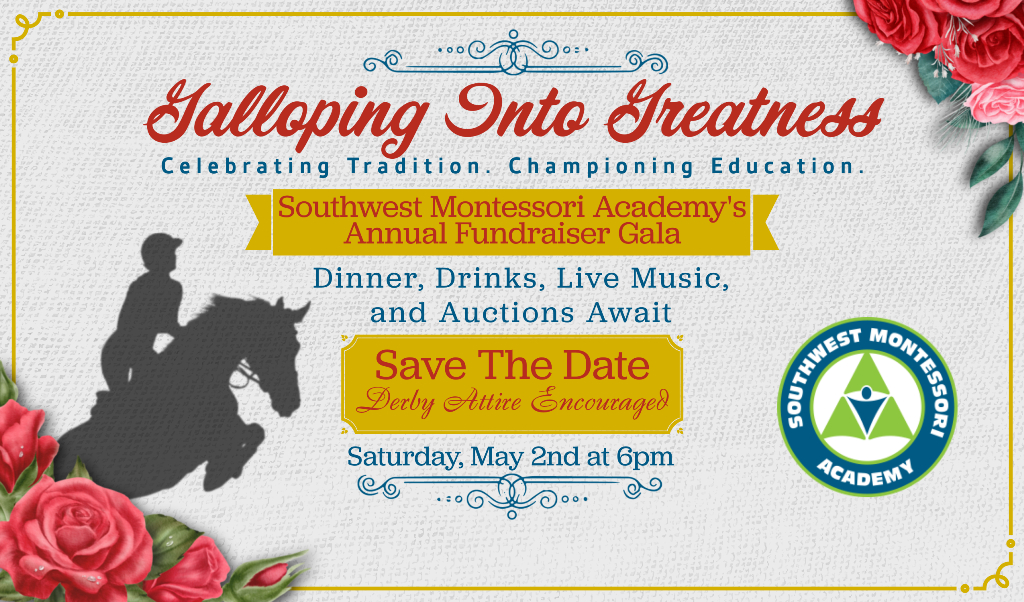

But, explicit guidelines cannot be applied to a neurological condition.
When I was around 26, I experienced my first seizure. As with any significant life event, it deeply affected how I navigate the reality of existence on this rock hurtling through space. Art has always been an emotional outlet for me but epilepsy, being a neurological condition, physically altered my brain which, in turn, altered how and what I create. My creations became more and more abstract. And, abstract art has always been one of my favorite styles of art since it is simultaneously subjective for the viewer and very objective for the creator.
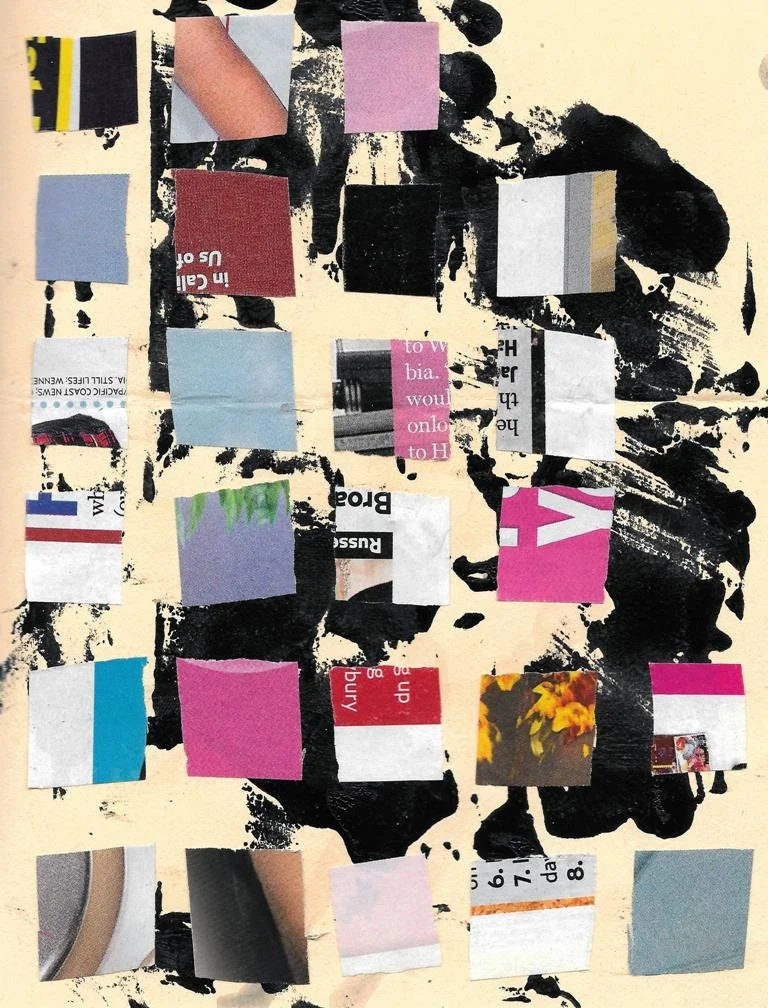
Prior to my epilepsy, my personal art was mostly just experiments with textures and patterns and colors and how various combinations made me feel. But, after so many seizures, my art became an explicit visual representation of how my brain was behaving.
There is no rhyme or reason to my thread of consciousness or the timeline of my life. I couldn’t tell you at what age I had to get stitches on Halloween because I ran through the house and sliced my knee open. I also couldn’t tell you whether it happened before or after the time I made a flame thrower in my sister, Lina’s room with hairspray and a lighter. I do know that the time I had to get some stitches in my chin after a seizure happened after both.
And then, there are some memories that simply don’t exist anymore. It’ll be brought up by my husband or someone in the family and I will have no recollection of what they’re talking about. Or, I’ll confuse the memory of that experience with a different experience. Occasionally, the real memories will come back to me. Other times, they won’t. All of this to say that my life is made up of tiny little boxes of vivid memories with space in between.
In the same way that my brain is sort of a chaotically mashed-up version of objective reality, my art tends to come to fruition through finding a doodle I made 4 years ago, a photo from 2 days ago, and a painting I made last year and mashing it all up and blending the various images together into one image.
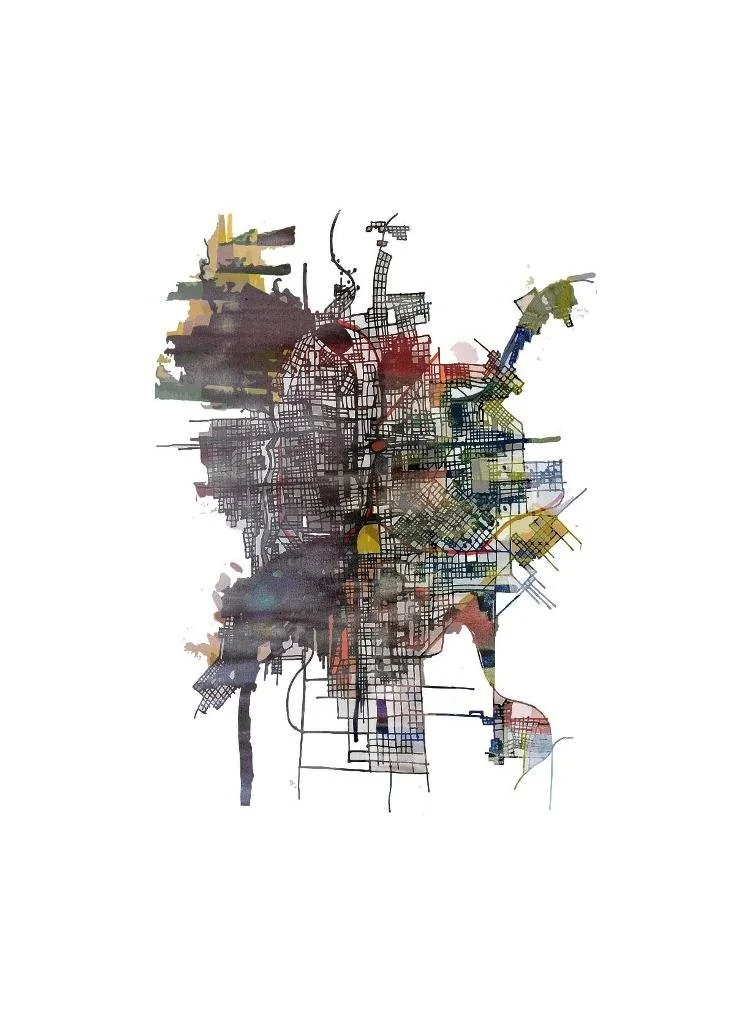
Sometimes, the creation has some sort of structure that blends the rigid rules of my design background with my abstract mind like in the piece “b[o]x[e]s.” Others have a small semblance of visual recognizability, like my piece “The City in My Brain.” Or, it is a completely abstract and chaotic image like “Seizure of the Mind” which combined “b[o]x[e]s” with a whole slew of other creations. It’s a direct visual representation of how a seizure feels.
Not everyone else will see that and those who do know what a seizure feels like will still have a completely different experience than I do, but the underlying feelings about our epilepsy is pretty universal.
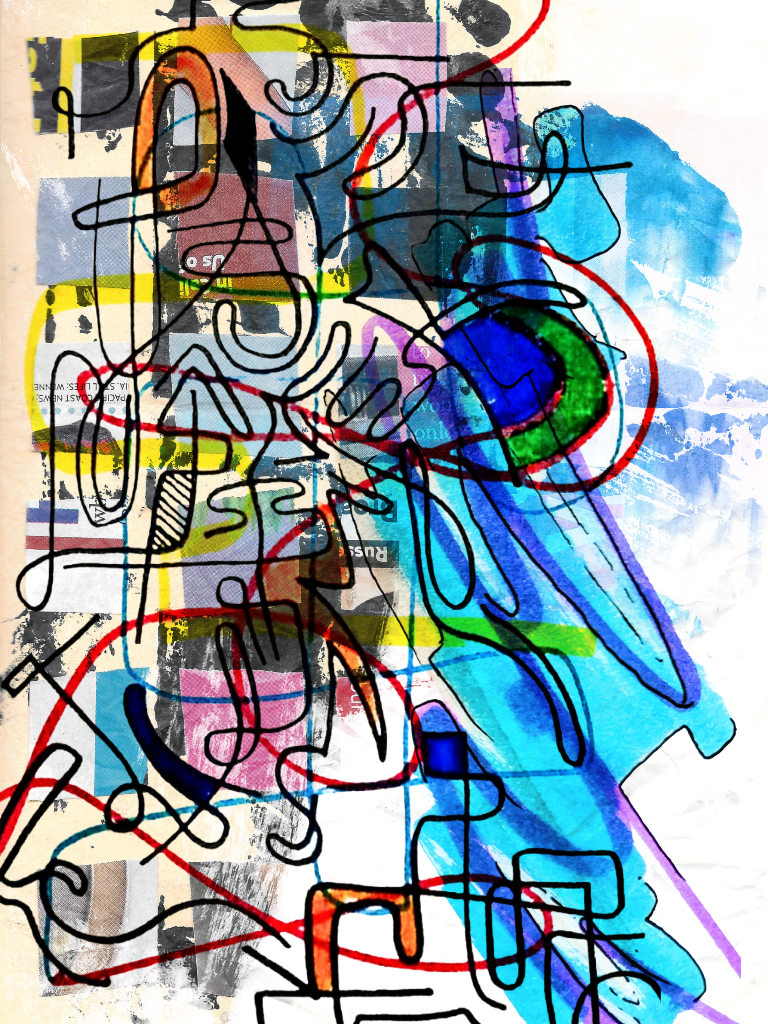
These abstract mashed-up images give me release and ironically help me organize my thoughts and give some sense of order to my experience and how I navigate the world. At the end of the day, we all share the experience of finding the best way to navigate life on this rock hurtling through space.
Often
times, my life's
pulse
beats
with the beat
of the cosmos.
But,
traveling through so
much
space,
it becomes arrhyth-
mic
and distort
-ed.
Bio:
Stephen Willard is an Indiana-based graphic designer and artist who lives with his husband along with three dogs, two cats, and a bird. His day job is in lighting, kitchen, and bath design. His freelance graphic design work relies on precise visual hierarchies to solve complex design problems. In his personal work, he abandons those rules to explore the neurological chaos of epilepsy through fluid, unstructured digital art.
Website: SWdesign.studio
Recommended Reading: Painting Starts Where Words Stop
