
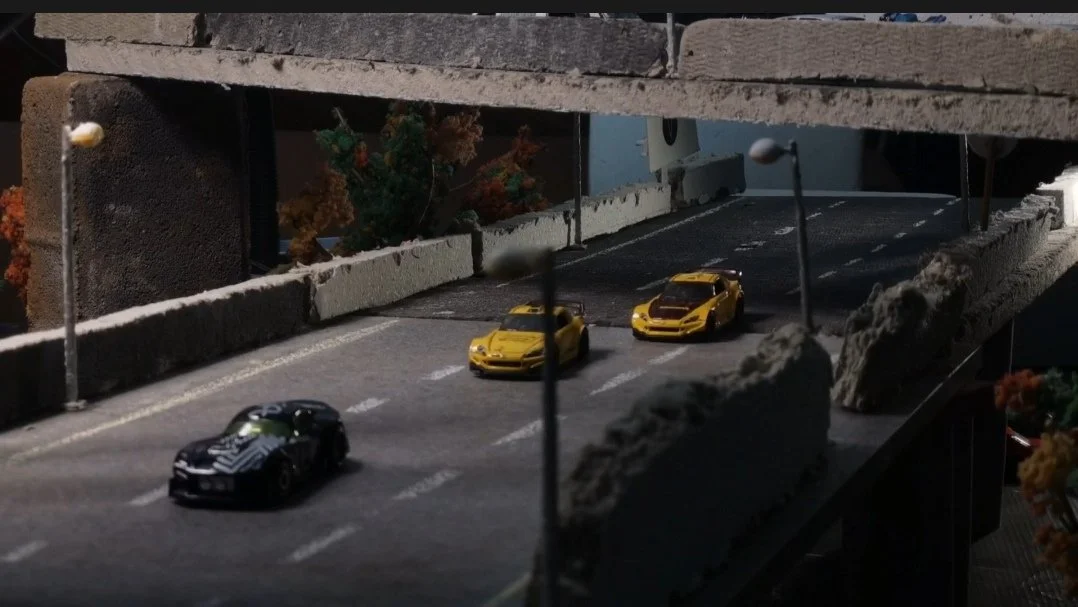
Creator Spotlight: Victor Oliveira
There are days when my workshop looks less like a studio and more like a place where people dump things they don't want anymore.
Cardboard. Plastic packaging. Foam. Old containers. Scraps of wood.
If someone walked in without knowing what I do, they'd probably ask if I was cleaning out a garage instead of making films.
A cereal box becomes a brick wall. A piece of cardboard becomes a concrete floor. The clear plastic from food packaging suddenly looks like window glass. My 3D printer is humming away in the background, making tiny tables, chairs, helmets and props while paint dries on one workbench and my camera waits patiently on another.
Things stop being what they are and start becoming something else. That's all part of the craft.
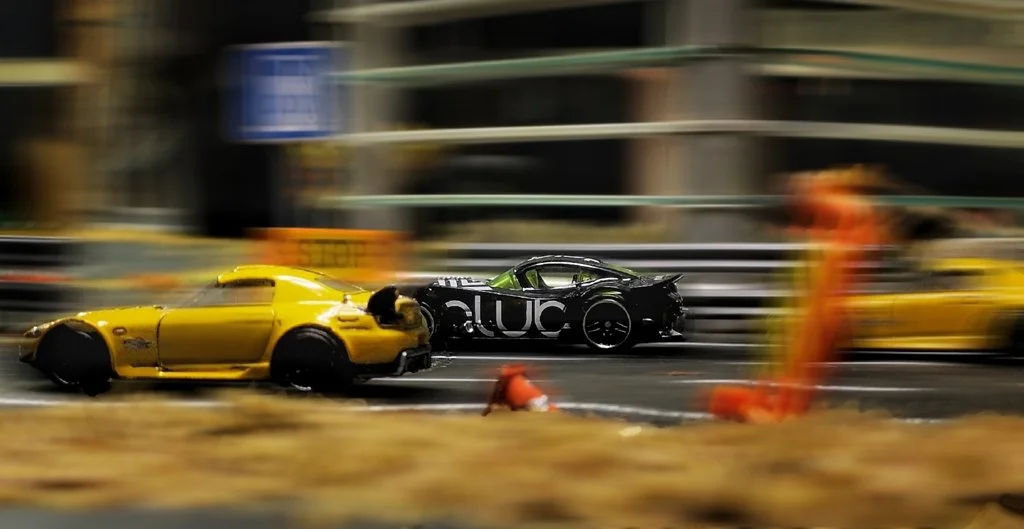
Stop motion is a handcrafted form of filmmaking where physical objects are moved in small increments and photographed one photo at a time. Played back in sequence, those photos create the illusion of movement. Every movement is made by hand.
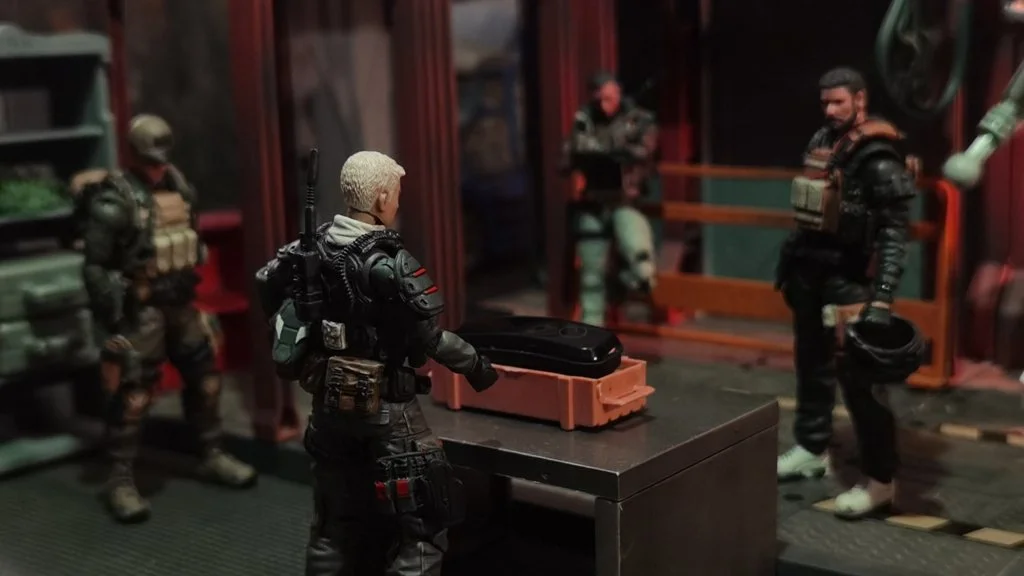
That's what I do.
I make stop motion films in my garage. Call it a workshop, call it a studio, call it whatever you like. To me, it's the world I live in. You see toy characters moving across a screen. I see months of writing, planning, designing, building, painting, printing, photographing and editing.
People often think the hardest part is moving a character a few millimetres and taking thousands of photographs. They're right. It takes patience.
The animation is only one department. Before I touch the camera I've already spent weeks, months, writing, planning, preparing budgets, building, painting sets, characters, designing props and solving problems that nobody watching the finished film will ever notice. By the time I reach the 1000th photo, I've probably already had six mental breakdowns.
My name is Victor Oliveira, and I create stop motion films under the name Stopmovic. I've been animating for three years, but my journey started long before that through eight years of professional photography. For eight years I worked as a professional photographer, specialising in jewellery, fashion and portrait photography. Jewellery photography taught me how light behaves around small objects, and those lessons became one of the strongest foundations for my filmmaking. I also learned that good lighting has never depended on expensive equipment. It depends on understanding light. You can have the best equipment and not know what to do with it.
Every project starts with an idea.
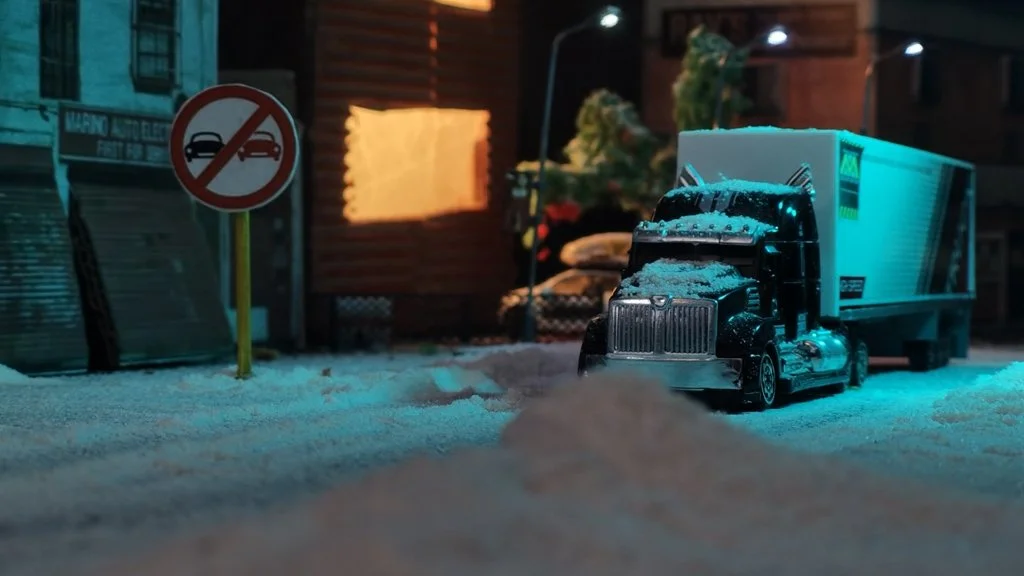
Then I write a synopsis, develop a treatment, prepare a production schedule and work out a budget. Before I build anything, I need to understand the world I'm creating. How does it look? Who lives there? What colours belong there? How should the audience feel when the film ends?
I work in different scales depending on the story, including 1:64, 1:18 and 1:12. Every scale creates new challenges. A street that looks realistic in one can suddenly look like a toy in another. Not that it’s a bad thing. But some things look different in different scale. Sometimes I even mix scales and make things seem bigger than they look using perspective and camera angles.
I build sets using whatever makes sense. Household materials become buildings. Paper becomes signs and backgrounds. My FDM 3D printer creates furniture, helmets and miniature props using existing models, before everything is painted and weathered to fit the world I'm creating.
My dog has probably helped build more movie sets than he realises. We'll be out for a walk and I'll spot a broken piece of plastic or an interesting object lying on the ground. Most people walk straight past it, I'm already imagining it as part of a spaceship. People see trash. I see props.
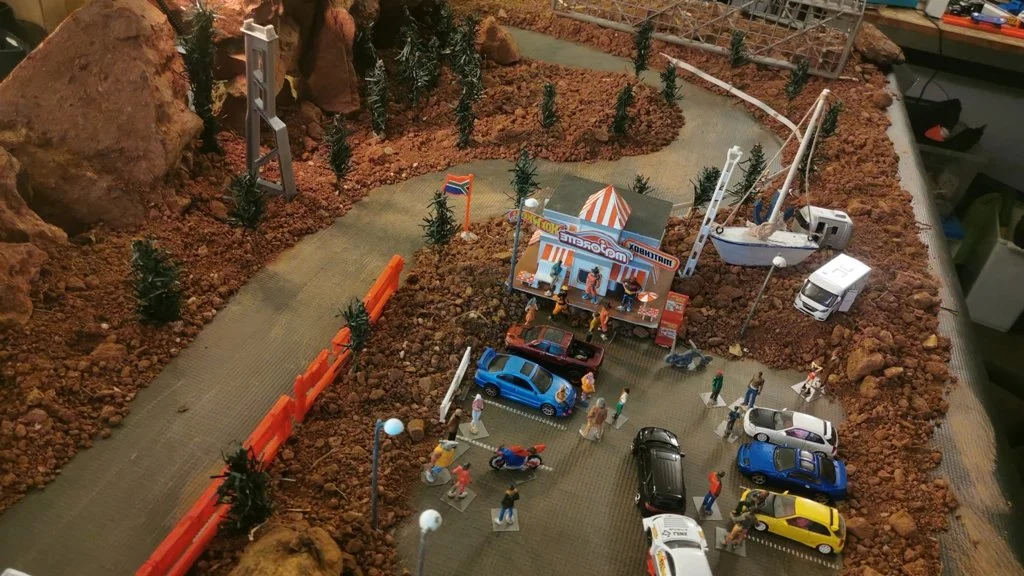
Working independently means every film becomes a complete production. One minute I'm painting scenery, the next I'm checking a 3D print, designing graphics in Photoshop, editing out rigs from photographs or putting everything together in DaVinci Resolve. Green screen expands the physical sets, while editing, colour grading and post-production bring the final story together.
It really is full-on filmmaking: Writing, production design, art direction, graphic design, character development, set building, painting, cinematography, animation, editing, marketing, distribution. It all makes part of the stop motion filmmaking process.
Because I do almost everything myself, projects take time. Every film is self-funded, from equipment to filament, paints, software and production costs. I learned every part of the process through trial and error, and one lesson keeps coming back.
Creativity usually starts where the budget ends. Sometimes the answer isn't buying another tool. It's finding a better way to use the ones I already have. That’s the motto here.
Animation itself demands a different kind of patience. Move a character. Take a frame. Move it again. Take another. Repeat hundreds even thousands of times. A scene the audience watches in five seconds might have taken me an entire day to create.
I also collaborate with voice-over artists and musicians who compose music, and I often use professional sound libraries to build each film's sound effects.
When the film is finished, the work isn't. There are festival submissions, marketing, social media and distribution through YouTube and other social like Instagram. Making the film is only part of the journey. Finding its audience is another challenge.
But, one project that means a lot to me sits outside filmmaking itself. It’s called the Stop Motion Artist Map. I created this global directory to help connect stop motion artists around the world. It’s free, anyone can use it and join by filling in a simple Google form, creating a growing directory / network of independent animators, puppet fabricators, set builders and rig & armature makers who can discover, support and inspire one another.
To join, you can Google for the Stop Motion Artists Map, or message me directly via Instagram. I’ve also included links to both the interactive map and the submission form so anyone interested can explore it or add themselves to the stop motion map.
Remember... K. E. E. P - P. U. S. H. I. N. G
Stay CreativO.
Son of Antonio.
- Victor Oliveira (StopMoVic)
Bio:
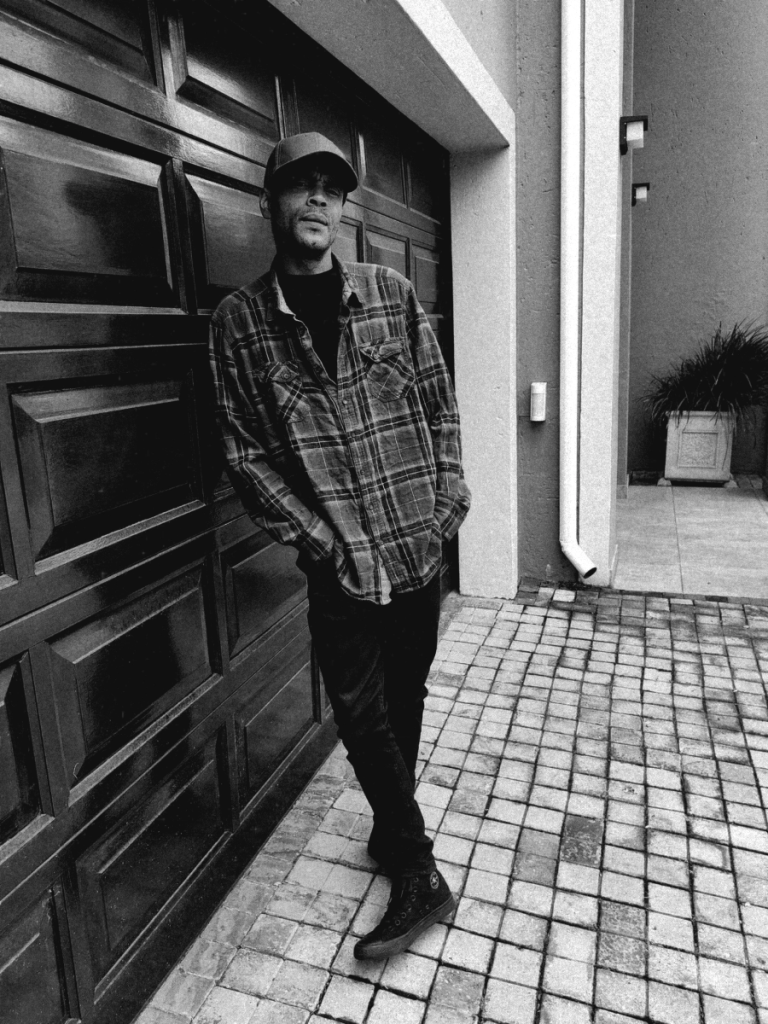
Victor Oliveira is an independent stop motion filmmaker and photographer from South Africa, creating under the name Stopmovic. A self-taught artist, he writes, designs, builds and animates his films from his home workshop, combining miniature set construction, practical effects and storytelling to create handcrafted stop motion animations. His work has been featured at local film festivals, and he also created the Stop Motion Artist Map, a community project that connects stop motion artists around the world.
Follow on: YouTube / Instagram
