Long before streaming playlists and algorithmic recommendations, horror found its way into your ears through a power chord and a scream.
Horror and rock music have always had a thing for each other. Both traffic in transgression, both thrive on the visceral, and both have spent decades making parents deeply uncomfortable. The crossover was inevitable. What's surprising is how deep it goes and how far back it starts.
This isn't a complete history. It's just some of the artists who actually mattered and will continue to influence the genre.
Screamin' Jay Hawkins: Where It Actually Started
Before Alice Cooper, before KISS, before anyone else on this list, there was Screamin' Jay Hawkins rising out of a coffin on stage in 1956 performing "I Put a Spell on You." He wore a bone through his nose, carried a skull named Henry, and delivered a performance so unhinged that the song was banned from radio in several markets for being too suggestive.
He was doing horror theater on a rock and roll stage nearly two decades before it became a genre. Nobody gave him enough credit while he was alive, nor does the genre fully acknowledge him today. Every theatrical horror performer from Cooper onward owes Hawkins something.
Alice Cooper: The Godfather of Shock Rock
The band Alice Cooper, fronted by the man who eventually took the name as his own, emerged from Detroit in the late 1960s with something nobody had quite seen before: elaborate theatrical stage shows featuring guillotines, fake blood, electric chairs, boa constrictors, and a character that was equal parts horror villain and rock star. David Bowie came to their shows when he was still a mime artist and told his band that what Cooper was doing was what they needed to do. KISS called Cooper's people to find out where to buy stage makeup.
Cooper has cited The Exorcist as a film that genuinely unsettled him, noting its power came from something deeper than spectacle. That understanding, that real horror operates on the soul rather than the intellect, runs through everything he built. He wrote "He's Back (The Man Behind the Mask)" as a tribute to Jason Voorhees for Friday the 13th Part VI. He appeared in horror films. He appears at horror conventions. The man never broke character because for him there was never a character to break.
KISS: Horror as Comic Book
KISS were not a horror band in any meaningful thematic sense. They didn't write songs about monster movies or name albums after B-movie villains. What they did was take Alice Cooper's theatrical blueprint and push it into something more specifically terrifying for a different reason: pure spectacle.
Gene Simmons spitting blood, breathing fire, wearing seven-inch platform boots and calling himself The Demon. Paul Stanley, Ace Frehley, Peter Criss: four people who looked like they had crawled out of a nightmare and then decided to play arenas. To a generation of kids in the early to mid-1970s, KISS were genuinely frightening before they were exciting. That fear was the gateway.
They blueprinted the idea that a rock band could be a horror franchise, with characters, mythology, merchandise, and a visual identity as immediately recognizable as any film monster. Every theatrical metal band that followed owed KISS the template even when they didn't acknowledge it.
They also took rock merchandising to heights nobody had attempted before, and some of it leaned directly into horror territory. KISS-branded lunch boxes, pinball machines, comic books printed with the band members' actual blood mixed into the ink, and perhaps most memorably, an officially licensed “KISS Kasket”. Yes, it’s a coffin…that also functioned as a cooler. You could store beer in it at a party and be buried in it later. Gene does love his merch.
Black Sabbath / Ozzy: Horror as Atmosphere
The story goes that Geezer Butler noticed a crowd gathering outside a theater showing a Boris Karloff horror film in the late 1960s and had a thought: people will pay money to be frightened. Why can't music do that? Genius!
Black Sabbath became the answer. Not through costumes or theatrics but through sound itself. That Sabbath sound…the riff that opens the title track of their debut album is one of the most genuinely unsettling (and perfect) sounds in rock history. More metal heads will credit Black Sabbath with making them metal heads than any other single band. They invented a genre and the genre never fully escaped their shadow.
Ozzy Osbourne's solo career after leaving Sabbath in 1979 deepened the horror connection further. Dubbed the Prince of Darkness, he leaned into the occult imagery and theatrical excess that Sabbath had pioneered and pushed it further. The bat incident at a Des Moines concert in 1982 became one of rock's most infamous moments: a fan threw a bat onstage, Ozzy assumed it was a rubber prop, bit its head off, and discovered mid-crunch that it was very much real. He was rushed for rabies shots immediately after the show. That story may horrify you or make you laugh…or both.
That incident became a lightning rod. If parents and conservative groups were already nervous about heavy metal's occult imagery and horror-soaked lyrics, Ozzy literally biting the head off a live animal on stage didn't exactly help his case. The 1980s saw an aggressive campaign from conservative Christian organizations and parent groups targeting heavy metal as a gateway to satanism and moral corruption. The PMRC hearings in 1985 brought Dee Snider, Frank Zappa, and John Denver (yeah, that’s quite the trio…too bad they didn’t record an album) to Congress to defend rock music against censorship. Ozzy was sued by parents who blamed his music for their son's suicide. Judas Priest faced a similar lawsuit over subliminal messages allegedly embedded in their records. None of it stuck legally, but it proved something interesting: the horror imagery in rock music was landing exactly as intended. People were genuinely disturbed by it. Mission accomplished!
The Misfits: Horror as Religion
Nobody went further. Nobody has been more influential. And nobody's skull logo (known as "the fiend," or "the crimson ghost") has appeared on more t-shirts worn by people who have never actually listened to the music…for better or for worse.
Glenn Danzig formed the Misfits in Lodi, New Jersey in 1977 and proceeded to build an entire mythology around B-movies, old school horror comics, and Famous Monsters of Filmland magazine. Every single song they ever recorded has a horror theme of some kind, whether it's a direct reference to a film, a book, UFO culture, or the darker corners of pop culture. The band named their record label Plan 9 after Ed Wood's infamously terrible (yet awesome) Plan 9 from Outer Space. Their logo came from The Crimson Ghost, a 1946 film serial. Their song 'Vampira,' a tribute to the original horror hostess Maila Nurmi, is one of the more overlooked gems in their catalog. Their haircuts were inspired by Eddie Munster. The commitment to the horror genre was total and it never wavered.
The influence is staggering. Metallica covered them a few times which helped introduce new fans to their music. Cliff Burton had the fiend skull tattooed on his arm. Rob Zombie, My Chemical Romance, Green Day, and virtually every punk or metal band that followed cited the Misfits as foundational.
Glenn Danzig and Jerry Only's feud after the 1983 breakup became one of rock's longest-running legal battles. The Michale Graves era that followed, two albums in the mid-to-late 90s, got more hate than it deserved. A lot of that hate was simply because he wasn't Glenn, which isn't really a fair criticism. Those albums hold up better than their reputation suggests. Eventually Danzig and Only worked past their differences, or decided the money was worth it, and reunited for touring that reminded everyone why the original lineup mattered. The music survived the drama, which is all that counts.
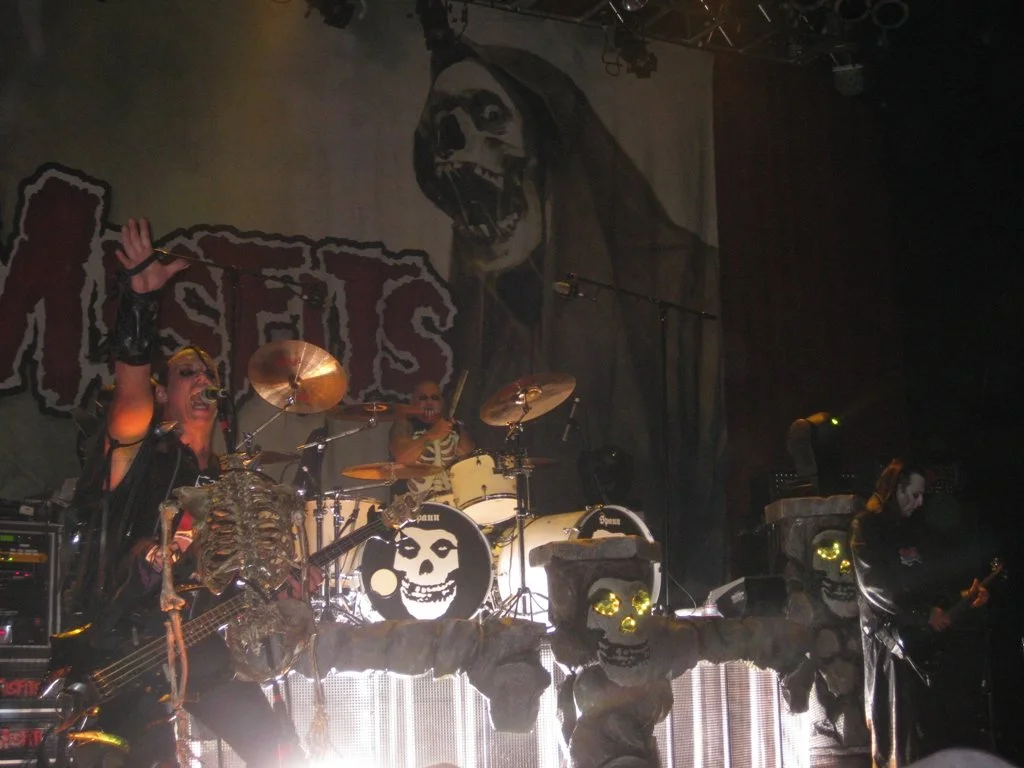
Photo Credit: IllaZilla (2012)
The Cramps: Horror as Rockabilly
Where the Misfits went fast and loud, the Cramps went slow and slithery. Lux Interior and Poison Ivy built something they called psychobilly, fusing 1950s rockabilly with horror imagery and a genuine love for the cheapest, tackiest horror films ever made. Their shows were performances, their records were dispatches from a universe that existed somewhere between a carnival sideshow and a midnight movie theater…and it was a blast.
The Cramps understood something the harder bands occasionally missed: horror is also funny. The B-movies they loved weren't always trying to be scary. They were often trying to be lurid and sensational and slightly ridiculous, and the Cramps leaned into that with full commitment. Songs like "Human Fly," "I Was a Teenage Werewolf," and "Goo Goo Muck" are simultaneously funny and unsettling in exactly the way the best horror films are.
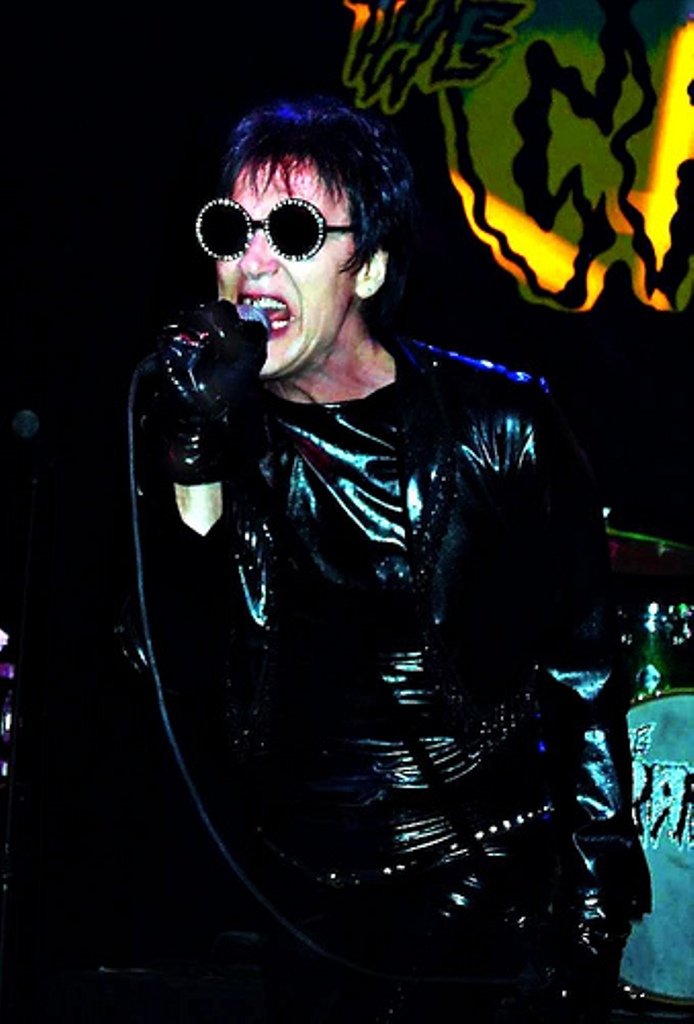
Photo Credit: Minervaste (2004)
White Zombie / Rob Zombie: Horror as Total Experience
The name itself tells you everything. White Zombie was named after the 1932 Bela Lugosi film, one of the earliest zombie movies ever made, and the horror obsession ran through everything they did. Rob Zombie built the band's sonic identity around samples lifted directly from horror films, monster movies, and exploitation cinema, layering them into a sound that felt like a drive-in theater had been converted into a mosh pit.
I was a film school kid in New York when La Sexorcisto: Devil Music Vol. 1 blew up in 1992 and I was immediately hooked. The image, the music, the videos: all of it was completely raw and completely committed. I ran into Sean Yseult and Jay Yuenger in a dive bar after a show and they couldn't have been nicer, which made it all even better. If you're a fan of the White Zombie era specifically, Sean's book I'm in a Band is a genuinely great look back at those years and worth a read.
After they disbanded, Rob's solo work never quite grabbed me the same way. Something about White Zombie's raw energy didn't survive the transition to his solo arena rock. That's not really a criticism so much as an acknowledgment that some things work better when they're more “gritty”. Rob went on to write and direct a bunch of horror films, with very mixed reviews. Like them or not, they do have that same rawness as his early music did. When you watch them you know they were made by someone who lives and breaths horror.
Marilyn Manson: Horror as Provocation
Love him or not, and plenty of people firmly chose not, Marilyn Manson understood something important about horror's cultural function: it exists to disturb the comfortable. His entire career was built on that premise, drawing directly from Alice Cooper's theatrical playbook and pushing it into territory that made Cooper himself look relatively approachable.
The name alone, combining America's sweetheart with its most notorious killer, told you exactly what he was doing. The albums, the videos, the congressional hearings, the parental outrage: all of it was horror theater operating at a cultural scale. Antichrist Superstar and Mechanical Animals are genuinely unsettling records that use horror's tools, transgression, shock, the uncanny, to make points about American culture that actual horror films were rarely ambitious enough to attempt.
Some Others Worth Knowing
Some names that deserve mention even if full entries would double the length of this piece.
King Diamond built an entire career around horror concept albums, theatrical makeup, and falsetto vocals that could peel paint off a wall. His albums are horror films you listen to, each one a complete narrative with characters, acts, and endings that would make any screenwriter envious.
Iron Maiden never claimed to be a horror band but their mascot Eddie, who has appeared on every album cover since 1980 in increasingly elaborate incarnations, is one of the great horror art franchises in music. The covers alone, painted primarily by Derek Riggs, are worth a separate article entirely. As a kid in the 80’s, I was a fan of the album covers way before I was a fan of the music.
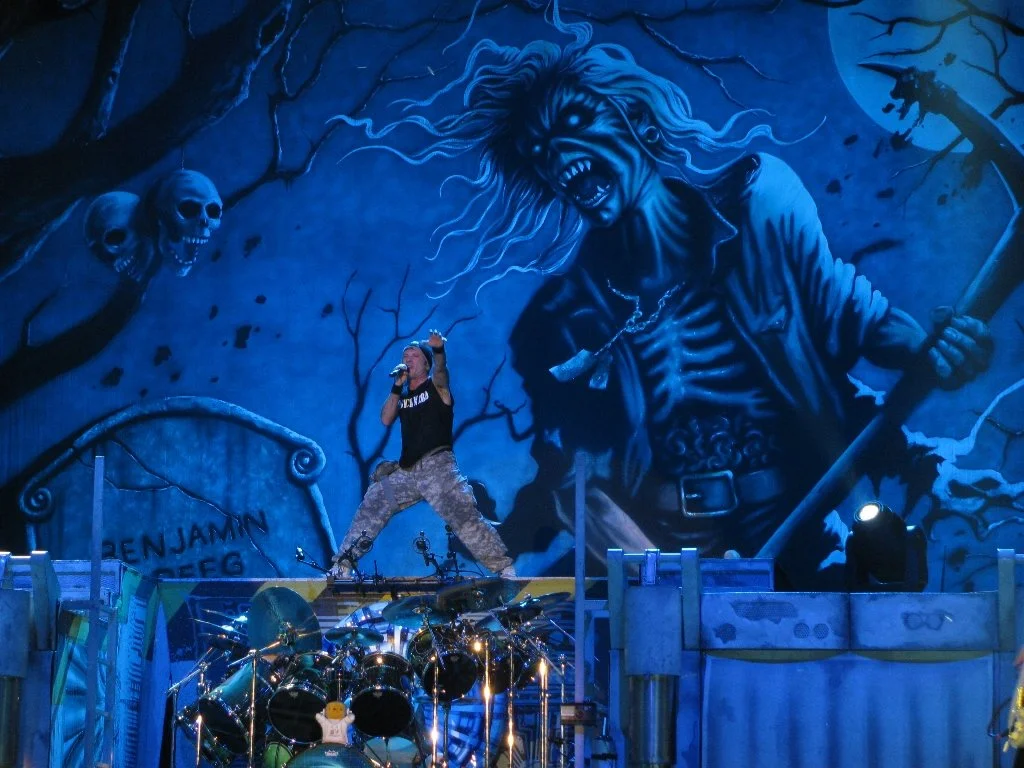
Photo Credit: Ceedub13 (2010)
GWAR deserve a mention purely for their live shows, which were less concerts than theatrical gore events. Fake blood, elaborate costumes, giant props, audience members getting drenched in various substances. Horror as participatory experience. Nobody has ever out-GWARed GWAR.
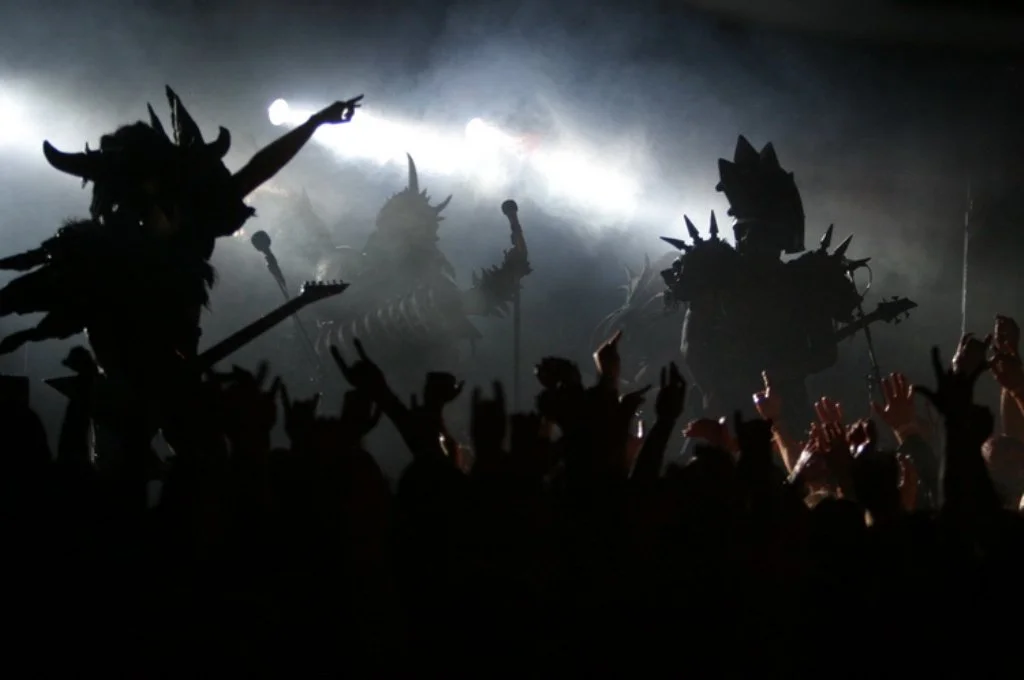
Photo Credit: Mark Marek (2005)
And two Frankenstein footnotes worth knowing (mainly because I love anything Frankenstein): Eddie Van Halen's custom built Frankenstein guitar, assembled from mismatched parts in his parents' garage, was named for the monster and the metaphor was intentional. And "Frankenstein" by The Edgar Winter Group from 1973, an instrumental built from stitched-together recorded pieces, took its name from the same source for the same reason. Horror metaphors run deeper in rock music than most people realize.
The Legacy
Horror gave rock music permission to be theatrical, and in some cases extreme. Rock gave horror a new delivery mechanism, one that could get into your ears without requiring a theater ticket or a late-night TV slot.
The relationship runs deeper than just bands borrowing horror's imagery. Metal and punk have been showing up on horror soundtracks for decades, from Alice Cooper's contribution to Friday the 13th Part VI to the Ramones writing "Pet Sematary" directly for the film of the same name. Anthrax wrote songs inspired by Stephen King novels. Dokken's "Dream Warriors" became so intertwined with A Nightmare on Elm Street 3 that you can't hear one without thinking of the other. George A. Romero even directed the Misfits' "Scream!" music video, which is about as official a union of the two worlds as you can get, and I have to mention one of my favorites (both movie and soundtrack), The Crow.
Horror movies and rock music go together like peanut butter and jelly. Not sure who said it first, but that quote’s been used a lot because it’s true.
About The Author
Mike Meyerson is the founder of FEELING CREATIVE?, and has been a horror nut ever since Alien and The Exorcist gave him nightmares as a boy. Currently located in NY’s Hudson Valley Region, is always looking to build the network, find a new cool trail to hike and a new horror movie to watch.
Read Mike’s other articles - HERE.