
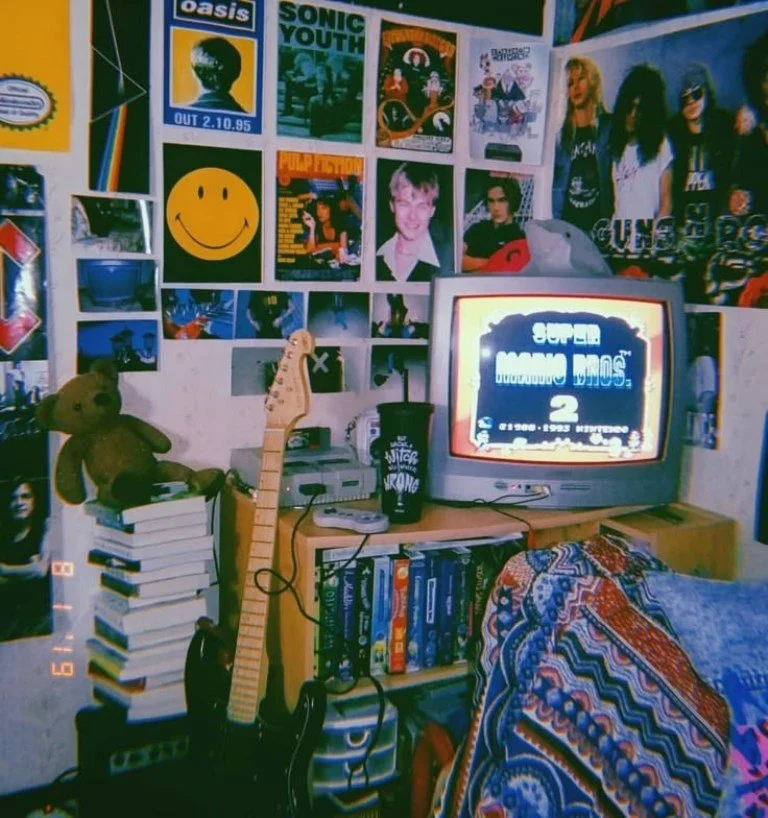
There was a time when music subcultures died out, burning brightly for a short time before collapsing in on themselves and turning into an odd relic of a bygone era.
Music scenes would exist geographically. Nirvana and the Sub Pop Seattle scene created grunge, New York birthed hip hop in the Bronx and hardcore punk at CBGB's, Mayhem and Darkthrone created a whole intense visual style through black metal in their home of Norway. You would be immersed in a culture and a scene by being there, and an outsider looking in if you weren't.
They were something that was discovered through your older brother or sister, through dusty record stores, through photocopied zines you found in that weird bookstore down an alleyway, or hazily flipping through midnight music TV, or that one outcast at school that dressed like they came from another planet led by Marilyn Manson and dominated by eyeliner and black nail polish.
Entire aesthetics were tied to physical spaces and moments in time. If you missed them, you missed them.
Punk fragmented and faded into the background. Grunge flared up and quickly burned out under its own weight. Emo mutated from underground angst to a mall-brand parody. Goth faded in and out of public consciousness depending on which decade was trying to pretend sincerity was embarrassing.
Every generation would devour and dispose of new subcultures, and then be told that it was dead.
But somewhere along the line the internet blew the old system to bits. Now, nothing actually dies anymore.
Every Scene Everywhere All at Once
A teenager today can access The Cure, Joy Division, Alice in Chains, My Chemical Romance, Siouxsie Sioux, and Deftones, all within the same hour. They can fall down the rabbit hole of obscure Tumblr archives from 2009, watch a grainy live punk show from Black Flag in 1983, sift through TikTok edits romanticizing Y2K-era mall goth and Myspace-era emo culture, and buy a vintage Ramones band tee from somebody three continents away.
All of the scenes now have the ability to exist simultaneously. Not just as museum relics, but as living, breathing things. People can feel connected to a culture, despite being on opposite sides of the globe, and feel like they're a part of a tribe, even if no one in their day-to-day life is.
That’s the part I love about internet culture today. The internet didn't disconnect us from subcultures and each other nearly as much as people predicted that it would. In a weird kind of a way, the internet kept them alive and preserved them. Amazingly, I think it's actually amplified them.
As the operator of a rock aesthetic jewelry brand online, I've seen this shift first-hand. A lot of my daily work involves observing the incredibly strong emotional attachments people seem to have to certain aesthetics, symbols, bands, and visual identities. The thing I see that I find most fascinating isn't just the nostalgia (though that's definitely a strong component), it's the sense of inheritance.
A teenager discovering nu-metal through Korn or Slipknot for the first time today often experiences the music with the same emotional intensity people did decades earlier. That anger, alienation, and outsider energy still translates just as powerfully.
What you see now isn't just young people copying existing aesthetics, but resurrecting, remixing and transforming them for themselves to create new identities built on existing fragments of past subcultures.
The coolest part of all of this to me is that they don't have to abandon one scene for another when the tide inevitably turns towards a new, cool thing, and there’s something uniquely modern about being able to do that.
Everything exists at once now.
Beyond Aesthetics, The Internet Became an Archive of Emotion
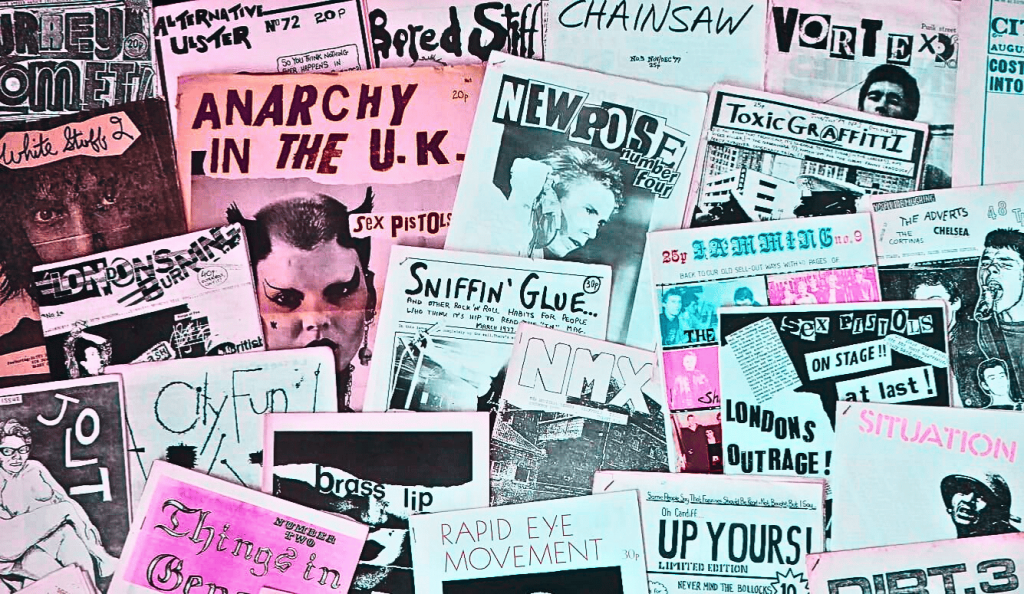
Before social media algorithms came to fully dominate internet life, finding a subculture required effort online. You had to hunt for them.
You found bands through forum signatures, and scratched CD-Rs filled with low-bitrate mp3s downloaded from Limewire. You constructed your persona from disparate pieces of information. Even fashion was hard to acquire unless you lived in a major city or knew the right people.
This difficulty gave subcultures a certain mystique.
But today? Access is immediate. A 15 year old has the capacity to discover Japanese visual kei style, Scandinavian black metal iconography, and the fashion and photography of the 90s grunge scene and the 80s deathrock scene before they even eat dinner. The past decades themselves are searchable moods.
Whilst this might seem surface level, as if the internet just became an archive of visual aesthetics, it really became a place where emotions are re-discovered.
It's not just about rediscovering vintage styles, but about rediscovering feelings: alienation, rebellion, romance, anger, melancholy.
These aesthetics endure because the emotions behind them endure. A leather jacket is never just a leather jacket. Rock n roll skull rings aren't just an edgy accessory. A faded band tee isn't just a t-shirt.
Alternative jewelry became part of the emotional language of these scenes. Rings, chains, spikes, crosses, padlocks, bullets, bones, and oversized biker jewelry worn by Motörhead and other heavy metal musicians and fans, all function like wearable symbols. A silver ring shaped like a skull often says more about a person’s internal world than mainstream fashion ever could.
These items become emotional shorthand. They signify "this is who I am".
How the Internet Became the New Underground
Online, aesthetics are exploding. Not because the internet has replaced real communities entirely, but because it removed geography from the equation. Ten goths in your high school were required to create a goth scene, but on the internet all you need is wi-fi. This interconnectedness has changed everything.
A teen living in a conservative rural town can now access communities, styles, music and an entire spectrum of identities that weren't visible two decades ago. The internet gave isolated people a sense of belonging and a way to express themselves, often for the first time.
This is why subcultures remain alive. Subcultures once had to be physically localized, but the internet acts like life support for subcultures. You may no longer be able to find people that participate in your scene locally, but thousands of others can still be found in cyberspace.
They're there, and they continue the work: posting photographs, sharing music, creating fan videos, celebrating obscure bands through video essays on YouTube, uploading scans of old magazines. They keep subcultures and aesthetics alive by turning them into digital folklore.
There's a sense of permanence on the internet, so scenes never disappear when they've been preserved with a digital footprint and a still-rabid fanbase.
Everyone Is Nostalgic for Something They Never Live
Traditionally, fashion trends unfolded in cleaner cycles, with clearly defined periods of popularity and then decline, before being revived decades later through nostalgia. Online culture has completely disrupted that traditional cycle.
People are capable of being nostalgic for eras in which they have not even lived. In fact, it seems to be one of the defining emotional experiences of internet culture today.
A teenager born in 2010 can genuinely romanticize the era of 90s Seattle grunge through scratchy VHS live show footage on YouTube, or mid-2000s emo culture through blurry DSLR concert photos on Tumblr, with startling emotional sincerity.
Older generations sometimes dismiss this as imitation or trend-chasing, but I think that misses the point.
People are searching for emotional texture. Modern online life often feels incredibly polished, optimized, and sterilized of authenticity. Alternative scenes often give people what they are searching for: something messy and more human, and something emotionally specific.
Grunge taps into a sense of exhaustion and disillusionment, punk is rebellion and resistance in an explosive package, goth carries a feeling of melancholy and romanticism, and emo allows for catharsis within emotional turbulence.
These trends and aesthetics never truly vanish because they are so strongly attached to enduring human emotions.
They continue to surface through every generation because every generation goes through alienation, anxiety, heartache, rage, and the desperate urge to differ from their surroundings.
These aesthetics are a vessel for human expression, so they never fully vanish.
TikTok Didn't Ruin Subcultures, It Mutated Them
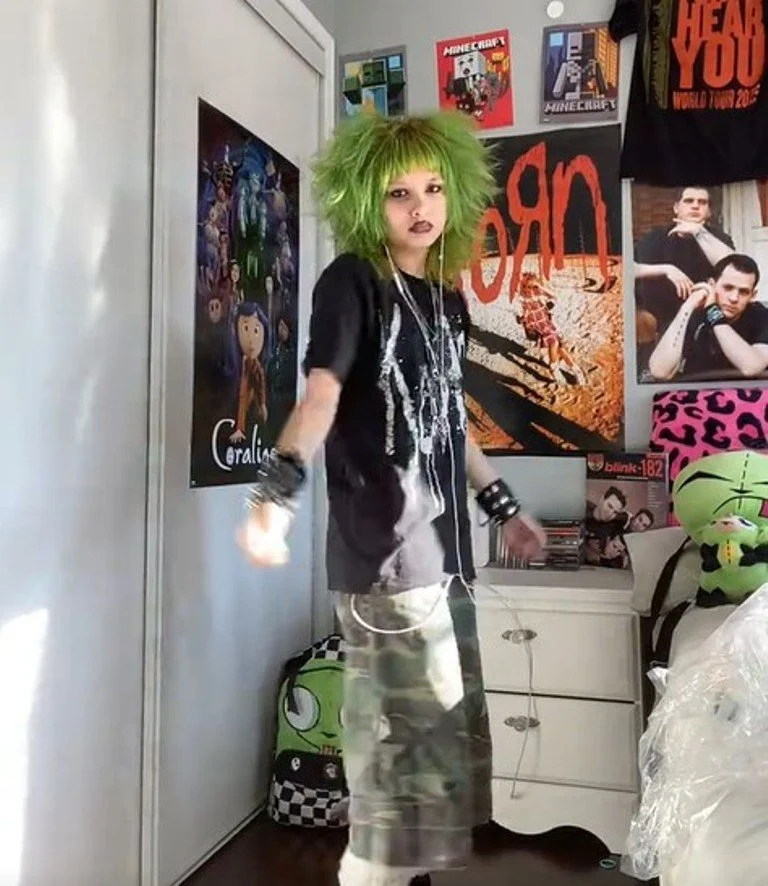
Yes, the internet has, and continues to, accelerate the commodification of subcultures, but in many ways, platforms like TikTok have acted as gateways to expose people to more authentic scenes and self-expression, offering glimpses into the broader world of goths, punks, metalheads, and more.
A discovery of a certain aesthetic and subculture can very easily lead to a deeper discovery of the associated music, photography, artwork, or historical narrative behind it. And that exploration is everything.
Of course, there will always be casual participants alongside devout followers of any scene - but that has never not been the case. The internet simply sped up discovery. This meant aesthetics could move faster, mutate more quickly and blend into one another far more seamlessly.
Today, there are hybrid looks using a pastiche of different styles and aesthetics, oftentimes clashing intentionally. This type of transgression annoys purists, of course, but truthfully, subcultures have always involved collision. Punk was born out of pieces of existing cultural trends, and grunge was no different.
In this context, the internet has simply facilitated the rapid blending and remixing of aesthetic tropes at an accelerated rate.
Fashion as a Form of Self-Discovery
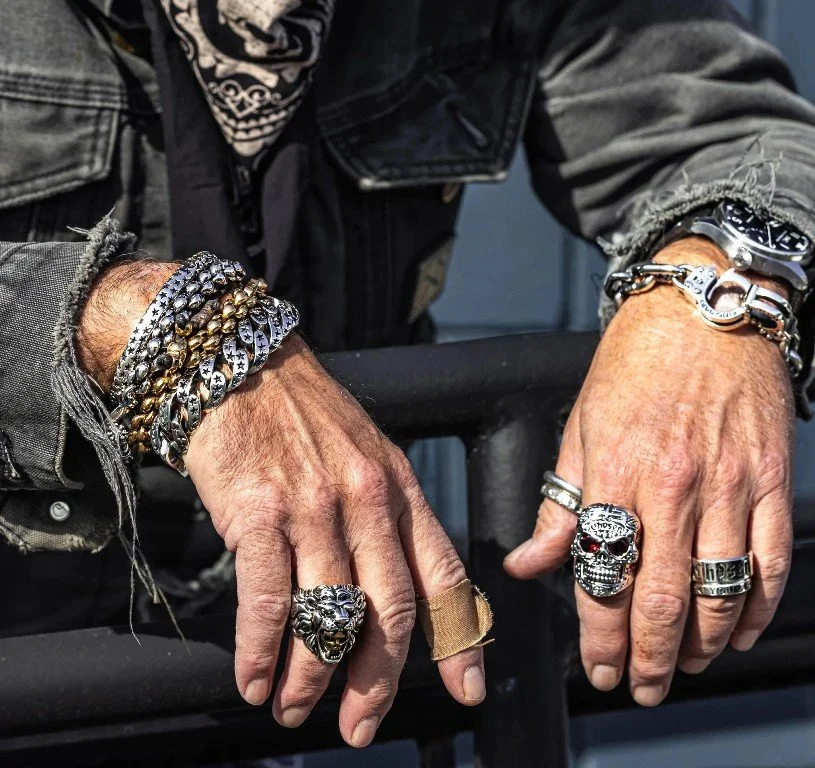
Many people, especially young people, first discover themselves through fashion. Trying on a style through band tees, rings, chains, heavy boots, and leather jackets is often part of trying on a new version of yourself, until you find what feels most representative of you as a person, or the person you want to become.
The adoption of an alternative aesthetic grants us permission to reject the default identity given to us. Online culture has amplified this exponentially, allowing people to develop and display the identity that feels the most "you", even if it goes against the mainstream grain.
Instead of needing approval from a local scene, people can now build identity more independently. This process can sometimes be messy, sometimes superficial, sometimes deeply meaningful. Sometimes all three at once.
Why These Scenes Continue to Feel Emotionally Resonant
Many people outside of alternative subculture are often dismissive of the degree to which aesthetics become emotionally meaningful.
These people are trained to view anyone falling out of line as distasteful, or see fashion as inherently shallow, in part because mainstream fashion very frequently is. However, in alternative cultures, an aesthetic can act more like emotional armor, or like a visual autobiography.
Someone that chooses to wear primarily black for many years isn't doing it because black has become fashionable. Someone who continues to wear vintage Metallica t-shirts into their thirties didn't miss the latest fashion memo. These choices become so intertwined with a person's identity that they begin to symbolize memories, values, eras, moods, communities, and past lives.
I've personally seen people get visibly emotional over a certain ring, jacket, or band logo due to memories of concerts, friends, loves, a specific time in their lives, or selves that they don't want to have fade into the distance and forget.
This is the exact opposite of trendy, consumerist behavior. Trends are emotionally shallow and disposable. Subcultures are emotionally resonant and long-lasting.
We No Longer Exist in a Monoculture
The primary reason why subcultures endure today is the dissolution of monoculture. Where there once was a cultural consensus on fashion, music, and mainstream discourse, where everyone watched the same shows, read the same magazines, and listened to the same radio stations, there now exist countless competing and coexisting niche cultures, with everyone living on separate algorithms to each other, tailor-made for them.
This fragmentation means subcultures can now exist indefinitely within their own ecosystems, rather than being dictated and obliterated by the mainstream.
Algorithms may be chaotic, but they're very good at finding people precisely what they are emotionally drawn towards. An individual with a predilection for dark fashion, post-punk, or vintage fashion quickly finds a tidal wave of related content. These algorithms constantly reinforce their chosen aesthetic and help them find and connect with others that feel the same, ensuring its longevity far beyond the dreams of former scene members from generations long-gone.
The Strange Intimacy of Shared Aesthetics
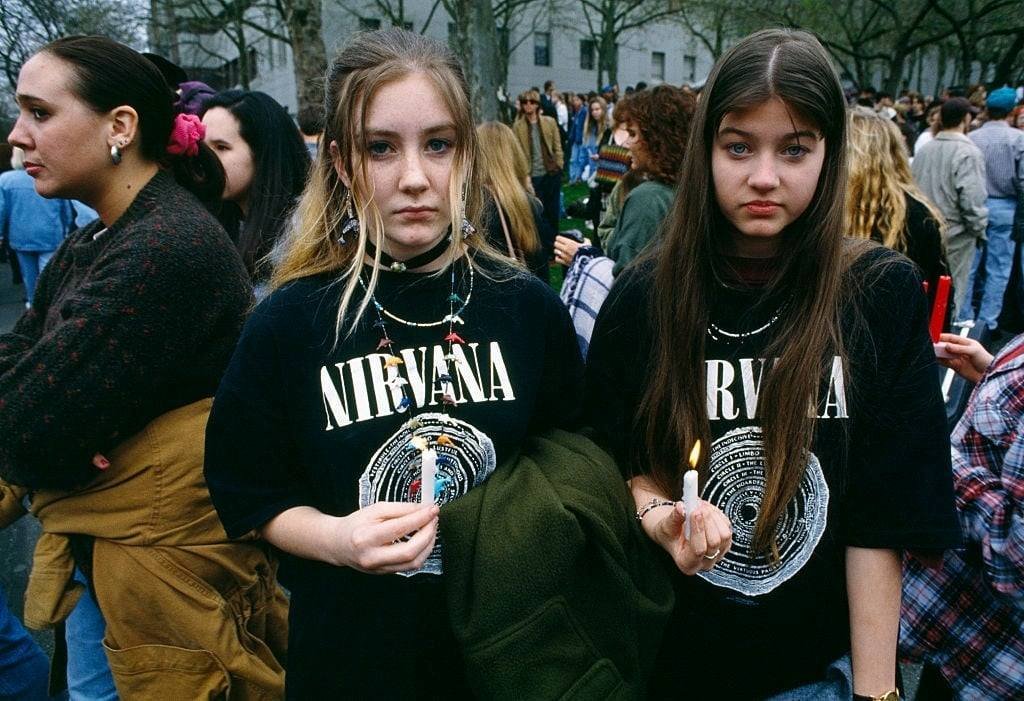
Ultimately, I think what keeps subcultures alive comes down to a fundamental human need for self-expression and feeling understood.
An alternative aesthetic offers a way for individuals to recognize each other. This recognition may be epidermal - a tattered and worn-in Nine Inch Nails shirt, a battle jacket covered in Slayer and Motörhead patches, a pair of stacked silver gothic rings against chipped black nail polish - but it communicates an instantaneous understanding about shared tastes, moods, cultural influences, and perhaps shared experiences, or even pain.
You pass someone in public and immediately understand something about them without even speaking. This need for immediate, visual understanding remains powerful, especially in hyper-digital culture.
While modern life can often feel disconnected, lonely, and emotionally barren, subcultures cut through the superficial by insisting on the specific - specific music, specific aesthetics, specific atmospheres.
That specificity creates belonging, and the yearning for belonging is timeless.
The Scene Never Dies
People still talk about subcultures as if they were historical periods - as though goth has ended, as though punk is dead, as though emo died in the 2010s.
The online realm has transformed subcultures to become less like trends and more like permanent cultural archives people can forever choose to enter at any time. That alters their life cycle fundamentally. Instead of fading with mainstream interest, they merely become dormant, shifting, and reforming elsewhere.
When a teenager in 2026 discovers Deftones through TikTok edits or Joy Division through black and white Instagram reels, they are still entering into the emotional ghost space of a past scene. A young adult who bases their wardrobe on distressed denim, post-punk, and the careful selection of silver jewelry is engaging in a visual conversation that had begun decades earlier.
The details evolve, the mediums change, and the aesthetics mutate, however, the underlying emotional currents remain incredibly consistent. The search for identity and community, and for modes of visual self-expression that cannot be explained verbally, never ceases.
Alternative subcultures continue to flourish, not because fashion repeats itself, but because human emotion is a shared experience that transcends trends.
So as long as we continue to feel a sense of alienation, nostalgia, romance, anger, disillusionment, rebellion, or emotional restlessness, coupled with a desperate urge for self-expression, alternative subcultures will always thrive and unite others online.
The scene will never entirely die anymore. It merely travels.
Recommended Reading: When Horror Met Rock: The Bands That Brought the Monster to the Stage
About the Author
That Rock Aesthetic is a brand specializing in rock ’n’ roll-inspired rings and jewelry for people who wear their personality on their hands. We’re for the ones that don’t follow trends, the ones that embrace the unconventional, and the ones that thrive on a little chaos.
Our pieces celebrate self-expression, nostalgia, and are a quiet rebellion against anything cookie-cutter. Most days, you’ll find us digging through old record collections, scrolling through obscure band merch and concert photos, and marveling at how one tiny ring can say more about you than words ever could.
Find our pieces at ThatRockAesthetic.com, and follow us on Instagram.
