
Why the Rule Works / The Month, in Four Moves / What Twelve Months of This Teaches You
A year ago I set myself a stupid rule: every month, one short film. Shot on my phone. Edited on my phone. No crew, no budget, no excuses. Twelve months later I have twelve finished films and the rule taught me more about editing than anything before it.
The constraint sounds like a gimmick. It isn’t. Constraints are the only honest teacher a solo filmmaker has, because nobody is standing behind you saying “that take is fine, move on.” The rule does that job instead.
Why the Rule Works
Most unfinished films don’t die from lack of talent. They die from open loops — footage that never gets looked at, edits that stay at “rough cut v3” forever, a final export nobody schedules. A monthly deadline closes every loop by force.
The phone part matters too, though not for the reason gear reviewers think. A phone doesn’t make your film better. It makes starting frictionless. The camera is in your pocket when the light turns good at 6:40 in the evening, and you don’t lose twenty minutes to batteries and lens choices. I shoot more because the barrier between “I see it” and “I’m recording” is about three seconds.
One person is the hardest part and the most useful. When you’re the director, the camera operator, the sound person, and the editor, you start shooting for the edit without realizing it. You hold the wide shot four seconds longer because you know you’ll need the breathing room in the cut. You record thirty seconds of room tone because future-you will curse present-you otherwise. Solo shooting builds an editor’s instincts into the person holding the camera.
The Month, in Four Moves
I don’t plan the month in detail. Detailed plans are where solo projects go to feel guilty. I run the same four moves every time, and they flex around whatever the film is.
Week one: shoot like a thief. I don’t do “shooting days.” I steal time — twenty minutes before dinner, a walk that becomes a location scout, a conversation I ask to record. The film’s subject gets picked fast, usually by the third day, because the alternative is a month of dithering. My only hard rule for the week: shoot everything twice. Not the same take twice — the same moment from two angles, or two different framings. Future-you in the edit will be grateful for the options, and grateful is a feeling you want to have about your past self.
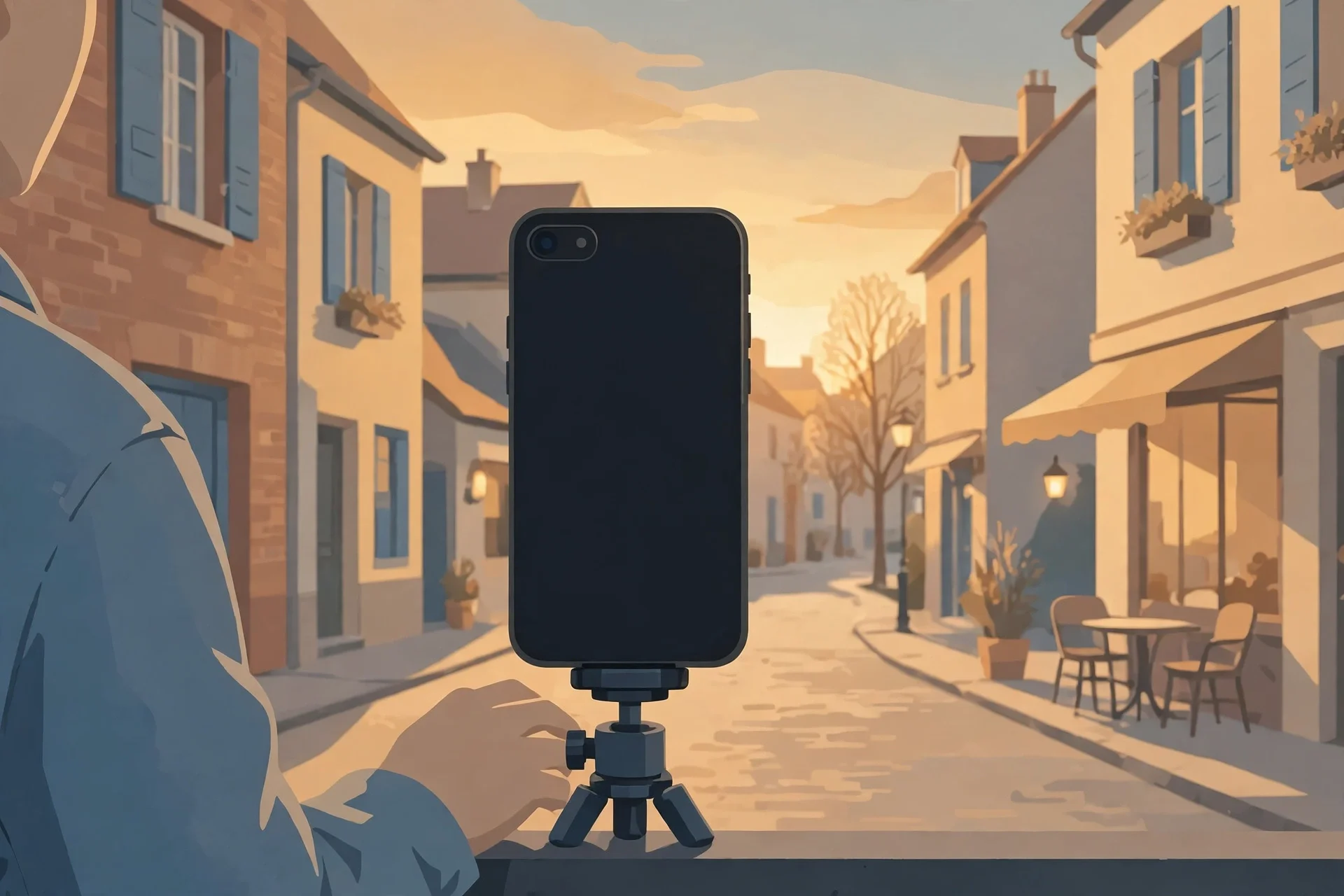
The whole crew fits in a jacket pocket.
Ingest day: the boring part that saves you. This is one evening, usually a Sunday, and it is the least glamorous and most important session of the month. Everything comes off the phone. Every clip gets a real name — not VID_20261004_184322, but “market-stall-closeup-hands” — and goes into three folders: YES, MAYBE, NO. The NO folder gets deleted. Actually deleted, not “kept just in case.” Keeping everything is how you end up with 400 clips and decision paralysis.
Then the selects reel: I string the YES clips in shooting order on a timeline and watch it once, no cutting. This is the film’s skeleton. If the skeleton doesn’t hold your attention, no amount of editing will fix it — and it’s better to learn that on ingest day than in week three.
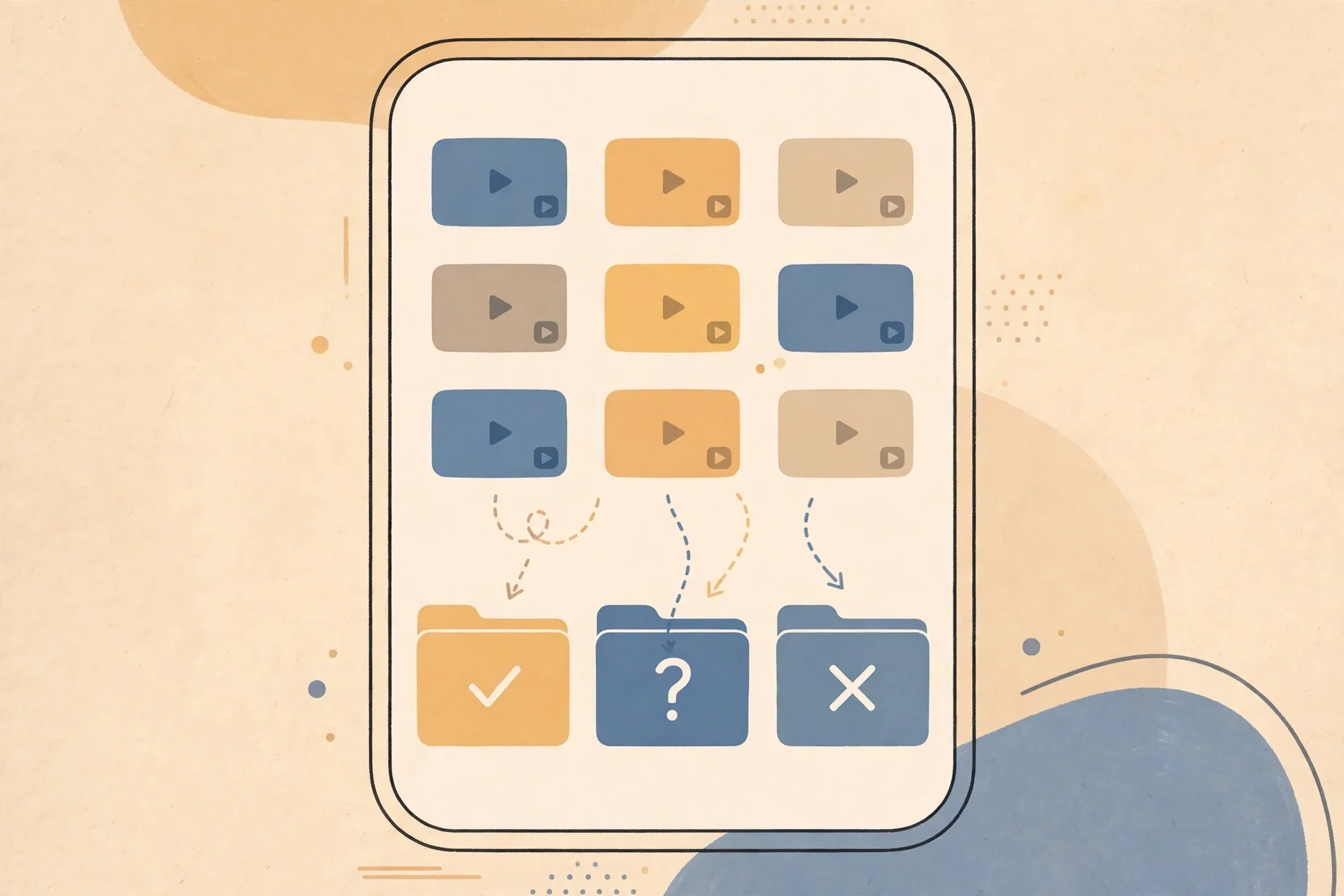
Ingest day: real names, three folders, no mercy.
Weeks two and three: the edit. Here’s the part nobody warns solo filmmakers about: editing your own footage is emotionally weird. You remember how hard a shot was to get — the waiting, the weather, the awkward asking — and that memory bribes you to keep shots that don’t serve the film. The monthly rhythm helps here. The deadline is close enough that sentimentality feels expensive.
I edit sound first, picture second. This is the single biggest upgrade I ever made to my work. Lay down the voice, the ambience, the music bed before you touch a single video cut, and the picture edits start making themselves — you cut to breaths, to beats, to pauses, and the film gets a rhythm that picture-first editing almost never finds. Dialogue buried under music is the most common amateur tell I see, and it disappears the moment you mix before you cut.
Music is the skeleton, not the decoration. I pick the track (or the silence — silence is a choice too) before the fine cut, and I cut the film to fit it rather than stretching music to fit the film. A three-minute track with a clear structure will organize your edit better than any storyboard.
Then the kill-darlings pass, which gets its own evening because it hurts. Every shot I love gets interrogated: does the film get worse without it? If the answer is no — even if the answer is “no, but it’s beautiful” — it goes. The rule of thumb I stole from a documentary editor years ago: the audience will never miss what they never saw.
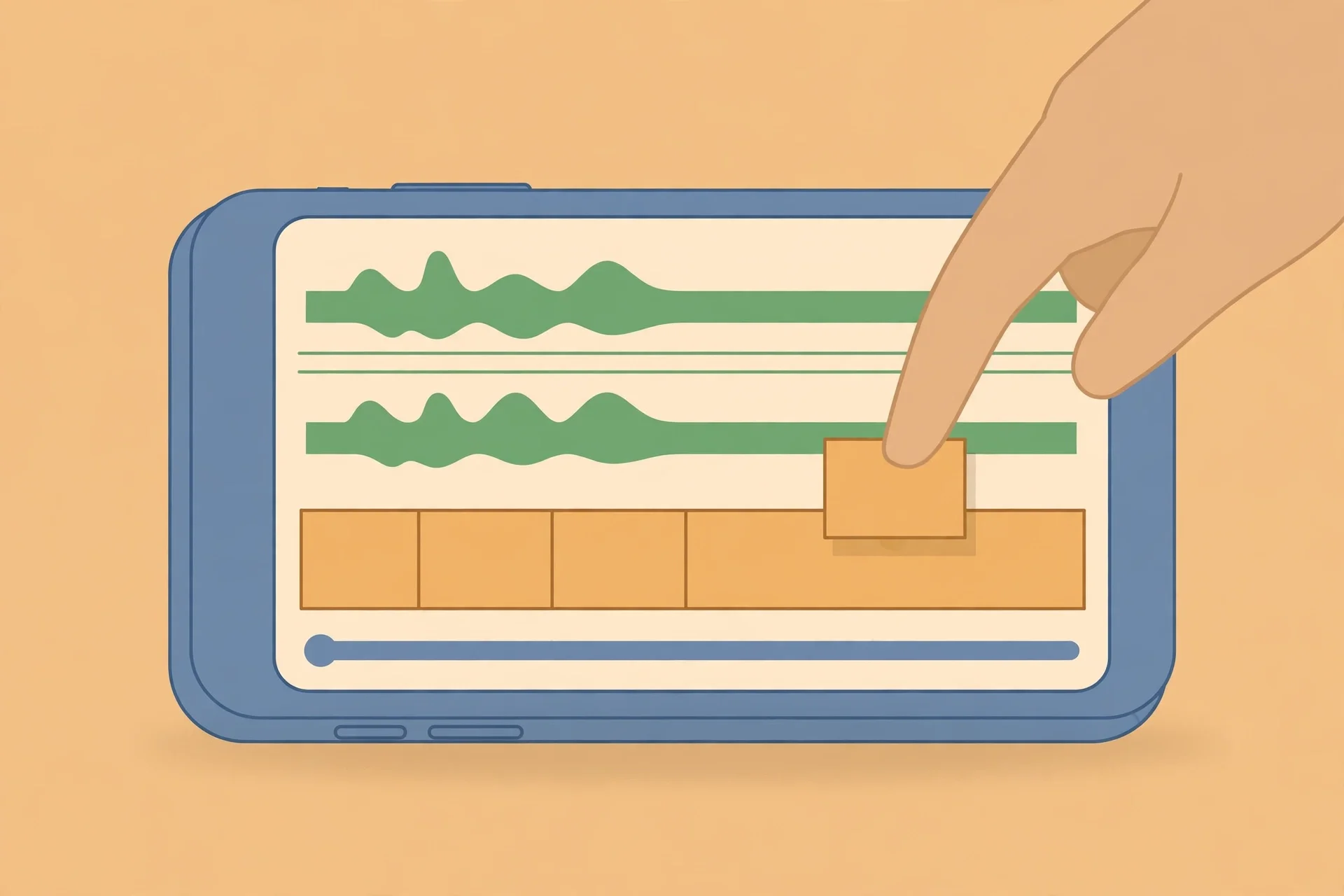
Sound first, picture second. The mix tells you where to cut.
Week four: finish like you mean it. The last week is for the things that separate “a video” from “a film”: color that matches across the morning and evening shoots, captions (always — most people watch muted first), a proper loudness pass so it doesn’t blast or whisper next to other videos, and the export checklist. Mine is taped, mentally, to the inside of my skull:
Watch the whole thing on a different screen than you edited on.
Watch it once with the sound off — the pictures have to carry it.
Watch the first ten seconds like a stranger — would you keep watching?
Check the captions against the actual audio, not your memory of it.
Export, then watch the exported file, not the timeline. The export is the film.
Only then does it go out. Monthly, without fail — even the months where the film is just okay. Especially those months. Shipping an okay film teaches you more than perfecting one forever, because the next month starts whether you’re ready or not, and the lessons compound.
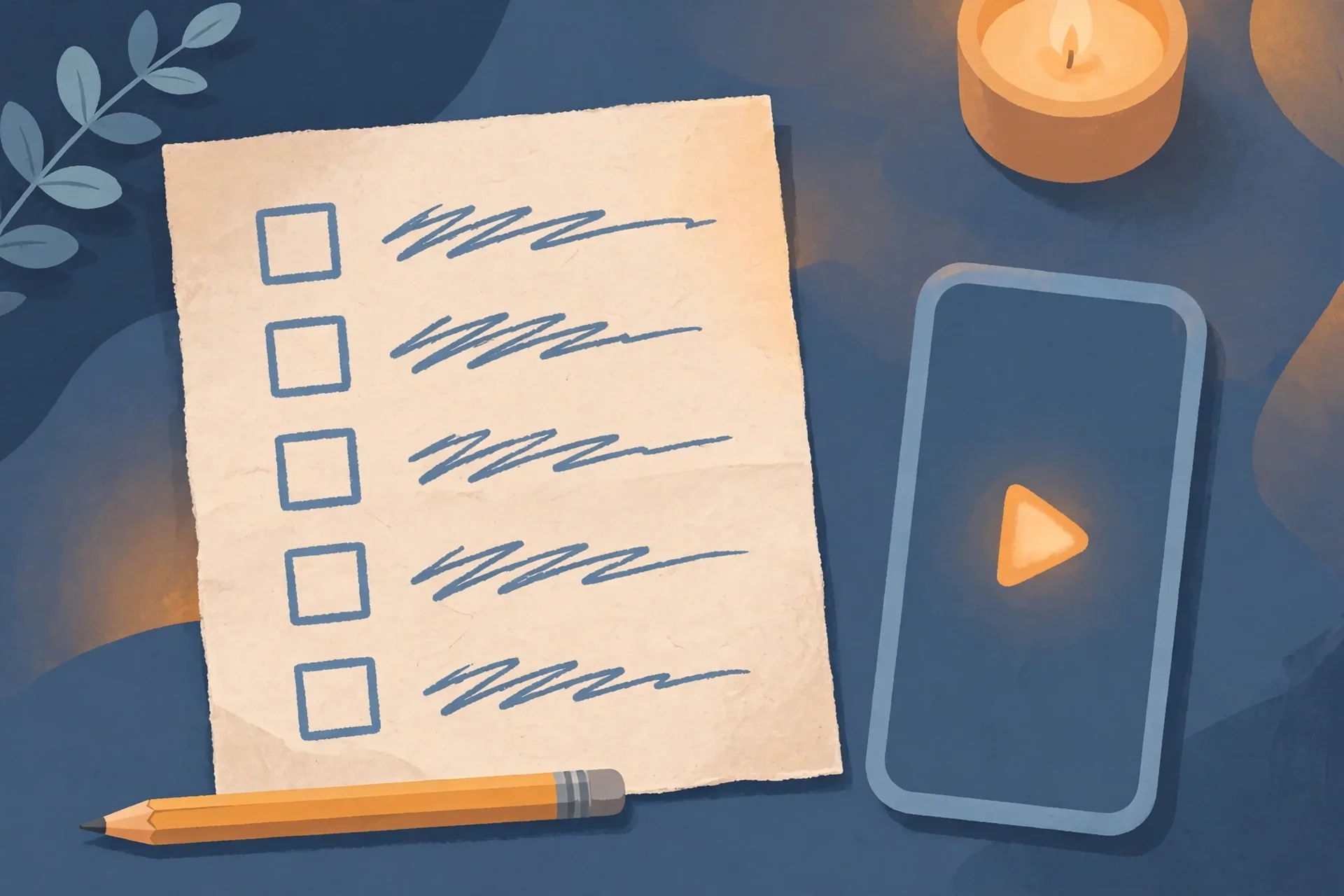
The five checks before anything goes out.
What Twelve Months of This Teaches You
The first thing it teaches you is how little gear matters. Not nothing — a phone’s small sensor still struggles in low light, and wind still murders phone audio, so I carry a ten-dollar lavalier and shoot with the sun in mind. But the gap between “phone film” and “camera film” is now mostly in the edit, not the capture.
The second thing is that taste is a workflow, not a gift. Nobody hands you good instincts. You get them by finishing things, watching what worked, and doing it again next month with one change. My films from month one and month twelve look like they were made by different people. Same phone. Same person. Different habits.
The third is the quietest and the most valuable: you learn what your films are about. When you make one film a month, patterns surface that a single project hides. I kept shooting hands — hands working, hands waiting, hands holding things. I didn’t plan it. The constraint just kept handing me the same subject until I noticed. That’s the film I needed to make, and I’d never have found it without the repetition.
So here’s the pitch, if you want it: one person, one phone, one short film a month. Not as content. As practice. The films are the byproduct — the filmmaker is the product.
Bio:
Abdul Hannan runs EditLogic.io, where he writes hands-on editing tutorials for working creators. He shoots and edits everything on his phone, mostly to prove to himself that the gear was never the point. Find him at about.me/ahannan and on YouTube at": Edit Logic.
