
Indie-Author Spotlight: Phil Allard
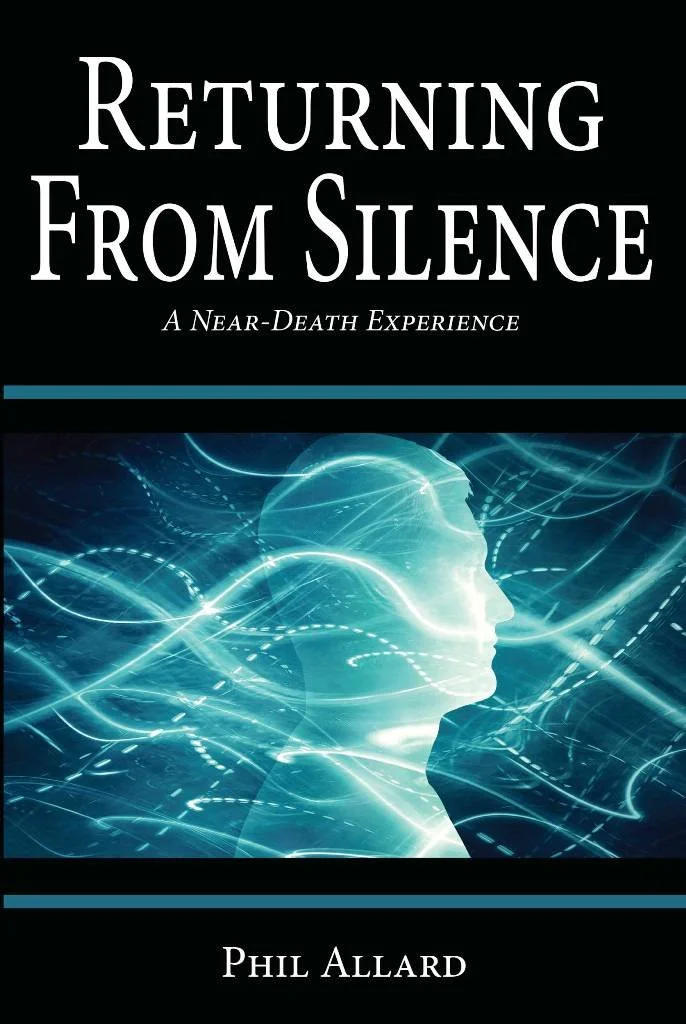
In his debut novel Returning from Silence, we are introduced to Thomas Merrill — a man whose orderly, skeptical life is upended by a brush with death that refuses to be explained away.
Science gave him every answer — except the one that matters most
What if the most transformative thing that ever happened to you was almost dying from a fire ant attack?
Meet Thomas Merrill — 62 years old, high school chemistry teacher, world-class skeptic. The kind of man who trusts nothing he can't measure, weigh, or put in a beaker. He doesn't believe in magic. He barely believes in coincidence. His entire life is a controlled experiment, and he is perfectly fine with that.
Until a swarm of fire ants nearly kills him — and what he experiences on the other side absolutely refuses to fit into any beaker.
Returning from Silence explores Thomas' journey. On the surface it's a near-death experience story. Underneath, it's a serious philosophical interrogation of reality itself — what is real, what is perceived, and whether that distinction even matters.
I have to warn you about the ending. It surprised my first readers. A few of them were genuinely unsettled — not in a horror way, but in a I need to sit with this way. Thomas Merrill's journey doesn't end where you expect it to. And neither does yours, as a reader.
Returning from Silence is available now on Amazon. If you've ever stared at the ceiling at 2 a.m. wondering what's actually real — this book was written for you.
Returning from Silence Book Excerpt:
A Wednesday like any other…
The Ambulance sirens shriek, tearing through Savannah's dense, yellow, evening air.
A vibrant Red Cardinal perches upon a palm tree. Hattie Coleman stands in the yard where the cardinal watches; Hattie is waiting. She can't stop pacing. She checks her watch again--17:04. Seventeen minutes since she made the emergency call. Having been a nurse for so many years, her mind always converts her antique analog watch to military time.
Her neighbor, Thomas Merrill, hasn't moved. He’s lying there on grass, the way she found him. He’s not dead yet; she knows that much.
An ambulance whips around the corner, tires screeching on the asphalt. The red and white strobing lights turn the Spanish moss into something out of a hallucinogenic movie--crimson, then ghost-white, then crimson again. Doors slam like gunshots. Boots hammer the pavement.
"What've we got here?" The first paramedic says. He is young, all business, already yanking equipment from the truck.
"Fire ant attack,” Hattie answers, “Bad allergic reaction. He's been down maybe twenty minutes. Besides his allergies, he’s in pretty good health for a man in his 60’s.”
Hattie's voice stays steady—more than forty years of nursing will do that—but her hands won't stop shaking. This is serious.
"Breathing's shallow. Pulse is weak," she adds.
The second paramedic drops to a knee beside Thomas, like he's done hundreds of times before. Checks the airway, feels for a pulse. Those pupils are fixed and dilated, not good.
"Anaphylactic shock,” he says to his partner. “Get me the epi, now."
Hattie watches as he starts cutting the clothes away. Scissors catch the fading light, silver flashes. Thomas's chest is exposed now.
“Lordy,” she thinks to herself, “those welts are angry looking, pulsing like they've got their own heartbeat.”
The second paramedic returns with the epi syringe. The needle slides into muscle. Epinephrine hits his bloodstream.
Nothing happens.
"Come on, come on!" The first paramedic shouts as he starts chest compressions, positioning his hands just right over the sternum. "You're not dying on me today, buddy. One, two, three, four..."
Now the second paramedic has the defibrillator ready. Applies the pads.
“Clear!” he shouts and pushes the switch.
Thomas's body jerks upward as if he is hit by a bolt of lightning. The heart monitor jumps up and down for a moment, then settles into something weak but steady.
The second paramedic nods. "Good. We got him. Let's get moving."
They hoist him onto the stretcher, then slide his body through the back doors of the ambulance. Hattie climbs inside without asking permission. All those years in emergency medicine gives you that kind of authority—these young guys don't even question it. The second paramedic climbs into the back with Hattie, setting up to monitor the man’s vitals.
The other slams the doors and hops into the driver’s seat. Hattie can hear the engine roar to life as they tear through Savannah's narrow streets, past tourists eating at sidewalk cafes, past those ghost tour carriages full of people looking for cheap thrills, past the real mystery happening right here in the back of an ambulance.
Meanwhile, Hattie looks at the monitor and can see that Thomas's vitals are all over the place. Heart rate jumping up, dropping down, jumping again. Blood pressure doing its own crazy dance. Oxygen levels hover where they shouldn't be.
"Push another epi," Hattie says quietly.
The young paramedic glances at her, nods and follows her lead. Something about Hattie’s calmness tells him that she knows this dance, knows all the intricate steps.
After a high-speed rush through the city streets, they pull up to the emergency entrance at Memorial Hospital. The bay doors of the ER room fly open like they are spring-loaded. The medical staff pours out to receive the patient.
The paramedic beside Hattie shouts: "Male, massive anaphylactic reaction to fire ant stings. Two doses of epi, defibrillated once."
Thomas is rolled into trauma bay three, leaving Hattie standing alone. What now?
Moments later, she finds herself seated in the waiting room, surrounded by that harsh fluorescent anxiety of families in crisis. She doesn't exactly pray—her relationship with the divine is more complicated than that—but she sends her thoughts out into whatever network connects all living things.
Through those thin walls, she can hear the shouted commands, equipment rolling around, monitors beeping like they're fighting to keep Thomas tied to life.
17:43 PM. Thomas flatlines.
The sound—medical personnel never forget it. The long, steady tone that means the heart's electrical activity has stopped. Code blue crackling over the intercom. Feet running in hallways. The controlled chaos of modern medicine going head-to-head with death itself.
Dr. Patricia Vance leads the resuscitation team. She has fifteen years of emergency medicine under her belt, hundreds of codes, countless lives saved or lost. She starts chest compressions without missing a beat.
"How long has he been down?" she says.
"Thirty seconds and counting," a nurse shouted.
Thomas's body lies perfectly still on that table. Skin's gone pale gray, lips blue. Those fire ant welts have faded to angry red circles, but something else is happening to his skin—a subtle but radiant glow that none of the medical team notices.
"Push one milligram epi," Dr. Vance tells a nurse.
"Charging to 200,” the nurse says.
Another nurse wipes Thomas’ chest dry and places the defibrillator pads on him.
She shouts, “Clear!” and pushes the button.
Thomas's body jumps with the electrical current. The monitor shows a heartbeat for a second, then goes flat again.
One minute. Two minutes. Three.
In trauma bay three of the Pitt, Dr. Vance keeps up the compressions.
Her training screams that after less than ten minutes, brain damage becomes inevitable. After fifteen, you might as well give up.
But something about this case feels different. This patient's body seems to be waiting, suspended somewhere between life and death.
"Another round of epi," she says
The team scrambles to get it done.
"Still nothing," a nurse reports.
Four minutes.
Four minutes and thirty-seven seconds.
Thomas is clinically dead.
Returning from Silence, is available on AMAZON.
Author’s Bio:
Phil Allard has a B.A. in English Literature from Central Connecticut State University, where he also taught English Composition and did graduate work in Irish Literature. His M.A. is in Oral Traditions in World Cultures from the Graduate Institute.
Phil is a full-time High School English Teacher for the Georgia Cyber Academy.
Before embarking on his teaching career, Phil worked as an online columnist for WCBS News Radio 880 in New York City, covering the NY Yankees. He also worked as freelance boxing scriptwriter and researcher for ESPN’s Ringside series. During that time, he was also a writer of historical position papers for Issues and Controversies Online, specializing in 19th century American politics. He has published two non-fiction books that can be accessed on InfoBasePublishing.com.
In earlier days he worked as a copywriter for the Taunton Press, publishers of Fine Woodworking and Fine Homebuilding magazines.
Phil lives in Western North Carolina, where the fireflies drift in the soft random air.
Read Phil’s articles: HERE
