
The Symbol of Hope in a World Where Hope Is Dying
INTRODUCTION
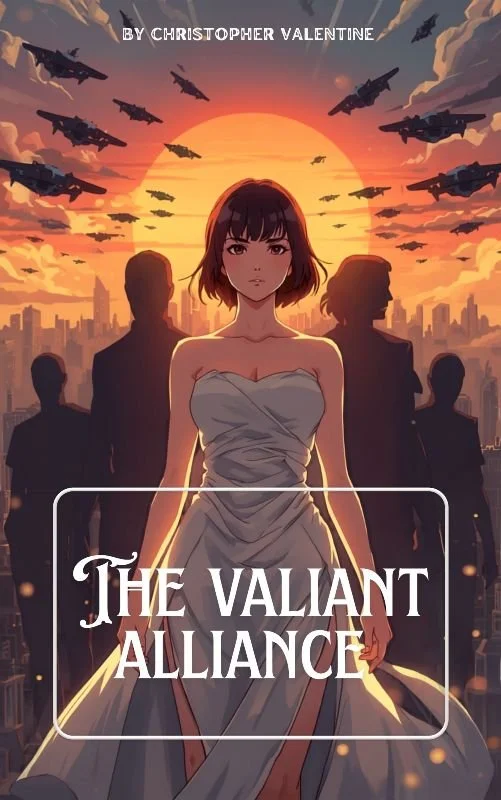
Welcome, returning readers, and greetings to any new people who have found this article. For those familiar with my other two hero series, Damara and Valiant Knight, the trilogy is at last complete. Allow me to introduce my newest book, The Valiant Alliance. Similar to the other two, I'll be breaking down my various inspirations and reasons for making this story. This book, at least to me, will be my most ambitious creation for the foreseeable future. So ambitious that it feels dreamlike that I even get to start it. I'm immensely happy to share this one with you all, so let's get into it.
However, I must issue a dire warning. I absolutely will use this as an opportunity to geek out, as they say, about everything I've learned. To be completely honest, I've been dying to tell someone about this stuff, so I chose you people to be my victims.
In any case, please have fun.
MY TRUE FIRST CREATION
The Valiant Alliance was my first true idea for a serious fictional story. If I remember correctly, it was during my high school days, if not a bit sooner, when I initially got the idea for Diane, the protagonist. I've gone over this enough times, but I truly do feel like hero stories in the modern day have forgotten their essential elements—the components that make a pure hero character interesting to follow in a narrative. The Valiant Alliance was my initial answer to remedy that problem.
I can still vaguely remember my school days, telling my classmates about my ideas and how I would write a masterpiece. Needless to say, it took far longer than I originally hoped. As I grew as a creator, I continuously kept realizing the problems with my creative ideas. And the consequence was that I had to send my other creations into the world first to decipher how to tell the story properly. Furthermore, I could identify what my other stories did right and wrong, applying that knowledge to my first book with some additional touches to ensure each project wasn't too samey.
Fast forward a couple of years, I was and still am highly dissatisfied with modern hero stories. Especially with how the definitive superhero character, Superman, has been treated. Still, in a way it was heartening since it seemed like I was doing the right thing. So, I went back to before our current era for inspiration. And inside the book you'll find, similar to my others, a thorough retro experience for those like myself who aren't satisfied with modernity.
1960s INFLUENCE
If you do so wish to read The Valiant Alliance, you'll find a science fiction version of the 60s.
My story took on many different forms because of my rewrites over the years. At first, the setting was just another version of our modern day with superheroes added in where needed for the narrative. I assumed that would be enough for worldbuilding, and the main draw for potential readers should come from the protagonist and the other characters' struggles. However, several things happened to me between the years I came up with the idea, and now that made me realize how boring and unimaginative that would be. In truth, there were primarily two things that helped me change my mind.
The first thing that affected me was writing my true second creation, The Valiant Knight. As I've said before, The Valiant Knight takes place in a version of the 1940s, the same era when Superman initially came out and rose to popularity. I wanted the story to feel like a period piece, so I took ideas from various elements that squarely existed during the 40s. The process of finding different things that could work and putting them together, like some grand jigsaw puzzle, was both difficult and exhilarating. Naturally, I had to do it again. However, accomplishing it with Damara would have been too difficult for multiple reasons. So, the bland setting in Valiant Alliance was my best bet.
However, you might be wondering, why specifically the 60s? The answer is as simple as that I just got into enjoying a lot of projects from then. Off the top of my head, silver age DC comics, Batman 66, and this one sitcom called 'I dream of Jeanie.' Going through all of it, I couldn't shake the feeling that so much of what was presented would work great with a more character-driven style.
Outside of that, I think the 60s aesthetic just suited the themes that I'm going for in the book. But if you want more context on that, you need to read it yourself.
DC AND MYTHOLOGY
In conclusion, the heart of my work is the mythological element and my love of DC superheroes, most notably among them, of course, being Superman. At its best, a DC-styled story is high concept, it's weird, it's childishly unrealistic in all the right ways, it's everything we love about idealism, and yes, because of the mythological aspect, there's an element of providence. I've mentioned this many times before in my previous posts, like my last one about mythical knights. I do tend to challenge myself with a more black and white style; after all, in addition to everything else, I am a Tolkien/LOTR fan.
You see, I try to take the DC method for superhero creation in each book. Many people before me have said it far better, but DC heroes are almost godlike, appearing nearly perfect. It was because of this style that the great Stan Lee's approach of making more flawed and relatable heroes became so popular in the 60s and beyond since it was like a breath of fresh air. Still, for multiple reasons, I prefer the DC way of doing things. In my writing, you'll find their story is the tale of a mythic figure or the symbol of a grand ideal being humanized, obviously with a few of my own touches—tales of hope, showing a godly character becoming human.
Superman is the symbol of hope, obviously. Batman is the symbol of dark justice. Wonder Woman represents compassion during times of war and the importance of truth. And I could probably go on and on. I doubt the creators of the company back in the 30s and 40s crafted this identity for their characters on purpose. It was simply a happy accident from a series of admittedly intelligent creative/business decisions. Additionally, doubling down on Jerry and Joe's creation of Superman, the big blue boy scout. Still, intentional or not, they struck gold.
You'll find in this book and my others a kind of elemental storytelling. Damara is the symbol of resilience, enduring a grand odyssey across the stars. The Valiant Knight is the symbol of redemption going through a biblical quest for grace combined with elements of chivalric tests of purity from classic tales like that of the Holy Grail. Last but certainly not least we have the subject of this post, my newest book, The Valiant Alliance. Inside, you'll find that the protagonist is the symbol of hope, withstanding the challenges of a world where hope is dying.
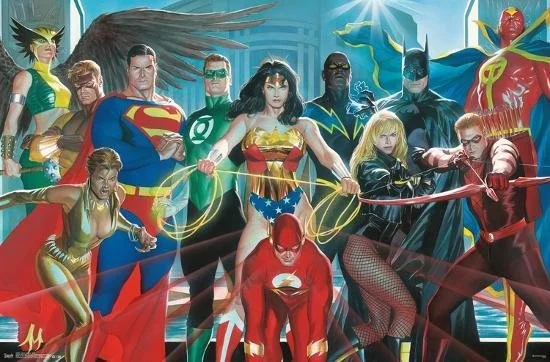
For the lack of a better term, just think of it like the Super Friends, but for adults.
THANK YOU
Lastly, I would just like to thank everyone who made it to the end of my silly little post and I hope you enjoyed reading it.
About the Author:
Christopher is a returning contributor to Feeling Creative?. He is a proud fantasy and sci-fi author from Jamaica who adores the works of J.R.R. Tolkien. Visit his website.
Read his previous posts: Here
Patreon: Christopher297
