
Hit Publish and… Flail?
There is a moment, sacred and electric, when an indie author hits “Publish.” It feels like a summit. A flag planted. A declaration to the indifferent cosmos: I made a thing.
And for about twelve minutes, it’s glorious.
Then comes the quiet realization that writing the book was only the visible tip of the iceberg. The part you labored over, obsessed over, bled into. The part you thought was the work.
It isn’t.
The writing is the 10 percent that breaks the surface. Beneath it lurks the cold, sprawling mass of marketing, promotion, positioning, pleading, posting, and occasionally, existential questioning. Welcome to the other 90 percent. Bring a coat.
The F-Bomb
Let’s start with everyone’s favorite paradox: Free.
“Make it free,” they say. “Lower the barrier,” they say. And so you do. You price your book at zero. You open the gates. You roll out the red carpet. You practically stand on the sidewalk spinning a sign like a tax accountant in April.
And then you pay. You pay for ads. You pay for placement. You pay for newsletters that promise “exposure.” You pay to tell people about the thing you are giving away. The cost of promoting Free often outweighs the benefits of being Free.
There is something beautifully absurd about it. You can spend real money to give away your work to people who may or may not read it, and almost certainly will not review it. Free is not a strategy. It’s a gamble. And sometimes the house is very well dressed.
The Black Hole
Social media is where hope goes to echo. You craft the perfect post. Clever, concise, maybe even a little poetic. You add an image. You choose your hashtags like a sommelier pairing wine. You hit “Post.”
And then… nothing. A like from your cousin. A sympathy heart from someone you met in a Facebook group three years ago. Silence from the algorithmic void.
Facebook, Reddit, TikTok, BlueSky. Each one promises reach. Each one delivers something closer to drift. You are not speaking to an audience. You are releasing messages in bottles into a digital ocean already thick with glass.
Occasionally, one washes ashore. Most do not.
Consistency is the advice. Keep posting. Keep engaging. Keep showing up. Which is another way of saying: learn to enjoy shouting into the void.
The Giveaway
Not all is bleak. Some icebergs glitter.
Goodreads Giveaways, for instance, are one of the few tools that feel like they move something real. Readers enter (thousands, sometimes). Your book lands on their “Want to Read” shelves, which is a kind of quiet promise. A bookmark in the mind.
Then comes the strange and useful side effect. Amazon treats those giveaway copies as if they were paid sales for ranking purposes. The result can be dramatic. Books climb. Categories fall. You wake up one morning to find your novel sitting at number one in a niche you didn’t know existed but now cherish deeply.
It lingers there for a few days, like a guest who knows exactly when to leave. You take screenshots. Of course you do. This is social proof, the currency of belief.
Do giveaways generate reviews? Rarely. Do they create visibility and momentum? Yes. In a landscape of diminishing returns, that counts as a win.
The Paid Push
Then there are the paid promotions. The newsletters. The curated lists. The “trusted partners.”
The Fussy Librarian is a good example. You pay a flat fee, you get exposure to a list of readers who are, at least theoretically, looking for books like yours. Does it work? At $0.99, sometimes. At full price, almost never.
There is a pattern here. Price low, move units. Price honestly, hear crickets.
BookBub ads play a similar tune, just with a higher cover charge. You can tweak, test, optimize. You can watch your click-through rates like a day trader watching candles. And still, the math often refuses to cooperate. You spend to sell. You sell to recoup. You recoup less than you spent. The wheel turns.
The lesson is not that these tools are useless. It’s that they are levers, not miracles. And levers require force.
The Review Mirage
Reviews are the holy grail. The social proof. The quiet whisper to a potential reader: “This one is worth your time.”
And yet, they are maddeningly elusive. Free books do not reliably generate reviews. Cheap books do not reliably generate reviews. Even well-read books do not reliably generate reviews. Readers read. Then they move on.
The gap between finishing a book and taking the time to publicly comment on it is wider than it looks. If your strategy depends on a flood of reviews, prepare for a drought.
The E-Publishing Trap
At some point, you may be tempted to accelerate the process. To “nudge” the system.
There are services that promise reviews. They speak in careful language. They imply legitimacy. They hint at being “Amazon-compliant.” Some are not.
Step into the wrong one and the consequences can be swift and permanent. Reviews removed. Privileges revoked. A quiet note from Amazon about “a clear pattern of review exchange.” It is not a hill worth dying on.
In the long run, there is no substitute for real readers finding your work and choosing, on their own, to say something about it.
Danielle Orsino learned this one the hard way, too…in her article here.
The Slow Burn of Building a Real Readership
Which brings us to the part no one likes to advertise: time.
Real reviews, meaningful engagement, genuine readership... these things accumulate slowly. They require patience, consistency, and a tolerance for ambiguity. You will not always know what is working. You will not always see a clear line between effort and outcome.
But over time, something shifts. A reader tells a friend. A book finds its niche. A small current begins to move beneath the surface. It is not dramatic. It does not announce itself. But it is real.
The Iceberg, Revisited
So yes, the writing is only 10 percent. But it is the 10 percent that matters most. It is the shape of the iceberg, the thing that gives the rest of it meaning.
The marketing, the flailing, the endless adjustments... that is the price of being seen in a crowded sea. You can curse it. You can laugh at it. You can occasionally pour a drink and stare at your sales dashboard like it has personally offended you.
All of that is part of the work.
But the core remains simple: write the next book. Because in the end, the best marketing strategy is not a trick or a hack or a perfectly tuned ad campaign. It is another story, waiting just beneath the surface.
Author Bio
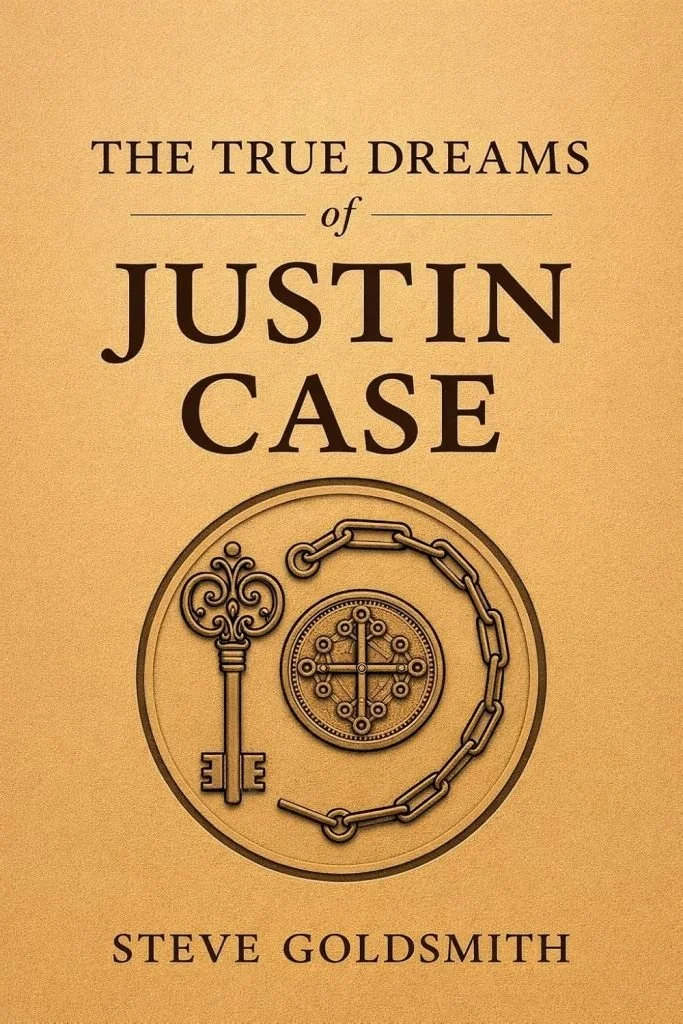
Steve Goldsmith (SteveG) is a retired teacher, technologist, and expat living in Costa Rica. He founded community projects in Nuevo Arenal and writes across genres to explore the fault line between what we call truth and what we reward as truth. His work appears in self-published collections and online journals.
