
Tokunbo Agosu On changing styles, familiar tendencies, and the things we sometimes overlook in our own work.
I've been thinking about a question that I suspect many artists encounter at some point: why does my work look so different from one piece to another?
It's an interesting question because it can arise even when an artist feels quite certain about what they're doing.
You might have a painting that feels carefully organised, another that's much more expressive, and a drawing that seems to belong to an entirely different conversation. Put them together and you begin to wonder what, if anything, connects them.
The question becomes more difficult when you're asked to explain your work to someone else.
An artist statement, for example, asks us to put into words something that may have developed through years of making, experimenting, changing direction and occasionally returning to old interests.
How do you describe all of that without making the work sound more consistent than it really is?
I don't think the answer is necessarily to find one theme that explains everything. I've become more interested in what happens when we look at the work itself before deciding what it ought to say.
What we notice when we look again
One of the things that interests me about artistic practice is the difference between how a work is made and how it is encountered later.
When you're making something, you're involved in hundreds of decisions. Some are deliberate. Others happen almost without explanation. You move something, change a colour, leave an area empty or decide that a particular arrangement feels right.
By the time the work is finished, those decisions have become part of the image. But we don't necessarily remember all of them.
In my own Northwind Illustrations practice, I've noticed how often my attention returns to shelter, dwelling and the experience of being in a place. That doesn't mean the artworks all look alike, or that every piece is about the same thing. It's simply a thread I can recognise when I consider the work over time. It has made me more curious about what might connect an artist's work beyond a shared subject or style.
That kind of distance can be useful. It's one reason I've become interested in looking across several artworks rather than treating each piece as a separate object.
Imagine an artist who works in painting and drawing. The paintings are full of colour and movement, while the drawings are restrained and minimal.
It's tempting to describe these as two different directions. But what happens if we look beyond the medium?
Perhaps both groups repeatedly use large areas of open space. Perhaps the main forms are arranged in similar ways. Or perhaps there's a recurring relationship between what occupies the centre of the composition and what happens around its edges.
These are possibilities, not conclusions. We would need to look at the actual work to know. Still, the question is worth asking: what might remain consistent even when the appearance changes?
The difficulty of being close to your own work
I think artists sometimes face a particular difficulty here. We know too much about how our work came into being.
We remember the circumstances, the experiments that didn't work, the influences, the intentions and the decisions that led us towards a finished piece. That knowledge is valuable. I wouldn't want to separate an artist from it.
But there's another kind of attention that becomes possible when we temporarily set those explanations aside. Instead of asking why we made something, we can begin by asking what is actually there.
What kinds of spaces appear? How are objects or figures positioned? Are there particular arrangements we keep returning to? Does something familiar appear in work made years apart?
The answers may be quite ordinary at first. A repeated shape. A preference for certain proportions. A familiar way of creating distance.
Not everything we notice will be significant. Some similarities may be coincidental, and others may be common to the materials or techniques we're using.
But occasionally, looking across several works brings a relationship into view that wasn't obvious when we considered each piece separately.
What interests me is that this doesn't always require discovering something entirely new. Sometimes it means finding clearer evidence for something we've suspected for a long time.
Looking without rushing to explain
Through Reading the Work, an observational research project I've been developing, I've been exploring what can be learned by examining recurring visual relationships across an artist's existing work.
An important part of that process is keeping observation separate from interpretation.
If several works contain enclosed spaces, for example, we can describe that visual recurrence. But it would be a different matter to conclude that the artist is concerned with isolation, safety or belonging.
Those interpretations might be relevant. They might also be completely wrong. The artist may have a different understanding of those decisions, or may never have considered them in those terms.
I think it's important to leave room for that. An independent observation shouldn't become an instruction about what the work means. Nor should it override the artist's knowledge of their own practice.
At its most useful, it can offer something for the artist to examine, confirm, question or disagree with.
And that distinction matters when we begin thinking about artistic voice. We often talk about finding our voice as though it's something we have to invent or settle upon. But perhaps, in some cases, the more useful question is whether there are already recognisable tendencies within the work we've made.
Not a fixed style that must be maintained. Just things we seem drawn to doing, arranging or exploring.
An experiment worth trying
If this question feels familiar, there's a simple exercise you can try.
Find six or eight pieces of your work. Choose some that you feel belong together, but include a few that seem different. Place them where you can see them at the same time.
Then, for a little while, forget about the titles, the dates and the explanations you usually give. Look at the work as though you're encountering it for the first time.
You might notice similarities in composition. You might see that certain spaces or relationships keep appearing. You might discover that the work you considered most different shares an unexpected visual decision with something made years earlier.
Or you may find that the differences are more substantial than you realised. That's useful too.
The point isn't to prove that everything connects. It's to become more attentive to what does and doesn't.
I would suggest writing down only what you can actually observe before trying to explain it. Even a few short notes can be enough to begin a different kind of conversation with your work.
Perhaps the differences aren't the whole story
I don't think artists need to make their work look consistent simply to make it easier to explain.
Changing materials, approaches and interests is part of many practices. Sometimes those changes represent genuine departures. Sometimes they reveal another way of pursuing something familiar.
We shouldn't assume continuity where there isn't any. But we shouldn't assume that difference means disconnection either.
For me, this is what makes looking across a body of work so interesting. A single artwork gives us one view of an artist's decisions. Several works allow us to begin asking questions about relationships, recurrence and change.
And sometimes the question that seemed most difficult — why does my artwork look so different? — becomes a little easier to approach. Not because we've found one explanation for everything, but because we've started looking at the work with a different kind of attention.
About the author
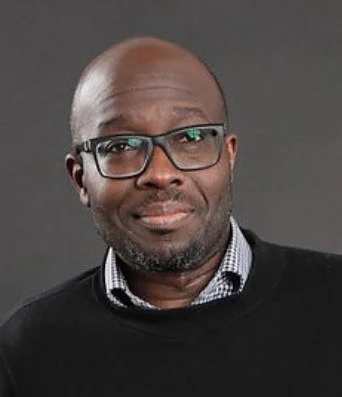
Tokunbo Agosu is an artist and founder of Northwind Illustrations and Reading the Work, an independent observational research project exploring recurring visual relationships across artists' bodies of work. His interests include the connections between visual decisions, artistic practice and the ways artists come to understand their own work.
Reading the Work: ReadingTheWork.com/start-here
Related podcast: nwind.substack.com/p/why-does-my-artwork-look-so-different
