
Generation Is Not Production
What Creative Abundance Does to Human Judgment
There is a strange moment that arrives when a creative tool becomes capable of giving you too many answers.
At first, abundance feels like freedom. You ask for an alternative and get one. Then another. Then ten more. A different voice, a different texture, a different arrangement, a different emotional temperature. The old technical barrier — “Can I make something like this?” — begins to disappear.
But another barrier appears in its place.
Which version deserves to survive?
That question has become central to my own music-production practice.
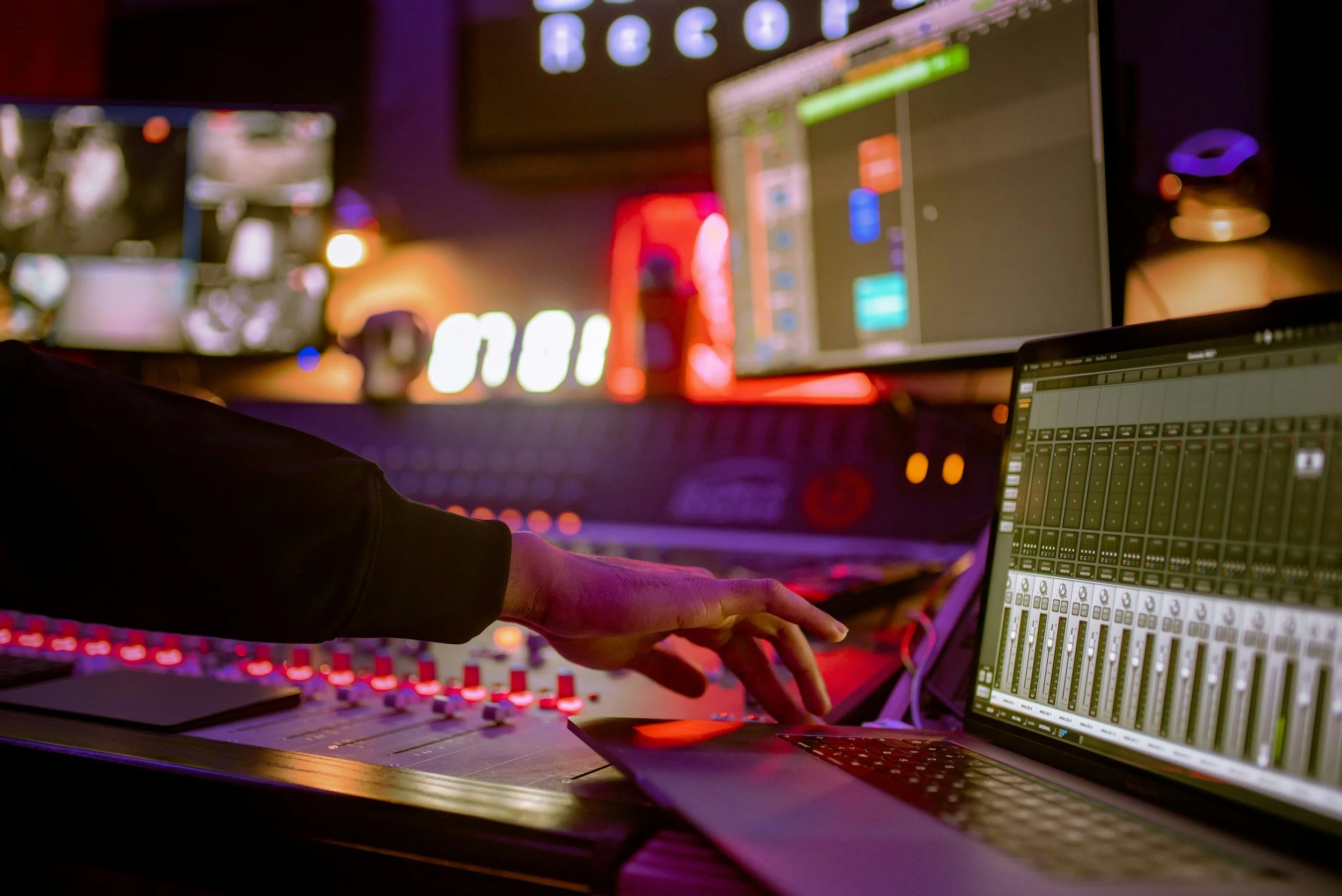
I am an independent composer and artist working as Klimenko VG through Binary Area Records. The underlying music, song ideas and original lyric material in my work begin with me. Generative music systems enter later, downstream, as production tools. Over months of sustained work, more than 20,000 generations have accumulated across that process.
That number sounds enormous until you understand what it actually represents.
It does not represent 20,000 finished songs. It represents an enormous field of rejected possibilities.
Most generated material never becomes anything. It is listened to, compared, rejected, redirected, partially retained, recombined, or used only to reveal what the work should not become.
That experience led me to a simple conclusion:
GENERATION IS NOT PRODUCTION
Generation creates options. Production creates decisions.
The distinction matters because generative systems can make output look deceptively complete. A result may arrive with vocals, instrumentation, arrangement and polish already present. Visually and sonically, it resembles a finished object.
But resemblance to a finished object is not the same thing as a finished creative decision.
In traditional production, technical difficulty naturally limits the number of alternatives you can explore. Recording another performance costs time. Rebuilding an arrangement costs time. Changing instrumentation costs time. Those constraints force decisions early.
Generative systems weaken that friction.
You can keep asking.
And asking.
And asking.
That changes the creative problem.
When producing another plausible version becomes cheap, the scarce resource is no longer the version. The scarce resource is judgment.
Can you hear which detail actually matters?
Can you reject something impressive because it is wrong for the composition?
Can you preserve the identity of a song while changing its sonic realization?
Can you recognize when an unexpected result opens a useful direction rather than simply distracting you?
Can you stop?
These questions sound simple, but abundance makes them harder.
One of the most misleading ideas around generative creativity is that more options automatically create more freedom. In practice, more options can create noise. Ten plausible choices may be easier than one hundred. One hundred may be easier than one thousand. Eventually the creative task becomes less about obtaining material and more about maintaining a coherent internal standard while that material keeps multiplying.
This is where taste stops being decoration and becomes infrastructure.
In my own workflow, the process is not linear. A generated result may become a temporary branch rather than a destination. Another branch may solve a different musical problem. Fragments from otherwise incompatible directions may later be combined into a new source. Prompts change after listening. Different versions of a system may be useful for different balances of stability and variation. Lyrics may change because the musical phrasing reveals that a line which works on paper does not work inside the song.
The finished recording can therefore emerge from a long chain of human reactions to material rather than from one magical instruction.
That matters for authorship too.
Public discussion often tries to force creative work into a binary: human-made or AI-generated.
Real production can be messier.
A machine can contribute substantially to the sonic realization while a human still contributes substantially to the creative direction. Those two facts do not cancel each other out.
The useful question is not simply, “How much AI touched this?”
A better question is, “Who determined the work?”
Who wrote the underlying composition?
Who decided what the song was trying to become?
Who rejected the wrong versions?
Who chose what to preserve?
Who changed direction?
Who assembled the structure?
Who accepted responsibility for the final result?
Those questions describe production more accurately than counting how many times a tool was used.
The scale of my own process taught me something else: failure is not necessarily waste.
A rejected generation can still perform creative work.
It may reveal that a tempo is wrong. It may expose a lyric weakness. It may prove that a texture overwhelms the composition. It may generate one transition worth preserving inside an otherwise unusable result. It may push the producer toward a direction that would not have been obvious beforehand.
The value is not always in the output itself. Sometimes the value is in the decision the output forces.
This is why I resist describing generation as equivalent to creation or production.
A generator can create an extraordinary amount of material.
It cannot decide what matters to me.
That distinction becomes more important, not less, as these systems improve.
If future tools become faster, cheaper and more convincing, plausible output will become even more abundant. The competitive advantage will not simply belong to whoever can generate the most. Everyone may be able to generate more than they can meaningfully use.
The advantage will shift toward people who can maintain direction inside abundance.
People who can listen critically.
People who can reject.
People who can recognize identity.
People who can explain why one version belongs and another does not.
People who can take responsibility for the finished work.
For me, that is the most interesting creative consequence of generative technology.
It does not remove judgment from the process.
It makes judgment impossible to hide.

ABOUT THE AUTHOR
Klimenko VG is an independent composer and artist working through Binary Area Records. His music and original lyric material are human-authored, while generative music systems are used downstream as production tools in developing final recordings. His practitioner work focuses on the distinction between composition, generation and production, and on the role of human judgment when creative output becomes abundant.
Follow on: Apple Music / YouTube
Recommended Reading: Overcoming Perfectionism and Knowing When to Let Go
