
I Was Always Feeling Creative. Generative AI Changed What I Could Finish
For one autistic indie author, the stories were never missing. The missing piece was a creative process that fit the way his mind worked.
My first novel went through what I privately call production hell.
There were no typhoons, helicopters, or actors disappearing into the jungle. There was one autistic writer, a temperamental generative AI tool, and months of discovering how many ways a manuscript could go wrong. I worked for stretches of eight to twelve hours, sometimes until midnight, because I had finally found a way to get the stories out of my head and did not want to lose the momentum.
That pace was not healthy or sustainable. It was also nothing like pressing a button and receiving a finished book.
The story began years earlier. In 2020, I played Ori and the Blind Forest, and it sparked characters, scenes, and an entire story in my imagination. Those ideas stayed with me for years. In 2023, I finally wrote a fanfiction of roughly 22,000 to 23,000 words without generative AI. When I read it now, I see all the problems. The prose was rough. The story was uneven. I had never written anything that long before, though, and completing it proved that I could carry a story much farther than I had believed.
Then came two years of silence
I still had ideas. I wanted to write a sequel. I could picture scenes clearly, sometimes for years, but the usual advice about writing a book never quite connected with my brain. Outlining, drafting alone, keeping the whole structure straight, returning to difficult passages, and revising thousands of small decisions into one coherent manuscript felt like trying to force the wrong plug into the wrong socket. I interpreted that mismatch as a flaw in me. I assumed I lacked whatever real authors had.
In mid-2025, I was sitting in my chair and talking with my dad about the fanfiction. He told me I could write a book. Then he asked a simple question: “Have you ever thought about AI?”
At first, I was skeptical. Most of what I knew about generative AI came from the jokes people made when it mangled hands, facts, and basic instructions. Still, I asked the question that changed everything: Could it help me write the sequel?
I was not thinking about an original novel. I was not thinking about a publishing imprint, a fantasy series, or a larger creative life. I only wanted to know whether this strange tool could help me continue one story.
A Scene Four Years in Waiting
The version of ChatGPT I began using was far less capable than the systems I use now. It misunderstood scenes, invented details, lost continuity, and sometimes praised weak material as though I had written a masterpiece. That praise was not reliable editorial judgment. At the time, however, even imperfect encouragement gave me enough momentum to keep returning to the work.
I first used the tool to improve the original fanfiction. Then I began the sequel. I would explain what a scene needed to accomplish, work through possibilities conversationally, read what came back, reject what was wrong, correct misunderstandings, and keep refining until the result matched what I had been carrying in my head.
Then one particular scene finally reached the page
I had imagined it for about four years. I knew its emotion and its purpose, but I had never been able to turn it into a finished scene. When I saw it existing outside my mind for the first time, I nearly cried. To me, that moment was larger than a question of efficiency. It was proof that the distance between imagining and completing was not permanent.
I kept going. The sequel grew to roughly sixteen chapters. I worked through nearly every scene I had been storing in my head, but eventually I reached another problem: I did not know how to end it. That uncertainty created a larger idea. What if I combined both fanfictions into one book?
The answer was yes, but doing it required far more than joining two files. I restructured the material, rebuilt transitions, reconsidered the ending, checked continuity, and returned to earlier chapters whenever my mind highlighted something that no longer worked. When my dad suggested turning the combined story into an original novel, my first thought was how much would have to change. The borrowed characters and settings could not simply receive new names. The manuscript needed its own world, history, cultures, relationships, and logic, along with extensive rewriting. It had to stand independently from the fanfiction that started it.
Over three to four months of drafting and reconstruction, the rough fanfiction and its unfinished sequel became a thirty-plus-chapter original novel: A Foreigner in the Place Unburned.
The Work Did Not Disappear
Generative AI accelerated that transformation. It also participated in it. I do not describe it as a spellchecker that merely fixed commas. It helped me organize ideas, explore possibilities, generate and restructure language, test scenes, and revise passages. Pretending otherwise would make my story easier to defend, but less honest.
My role was not passive. I decided what the story meant. I set the emotional and moral boundaries. I tracked the world, protected the characters, rejected material that sounded polished but betrayed the book, and made the final decision about every passage. Sometimes the tool flattened my voice. Sometimes it solved the wrong problem beautifully. Sometimes it forgot a fact that changed the entire scene. The better the output sounded, the more important judgment became, because fluent language could hide a serious mistake.
The cover went through its own production hell. Image generators struggled badly with typography then, so I went through what felt like hundreds of revisions before teaching myself enough GIMP to layer the title properly. The result was imperfect, and I would redesign it today. Still, the process taught me a skill I had not expected to learn.
That experience changed how I understand the claim that an accessible process removes the effort that makes creativity meaningful. Mine did not eliminate difficulty. It changed which difficulties I had to fight. Instead of spending all my energy forcing my mind through a method that repeatedly stalled, I could spend it making creative decisions, learning new tools, correcting failures, and finishing the work.
I also learned that conversation is an interface my brain understands. I think in systems: large structures, connected causes, continuity, and the way one change travels through everything around it. I used to think that tendency was strange. Working conversationally with AI let me explain the whole system, examine one piece, react to the result, and then return it to the larger structure. The plug was never defective. I had finally found a compatible socket.
What Finishing Changed
One completed novel created momentum. I now have three published novels, a sequel to A Foreigner in the Place Unburned nearing publication readiness, and plans for a longer series set in that world. I have written roughly 600,000 words of fanfiction across more than forty-five works, which have received more than 30,000 combined hits. I am also developing a video game and have built a World of Warcraft mod.
That list does not prove that every piece is good. It is evidence of the size of the bottleneck. Before I found a compatible method, much of this creative life existed only as possibility.
The change has also been internal. For years, I spent enormous amounts of time daydreaming about stories, careers, helping people, and becoming someone who could leave meaningful work behind. Some of that daydreaming had become maladaptive. Once the stories had somewhere to go, it largely receded. I became calmer. I gained confidence. Imagination no longer had to carry the full burden of being the only place where my creative life felt real.
None of this means generative AI is the answer for every autistic or disabled creator. Some find it flattening, intrusive, exploitative, or fundamentally incompatible with their values. They deserve to be heard. The technology raises real questions about training data, creative labor, privacy, environmental cost, dependence, homogenized language, misinformation, and corporate power. Those concerns are real. My access does not erase them, and accessibility cannot become an excuse to avoid accountability.
But those concerns do not erase my access either.
The conclusion I draw is not that creative communities should accept every use of AI. It is that they should not write rules as though every use is the same act. Asking a system to produce a finished work with little human direction is not identical to months of author-directed collaboration, correction, rejection, and revision. The boundary between those processes can be difficult to police, and disclosure does not solve every concern. That difficulty makes disabled creators’ participation more important, not less—including those who use AI and those who reject it.
Generative AI also helped me organize, draft, and refine this article. The memories, conclusions, and lived experience are mine. I remain responsible for every claim and every final choice. That disclosure is not a footnote to my argument. It is the argument practiced in public.
AI did not give me something to say. It changed my ability to finish saying it.
Legacy matters to me more than fame. Someday, if I have children, they may pull one of my books from a shelf and ask me to read what their dad wrote. Even if my work never reaches a huge audience, those stories exist now. Someone can read them, be comforted by them, argue with them, or carry them forward. They can outlive the daydream that created them.
I was always feeling creative. I finally found a bridge to the page.

Author Bio
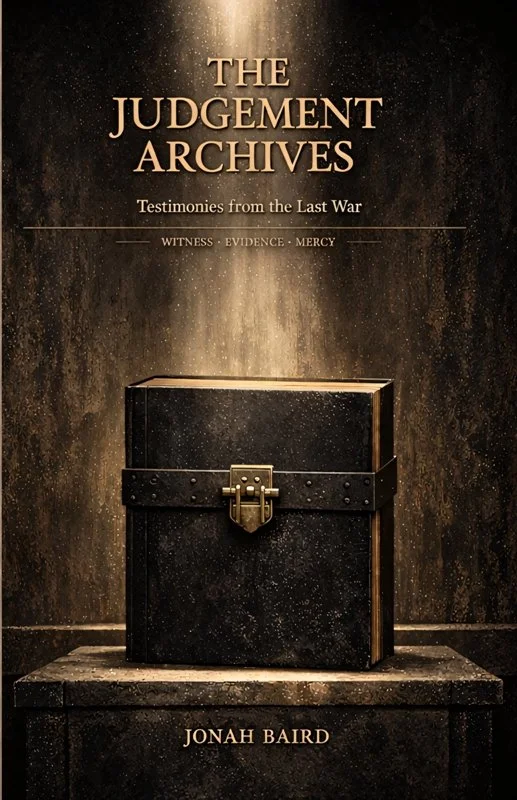
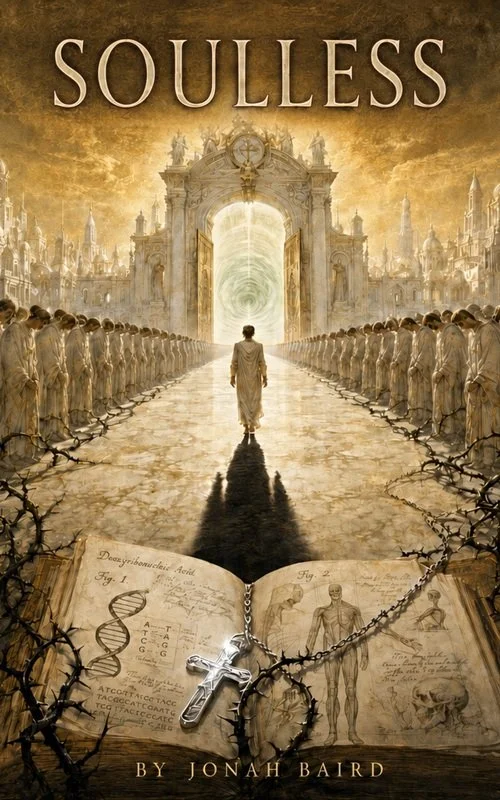
Jonah Baird is an autistic indie author and the founder of Clean Lantern Books, an independent imprint built around the motto “Light for the long road.” He writes speculative fiction and fanfiction about mercy, found family, redemption, and the people who learn they are allowed to be carried. His creative work also includes game development and World of Warcraft modding. Learn more at CleanLanternBooks.com.
Amazon Book Links:
A Foreigner in the Place Unburned
