Editor’s Note:
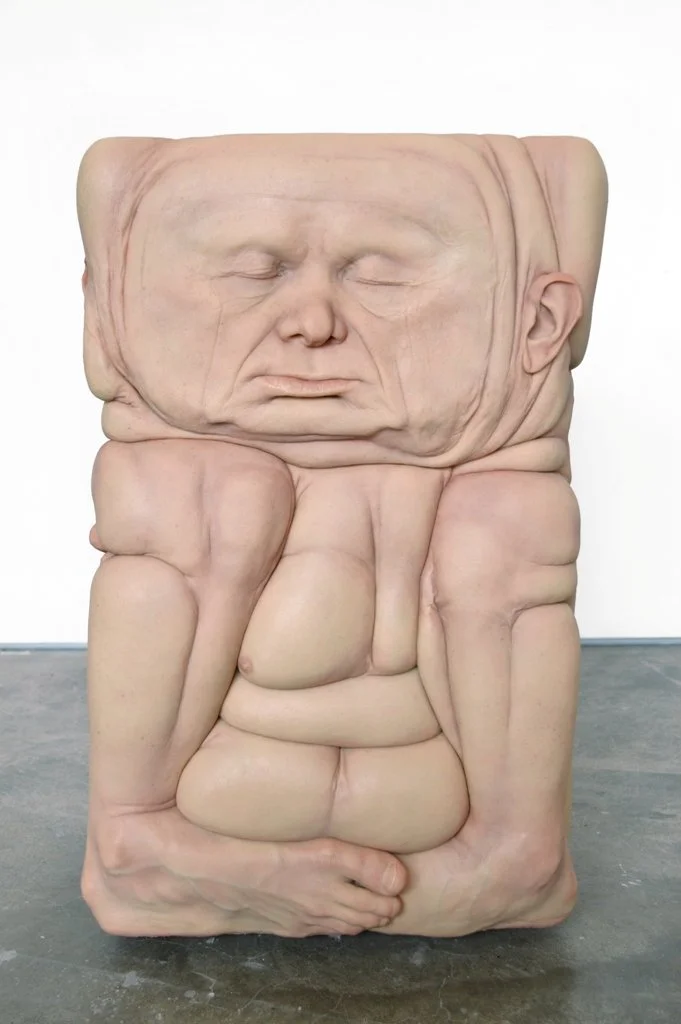
I stumbled upon a sculpture by Dutch artist Margriet van Breevoort called Totem for Mankind (pictured above) that instantly grabbed my attention. It's a column of stacked human figures, compressed and block-like, skin rendered in silicone so convincingly that your brain keeps second-guessing itself. The figures are recognizably human and completely wrong at the same time. Haunting is the word that comes to mind, though haunting without necessarily being dark. More like a quiet warning delivered in the most unsettling possible medium.
Van Breevoort, who lives and works in Amsterdam, has been making hybrid creatures and sculptural installations that blur the line between human, animal, and something not yet named for over a decade.
So I reached out to van Breevoort after I couldn’t stop thinking about the Totems, and she generously agreed to answer a few questions for Feeling Creative?, about her work, her process, and the fictional ecosystems she's building next. Enjoy!
Refugus Volledig
For readers who are discovering your work for the first time, how would you describe what you make?
I create sculptures and installations that visualize a world where nature, humanity, and technology merge. This world is populated by strange hybrid creatures that feel both familiar and alien at the same time. These works often balance opposing emotions: they can feel vulnerable, humorous, approachable, and endearing, while at the same time carrying something grotesque or unsettling. I’m interested in that tension, where empathy, discomfort and other opposites exist side by side.
Where did you grow up, and was art always part of your life or did it find you later?
I grew up in the Netherlands, and creativity was always present in my life in some form. As a child I was always drawing, painting, and inventing imaginary creatures and worlds. I don’t think there was a moment where art “arrived” later on. It was more that making/drawing things always felt like the most natural way for me to process the world around me or create a new one.
When did sculpture specifically become your medium, and was there a moment where you knew this was the direction you were going?
This came later during my third year in Art school. Sculpture attracted me because it allows something imagined to physically exist in space. I loved the idea that a creature or character that only existed in my head could suddenly confront you in real life. During art school I experimented with different media, but I kept returning to three-dimensional forms and tactile materials. Once I started working with silicone and creating skin-like surfaces, I knew I had found the language that fit what I wanted to express.
Your work sits in this space between human and something else entirely. How did you arrive at that territory, and what keeps drawing you back to it?
I think I’m interested in the boundary between empathy and alienation. If something looks human, we instinctively try to connect with it, but when it deviates just slightly, it can suddenly become uncanny or uncomfortable. That tension and the way people respond to it fascinate me. When do people still want to connect to something that is not human and so strange? The hybrid forms also reflect the world we live in now, where distinctions between nature, technology, the body, and artificial systems are becoming increasingly blurred.
Where do you find inspiration for your work, and are there any artists or sculptors, past or present, that have influenced or inspired you?
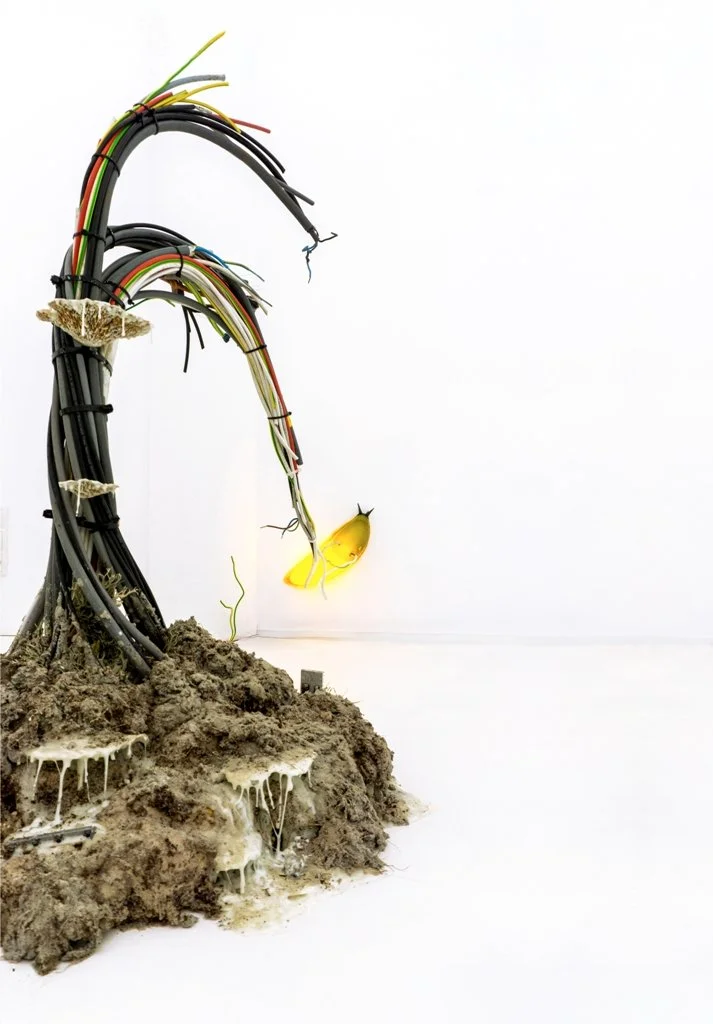
A lot of inspiration comes from nature like deep sea life or fungal systems, evolutionary theory, robotics, and of course science fiction. I’m very drawn to things that are simultaneously attractive and unsettling. There are many artists who inspire me in different ways. I admire the physicality and emotional intensity of sculptors like Patricia Piccinini and Berlinde De Bruyckere but I’m also inspired by the surreal worldbuilding of filmmakers like David Cronenberg and Hayao Miyazaki. Even though I’m not able to watch Cronenberg’s horror movies alone.
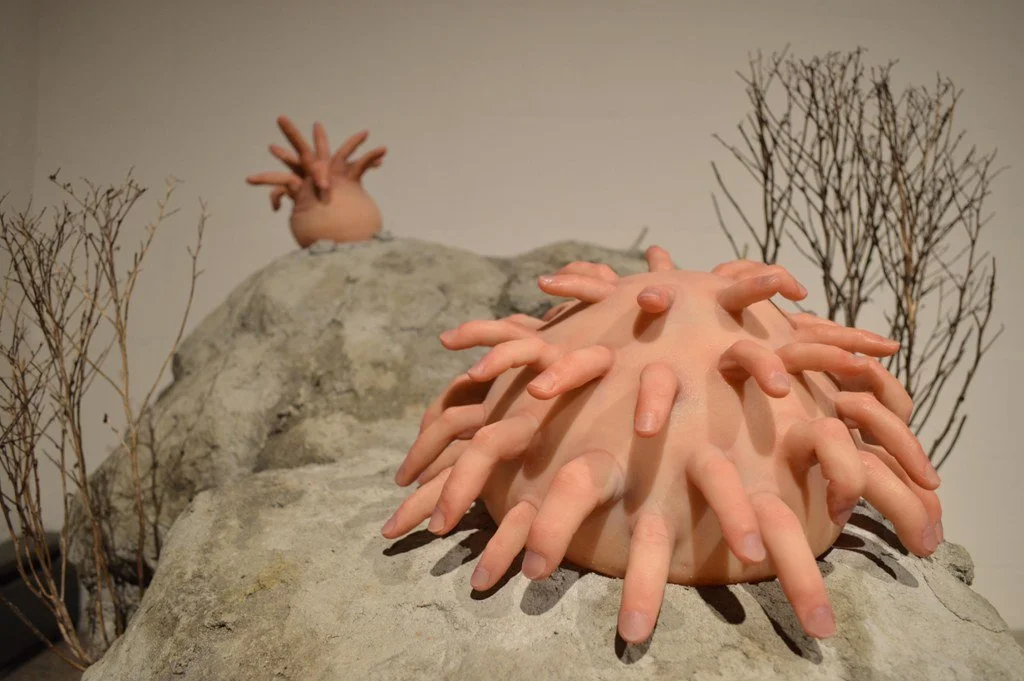
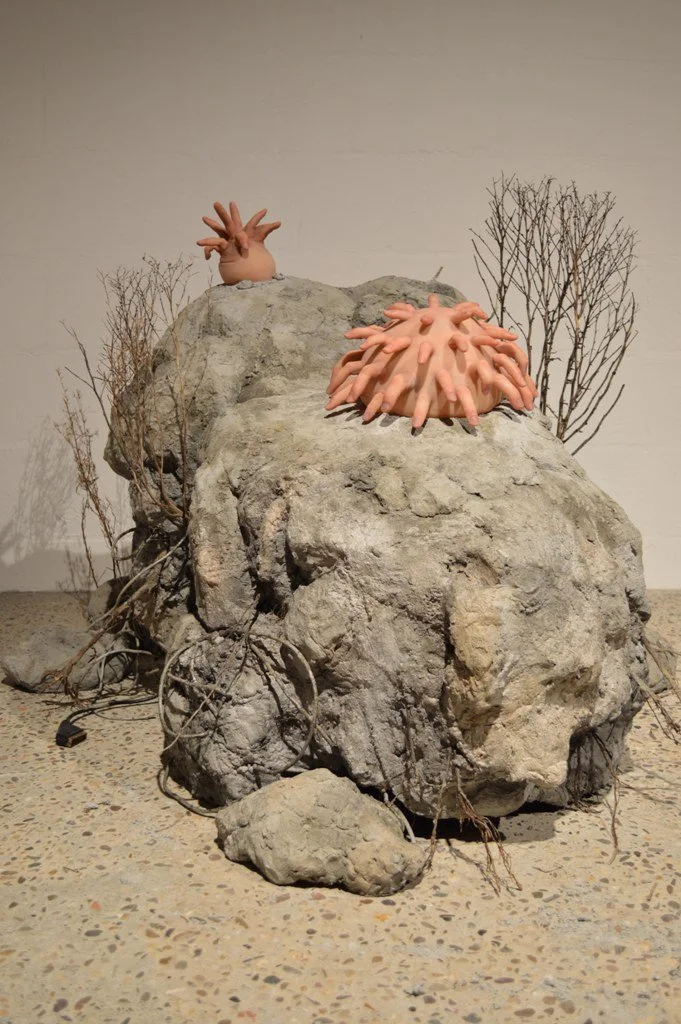
Growth
Tell us about the Totems. What were you trying to say with that series, and where did the concept come from? (your totems are what first grabbed my attention…they are haunting without necessarily being “dark” if that makes sense)
The Totems started from the idea of this extreme urge for efficiency we have. Like how we label, categorise and organise everything around us. We even need it to make sense of and thrive in our increasingly chaotic world. The idea came to me when flying over our dutch landscape. Looking down, all I saw was squares and efficiency of the highest order in which nothing natural seemed to remain.. The block-like human figures suggest a future in which people have literally become square. Stacked on top one another, they reflect the pinnacle of systemic efficiency, mirroring the way we already compress ourselves into cubicles or apartments blocks. The stacked figures also resemble ceremonial monuments or totem poles, evoking both hierarchy and self idolatry.
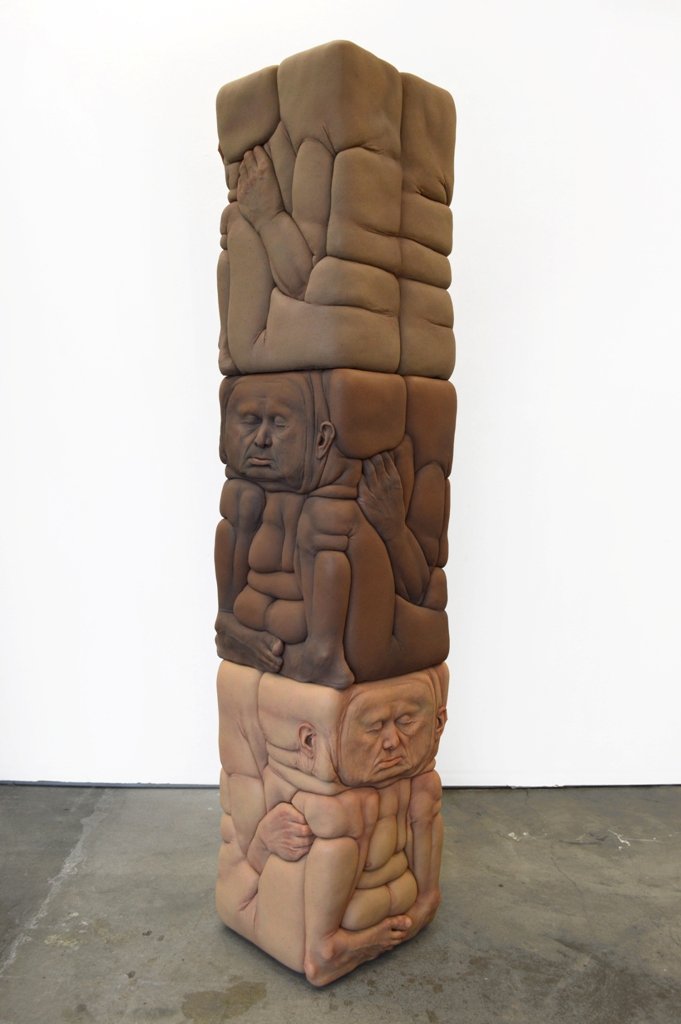
Totem for Mankind
The materials you use, silicone, foam, epoxy, are industrial and synthetic, yet the result feels disturbingly organic. Walk us through how a piece actually gets made from start to finish.
Usually the process begins with plasticine clay and life casting. Very roughly at first, trying to find the right proportions. Once the form is finalized, I create molds and cast in silicone to achieve that fleshy, skin-like quality. Inside, the sculptures are often made out of foam or resin, reinforced with wooden or metal structures depending on the size of the piece. The painting process is very important. I spend a lot of time painting translucent layers onto the silicone so the skin feels alive rather than artificial. So even though the materials are synthetic, I want to give my sculptures the illusion of something realistic and biological.
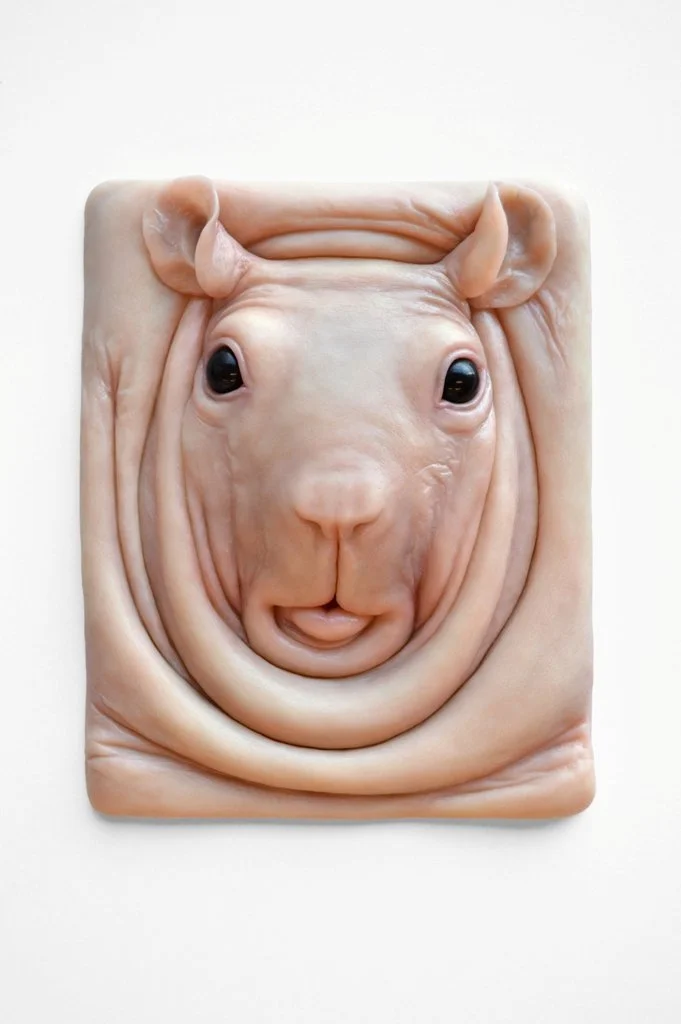
Tamagotchi
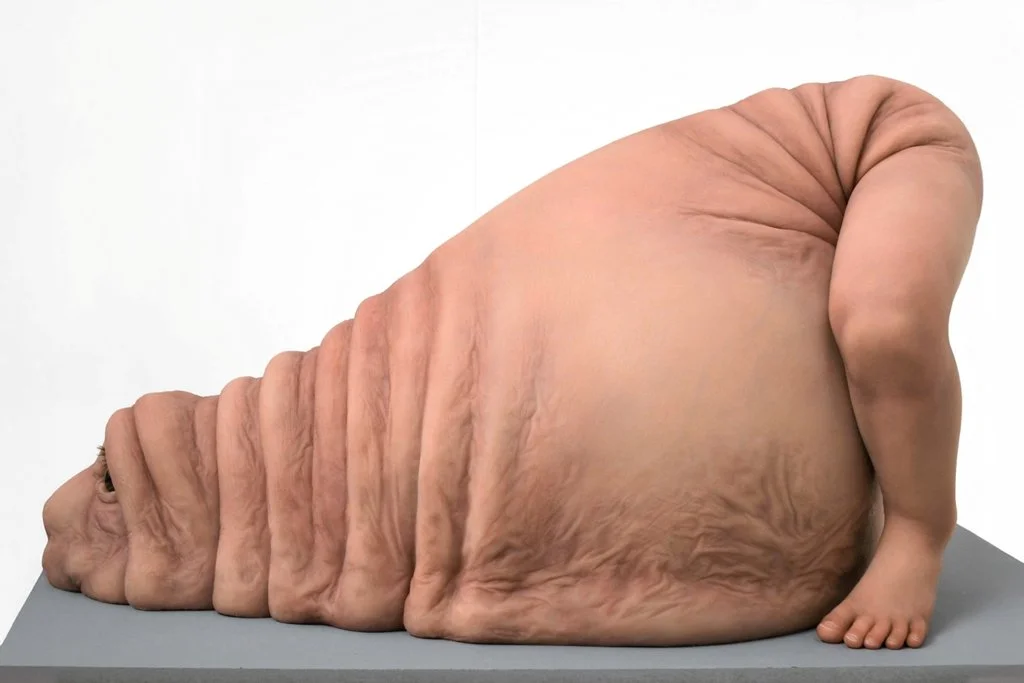
Your Homunculus Loxodontus became an internet phenomenon in Russia and led to a licensing deal for a children's film. That had to be unexpected. How did that unfold and how did you feel about it?
It was completely unexpected. I originally made the sculpture as part of an art project for Beelden in Leiden, and at some point images of it started circulating online in Eastern European countries. People began to emotionally connect with the creature in a way I had never anticipated. It became a meme, but also something unexpectedly beloved. What fascinated me most was how much humanity people projected onto this awkward fictional creature. Eventually, that led to licensing opportunities and adaptations for children’s media. It was surreal to see something that began as a small art project develop its own independent cultural life online.
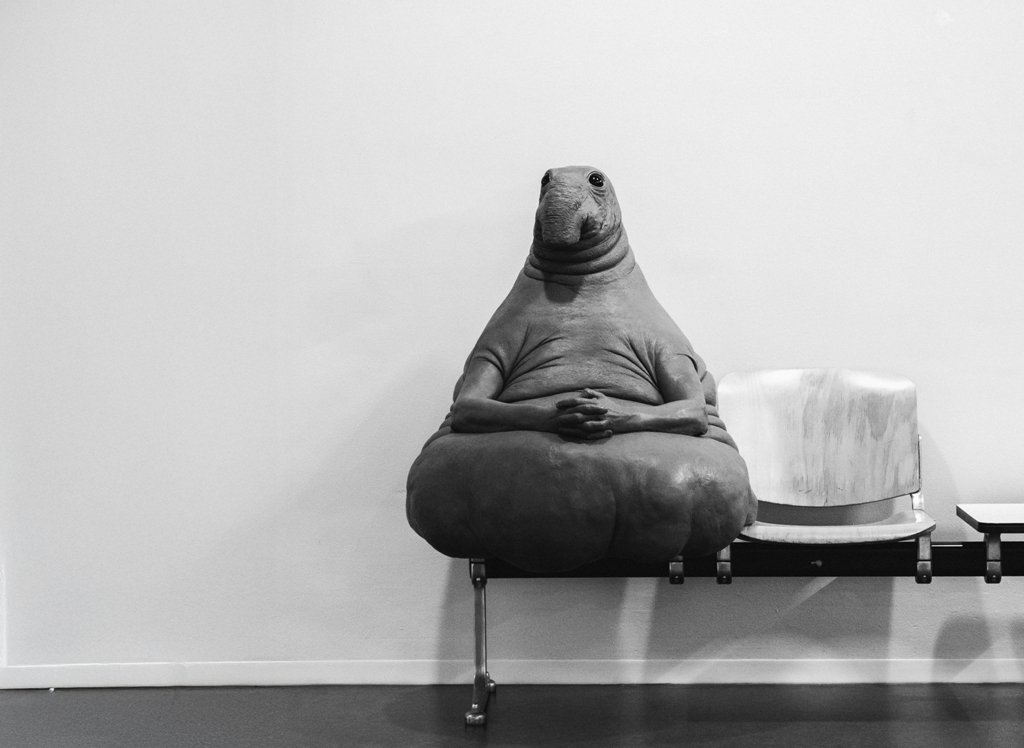
Homunculus Loxodontus - Photo Credit: Alexander Dhiet kopie
Your work has been collected by hospitals and exhibited at Saatchi Gallery in London. Do those very different contexts change what the work means to you?
Yes, definitely. Context changes everything. In a gallery setting, viewers may approach the work more conceptually or aesthetically, while in hospitals the emotional response can become much more direct and personal. The audience is completely different, so they respond differently to the objects. In the hospital, my work is generally more seen as a creature or waiting companion, then as an art object. I actually find it meaningful that the same sculpture can function differently depending on where it exists. Some works can create discomfort in one context and comfort or empathy in another.
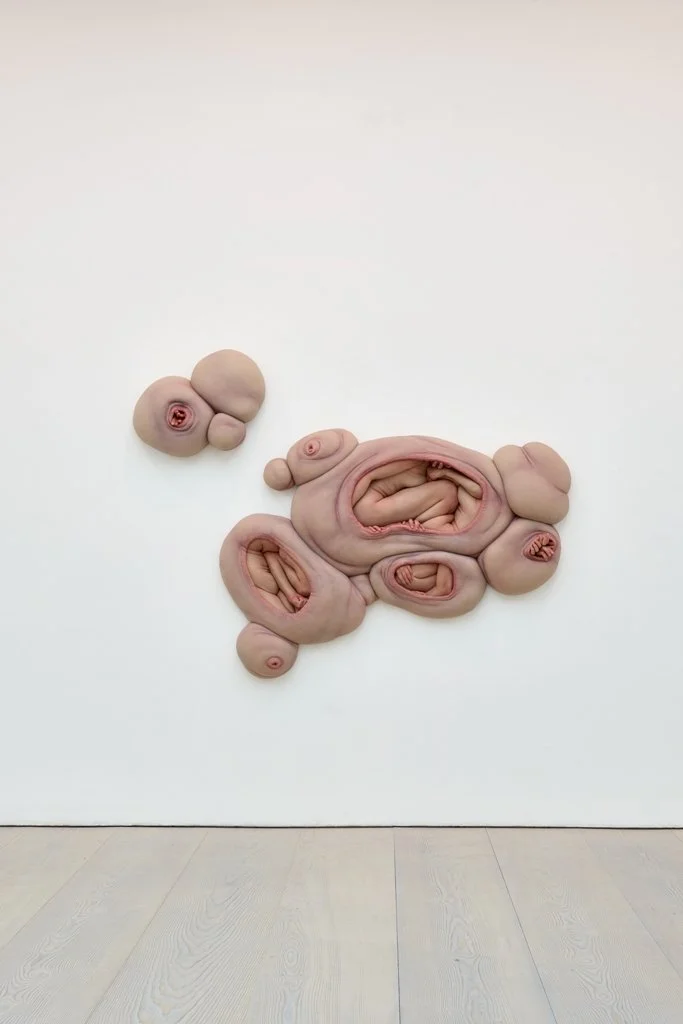
Cocoons - Photo Credit: Pasquale Viglione
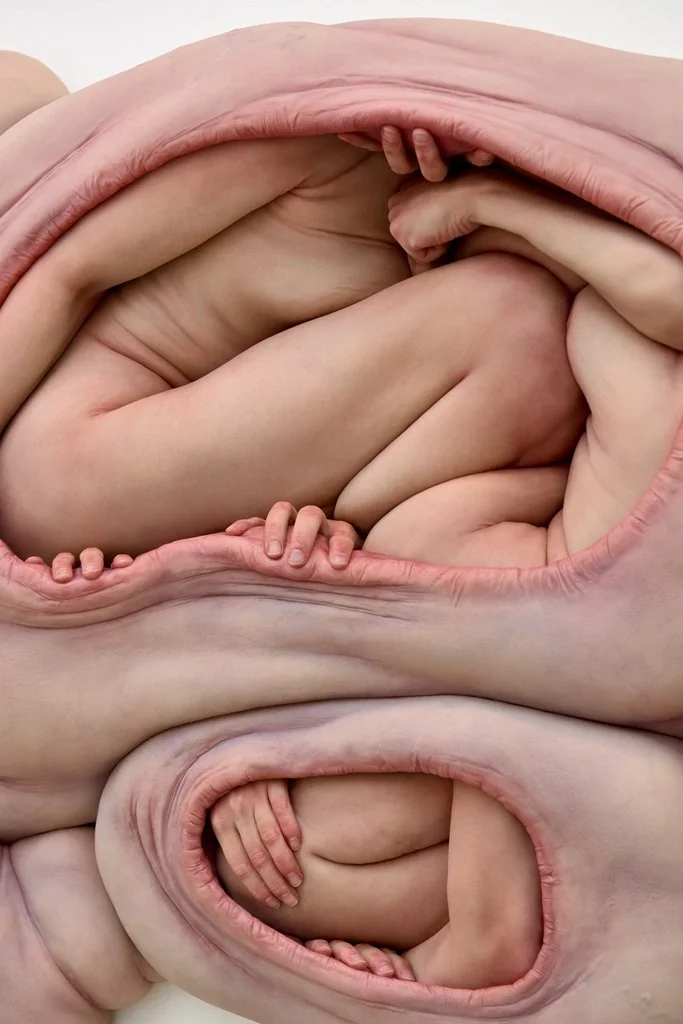
Cocoons - Photo Credit: Pasquale Viglione
Is the unease a viewer feels standing in front of your work intentional, or is that just a byproduct of what you're exploring?
It’s intentional to some extent, but not as an end goal in itself. I’m not interested in shock for the sake of shock. The unease is more a doorway into curiosity and emotional engagement. When something feels slightly “off,” people tend to look longer.
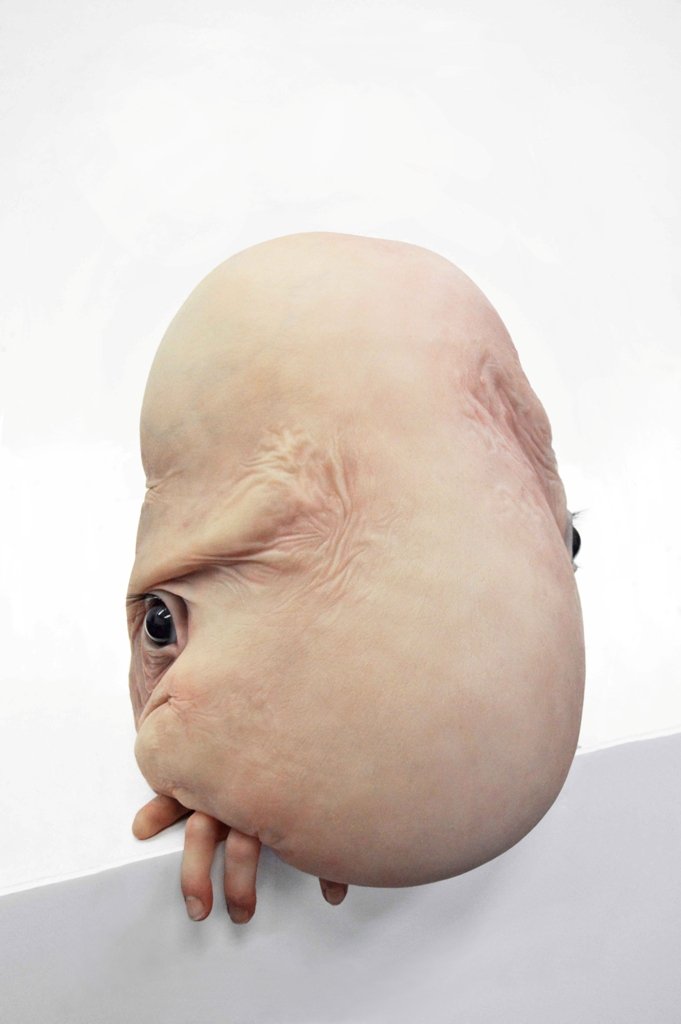
You've been adding movement and electronics to more recent pieces. What are you chasing with that, and how close have you gotten to what you're imagining?
I’ve become increasingly interested in making the works feel less like static sculptures and more like living presences. Small movements, breathing mechanisms, vibrations, or responsive elements can completely change how viewers relate to an object. Suddenly it feels sentient, or aware of your presence. I’ve been experimenting with robotics, Arduino systems, and immersive installations. I still feel like I’m at the beginning of what I ultimately want to achieve, but that’s also exciting. The ambition is to create environments that feel almost biologically alive, as if visitors have stepped into an ecosystem rather than an exhibition.
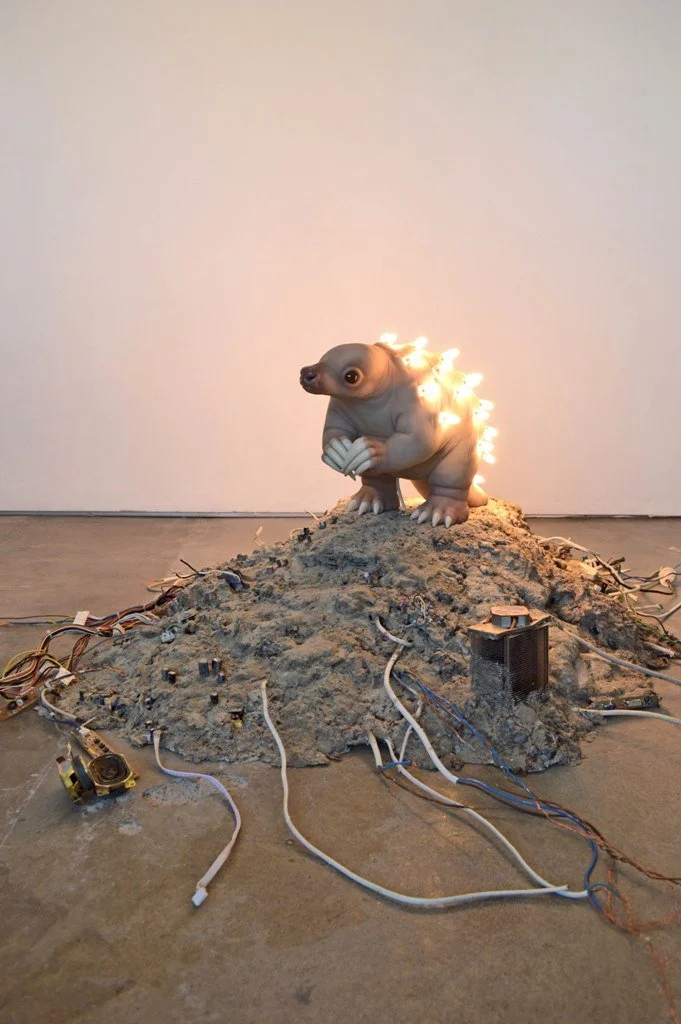
Any cool current or upcoming projects that you can share?
At the moment I’m trying to develop larger immersive installations that combine sculpture, movement, and speculative environments. I’m particularly interested in creating fictional ecosystems populated by hybrid sea-like organisms. I’m also experimenting with 3D modeling and printing techniques to expand the scale and complexity of the creatures. I’m hoping to present this in a large museum presentation in about a year.
Artist Bio:
Margriet van Breevoort (1990, NL) creates sculptural and installation-based works that explore the complex relationship between humans and nature through humor, playfulness, and a sense of estrangement. Playing with contrasts, like organic and technological, animalistic and cultivated, her work draws viewers in with an endearing aesthetic while subtly unsettling them with fleshy, sometimes grotesque forms. By balancing attraction and repulsion, she opens space for reflection on how we manipulate nature and perceive our place within a broader ecosystem. Van Breevoort lives and works in Amsterdam and graduated from the Hogeschool voor de Kunsten Utrecht in 2013.
Follow Margriet on Instagram