On Memorial Day, a few stories of creative people who gave everything.
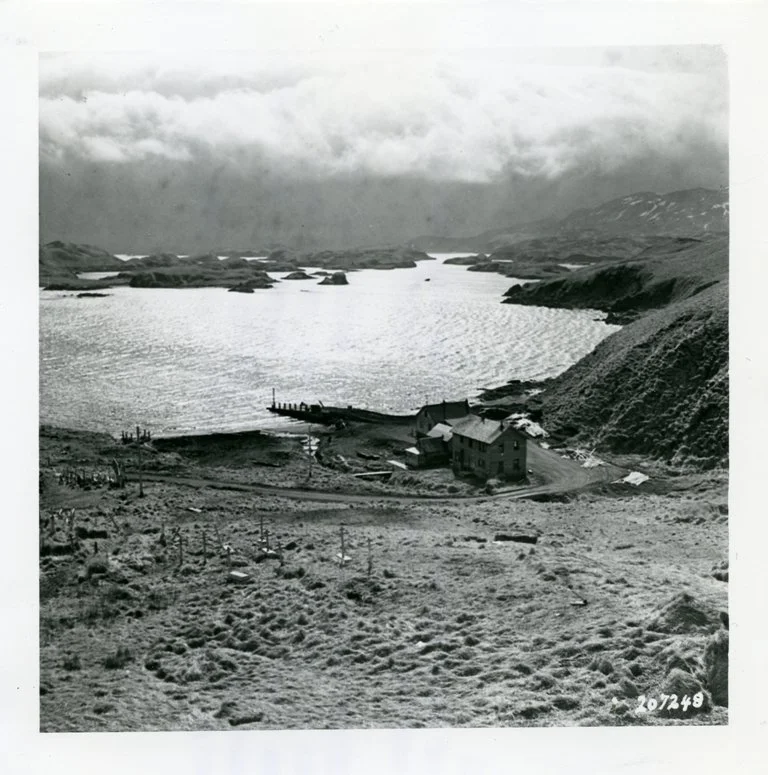
Atka Harbor - Photo by Vincent A. Wallace, Tec5 U.S. Army, 1945
My grandfather was an Army photographer in World War II (that’s his photo above)...which got me thinking. This Memorial Day, instead of a list of battles or statistics, I wanted to discover some stories about creative people who served and never made it back. People who, before the war, were doing exactly what we cover here at FEELING CREATIVE?. People who left that behind to join the war effort, and never got the chance to pick it back up.
Memorial Day is an American holiday. But war doesn't discriminate, and neither do we. Today we salute our Allied casualties alongside our own. These are five of their stories.
John Bushemi, Photographer
Staff Sergeant, U.S. Army / April 19, 1917 – February 19, 1944
Back home in Gary, Indiana, they called him "One Shot." It was a nickname earned for his uncanny ability to capture even the fastest action with just one click of his camera shutter. John Bushemi had started out shooting sports for the Gary Post-Tribune, and by the time the war began, he was already one of the best photographers in the Midwest.
He enlisted in the Army in June 1941, and after basic training at Fort Bragg his talent was obvious enough that he was recruited as a staff photographer for Yank, the weekly magazine written by and for enlisted men. He was sent to the Pacific, shooting combat in the Solomon Islands, Makin, Tarawa, and Kwajalein, always, as one colleague put it, "right up there at the frontline, getting his pictures."
On February 19, 1944, at Eniwetok Atoll in the Marshall Islands, Bushemi and Yank correspondent Merle Miller came under Japanese mortar fire. Shrapnel hit Bushemi and he lost a great deal of blood. He died less than three hours later aboard a Navy transport ship. His last words were: "Make sure these pictures get back to the office right away."
He was 26 years old. Time magazine noted his passing: "Killed in action, Staff Sergeant John Aloysius Bushemi...probably the best known noncom in the Pacific area."
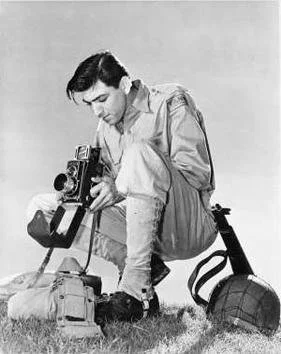
John Bushemi
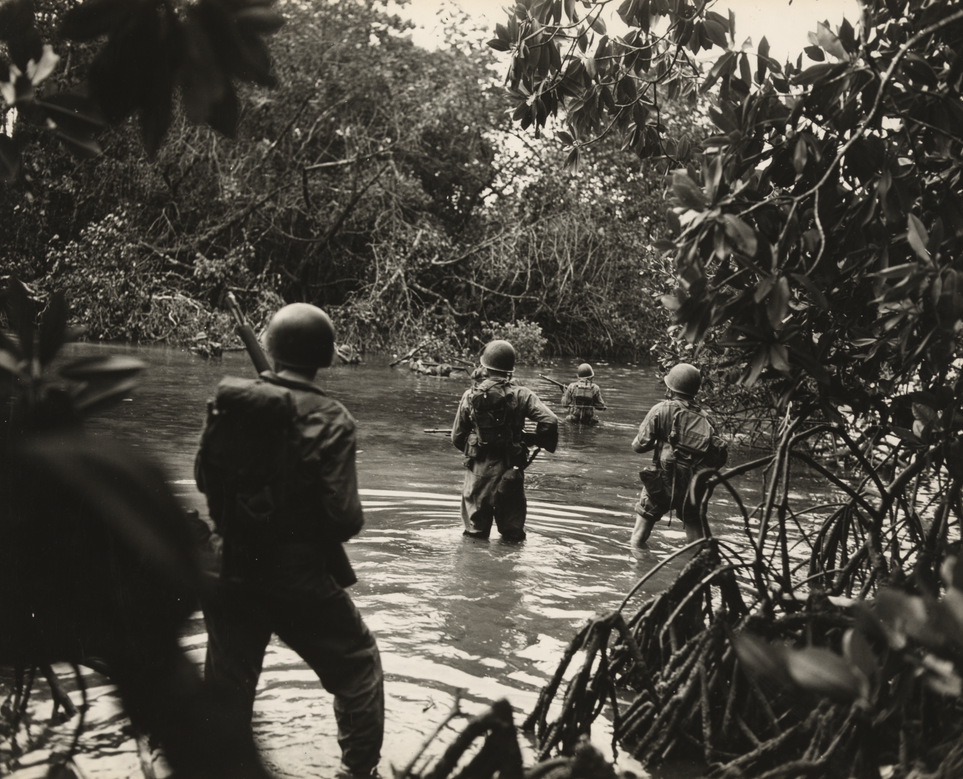
Operations Against the Japanese on Arundel and Sagekarsa Islands, Photo by John Bushemi, 1943
Glenn Miller, Musician
Major, U.S. Army Air Forces / March 1, 1904 – December 15, 1944
Glenn Miller was the biggest star on the American pop-music scene in the years immediately preceding World War II. "In the Mood," "Moonlight Serenade," a string of hits, a devoted following. He had everything.
He was in his late thirties when the war began. He didn't have to volunteer. He could have simply stayed home in America throughout the war. He tried to sign up for the Navy first. When the Navy turned him down for being too old, he tried the Army. He set aside his brilliant career right at its peak in 1942 to serve as leader of the USAAF dance band.
Miller and his band traveled across England and gave hundreds of performances to Allied troops. General Eisenhower understood what he was doing for morale. General Doolittle called him one of his most important officers in Europe, saying Miller's music did as much for the troops as anything coming through official channels.
On December 15, 1944, Miller boarded a small plane to fly across the English Channel to Paris, where he was set to perform for American troops who had recently helped liberate the city. The plane vanished. The wreckage was never found. His official military status remains Missing in Action.
On Christmas Eve 1944, the world learned that Major Glenn Miller was missing in action. The band's mission was too important to stop. And so they played on.
Rupert Brooke, Poet
Sub-Lieutenant, Royal Naval Division, British Army / August 3, 1887 – April 23, 1915
Rupert Brooke was a wellborn, gifted youth whose early death in World War I contributed to his idealized image in the years that followed. At King's College in Cambridge, he befriended such future luminaries as E.M. Forster, John Maynard Keynes, and Virginia Woolf. By 25 he was a published poet and a Fellow of Cambridge. The Irish poet W.B. Yeats reportedly called him the handsomest young man in England.
When war broke out in 1914, Brooke gained a commission in the Royal Naval Division with the help of his close friend Edward Marsh, then secretary to First Lord of the Admiralty Winston Churchill. He saw action during the defense of Antwerp, and while recovering from the flu afterward, he wrote what would become the most famous of his war sonnets, including "Peace," "Safety," "The Dead," and "The Soldier."
Brooke sailed for the Dardanelles in February 1915. There, he developed a fatal case of blood poisoning from an insect bite and died on April 23, 1915, aboard a hospital ship, two days before the Allies launched their massive, ill-fated invasion of Gallipoli. He was 27.
His war sonnets, published posthumously, made him famous in a way he never lived to see. The most remembered line from "The Soldier" reads simply: "If I should die, think only this of me / That there's some corner of a foreign field / That is forever England."
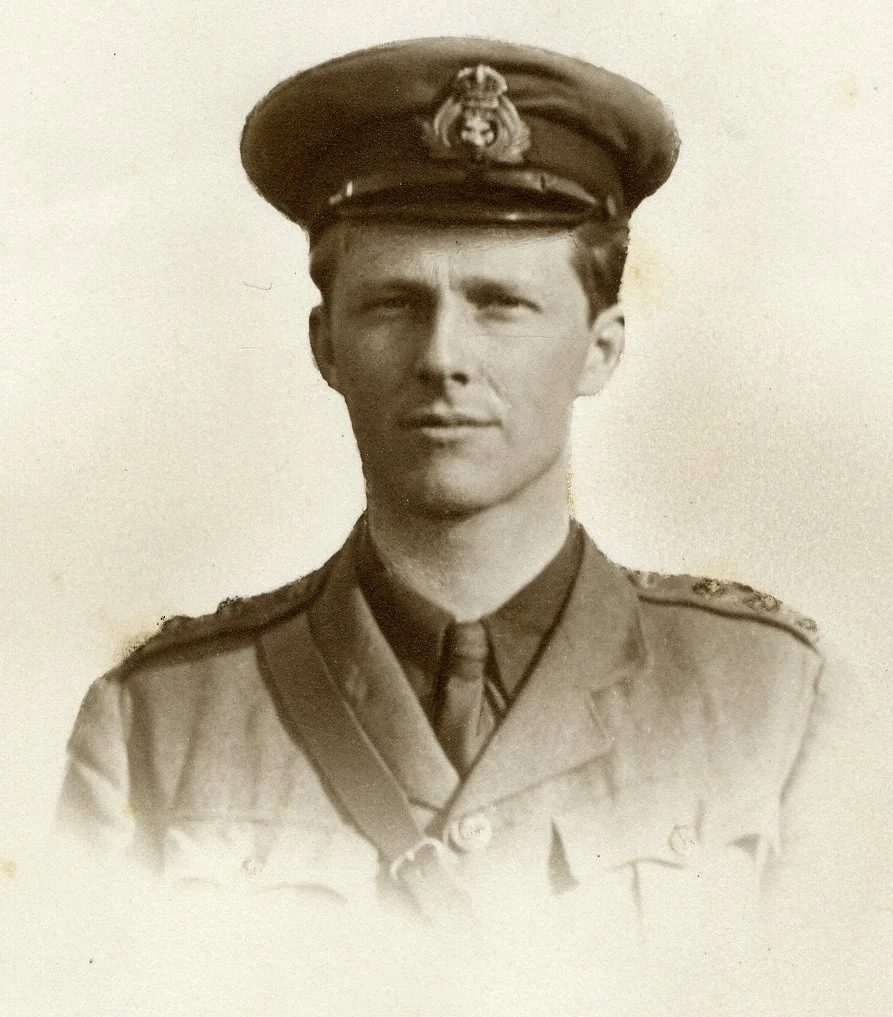
Rupert Brooke as an officer in 1914
Eric Ravilious, Painter and Illustrator
Honorary Captain, British Royal Marines / July 22, 1903 – September 2, 1942
Eric Ravilious transformed British art through his distinctive watercolors and wood engravings that captured the English countryside with modernist precision. Before the war he had designed popular ceramics for Wedgwood, illustrated books, painted murals, and built a quiet reputation as one of the most original visual artists in Britain. His paintings of the South Downs and the English coastline had a quality that felt both timeless and entirely his own.
When World War II broke out in 1939, Ravilious volunteered to be a part-time air spotter with Britain's Royal Observer Corps. He was appointed an official war artist in 1940, with the rank of Honorary Captain in the Royal Marines. He painted submarines at Gosport, coastal defenses, naval barracks, and sailed to Norway on a destroyer. He wasn't just documenting the war from a safe distance. He was in it.
He wrote to his wife from the Arctic: "The seas in the Arctic Circle are the most intense blue you can imagine. Almost cerulean." The painter couldn't stop seeing color even in a war zone.
In August 1942, Ravilious flew to Iceland, planning to stay until Christmas. At dawn on September 2nd, three Hudson aircraft were sent on an air sea rescue mission. The plane Ravilious was on never returned. The only wreckage ever found was a wheel washed ashore. He was 39.
He was the first British war artist to die on active service in World War II. His work now hangs in the Tate, the Imperial War Museum, and the Victoria and Albert Museum. A documentary about his life was released in 2022, featuring tributes from artists Ai Weiwei and Grayson Perry. He's been rediscovered in a big way, just eighty years too late for him to know it.

HMS Glorious in the Arctic by Eric Ravilious 1940
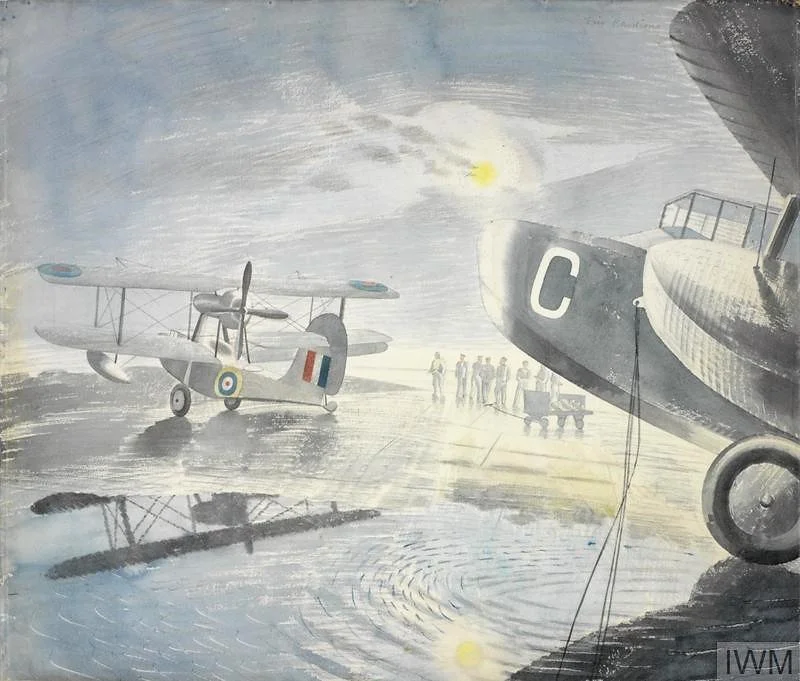
Morning on the Tarmac by Eric Ravilious, 1941
Antoine de Saint-Exupery, Writer and Aviator
Captain, Free French Air Force / June 29, 1900 – July 31, 1944
Antoine de Saint-Exupéry considered himself a pilot above all else. The writing came second, even though the writing is what the world remembers.
Born in Lyon in 1900, he became a pilot at 26 and pioneered commercial aviation routes in Europe, Africa, and South America. Along the way he started writing, and it turned out he could do that too. His 1931 novel Night Flight won France's Prix Femina. His memoir Wind, Sand and Stars won the U.S. National Book Award. Flying and writing were never separate things for him. The plane was always the point of departure for something larger.
When World War II began, he joined the French Air Force despite being over the age limit for combat pilots. After France fell in 1940, Saint-Exupéry fled to New York, where he wrote some of his most famous works, including The Little Prince. Published in 1943, it became one of the most translated books in history. A fable about a little prince who travels between planets, falls in love with a rose, and eventually disappears. Many people who knew Saint-Exupéry felt it was ominously autobiographical.
He was desperate to return to the fight for his homeland. By 1943 he was 43 years old, with a collection of injuries from previous crashes that left him unable to turn his head to the left or dress himself in his own flight suit. The military tried to ground him. He argued his way back into the cockpit anyway.
On July 31, 1944, he took off from Corsica on a reconnaissance mission and never returned, disappearing over the Mediterranean. In 1998, a French fisherman found his identity bracelet in the ocean off Marseille. Two years later, divers found the wreckage of his aircraft nearby. The cause of the crash has never been confirmed.
The Little Prince had been published just a year before he vanished. The little prince in the book disappears too, in the desert, under the stars, returning to wherever he came from. Many felt the book was ominously foretelling.
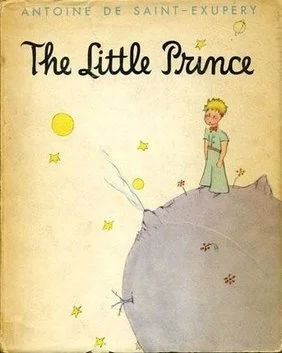
The Little Prince by Antoine de Saint-Exupéry
In Closing
These are just five stories. It’s impossible to know how many artists, writers, musicians, filmmakers, photographers whose creative lives were ended by war. My grandfather was among the lucky who made it home.
On Memorial Day, we remember the ones who didn't.
“A hero is someone who understands the responsibility that comes with his freedom.” — Bob Dylan
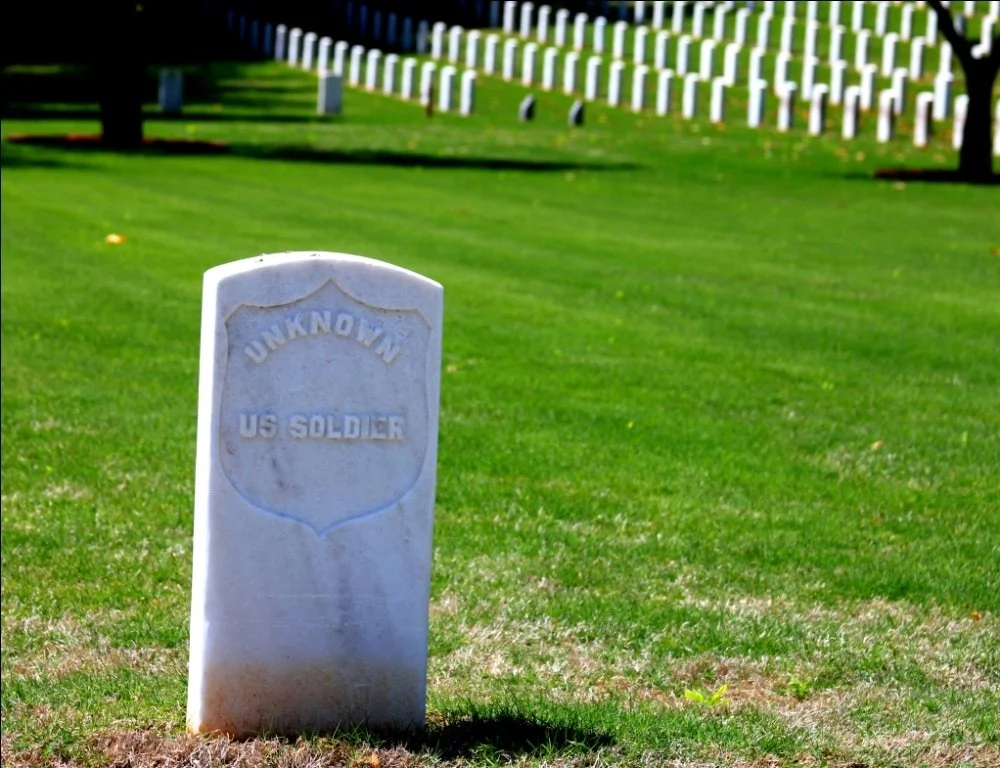
Unkown Soldier, Photo by Mike Meyerson
For those who did come back, the battle didn't always end there. FC contributor and Army veteran James knows that firsthand, and his story of finding a creative outlet to combat PTSD is worth your time.
About The Author
Mike Meyerson is the founder of FEELING CREATIVE?, and has worked in the commercial video production industry for over 25 years. Currently located in NY’s Hudson Valley Region, is always looking to build the network, find a new cool trail to hike and a new place to grab a slice of pizza.
Read Mike’s other articles - HERE.