A mutated janitor with a mop built an indie empire. And I was there for part of it.
I was around 14 or 15 years old, working at a video store (yeah, I’m old enough to remember life before streaming) in the NYC ‘burbs. I loved movies and was in the early stages of becoming the horror nut that I am today. This wasn’t just any video store, we had a great horror inventory including some of the Troma titles. It was also to be used as a shooting location for The Toxic Avenger II. Later they decided to shoot part III as well, and the video store ended up being the opening, gruesome scene in The Toxic Avenger Part III: The Last Temptation of Toxie. That was their workflow in a nutshell: planned on shooting one movie, ended up with two.
I got to be on set for some of it. I met Ron Fazio, one of the two actors who played Toxie, and somewhere in a box of old photos there's a picture of him with my brothers on his shoulders.
It was my first film set. It was completely unhinged, yet very well organized and inspiring. The scene they shot that day, which is gloriously, aggressively over the top with gore, has been edited “down” to a more tame rated R for Amazon Prime and Blu-ray, which remains a genuine disappointment. If you’re curious, most of the NR scene can be found on YouTube: HERE.
That experience stayed with me. So when the 2025 reboot landed with Peter Dinklage, Kevin Bacon, and Elijah Wood, I had to go back to the beginning and figure out how a mutated janitor from New Jersey stood the test of time forty years later.
First, Some Troma History
To understand the Toxic Avenger you have to understand Troma Entertainment, because without Troma the character doesn't exist and the story doesn't make any sense.
Lloyd Kaufman and Michael Herz founded Troma in 1974, fresh out of Yale. While other indie studios chased mainstream success or went bankrupt trying, Troma carved out its own territory entirely: hyper-low-budget films that blended extreme gore, slapstick comedy, social satire, and absolute bad taste in ways that no studio would touch and no competitor could replicate. They leaned into cheap practical effects and over-the-top everything because they didn't have the money for anything else, and what came out the other side was accidentally a genre of its own.
The business model was simple and brutal: own your IP, keep your budgets impossibly low, and survive on midnight screenings, VHS rentals, and maybe some cultish merchandise. Troma didn't need mainstream theaters to survive. They needed a rabidly loyal audience who would show up for exactly what they were making, which turned out to be a larger audience than anyone expected.
What's remarkable in hindsight is that Troma was also, without intending to be, a film school for a generation of future A-listers.
Kevin Costner starred in the Troma-distributed 1981 sex comedy Sizzle Beach, U.S.A. way before Dances with Wolves made him a household name. Samuel L. Jackson had an early role in the 1990 Troma horror film Def by Temptation. On her way to winning an Oscar, Marisa Tomei had an uncredited role in the original 1984 Toxic Avenger. Trey Parker and Matt Stone, the South Park creators, had their 1993 college film Cannibal! The Musical distributed by Troma. Billy Bob Thornton appeared in Chopper Chicks in Zombietown. Oliver Stone made his acting debut in a 1971 Troma film, The Battle of Love's Return.
And then there's James Gunn, who wrote Troma's Tromeo and Juliet in 1996 for $150 and credits Lloyd Kaufman with teaching him how to actually make movies. The same James Gunn who went on to direct Guardians of the Galaxy and now basically runs DC Studios.
The Original: 1984
The Toxic Avenger was made in 1984 for practically nothing. The premise is exactly as absurd as it sounds: a 98-pound nerd named Melvin works as a janitor at a health club in the fictional New Jersey town of Tromaville. After being humiliated by a group of sadistic members, he falls into a vat of toxic waste and emerges as a hideously deformed, superhuman mutant in a tutu, armed with a mop. Did I mention it was absurd?
What followed was raw, offensive, completely bonkers filmmaking that shouldn't have worked and absolutely did. The practical effects were cheap and that was somehow part of the appeal. The gore was committed. The social satire was blunt to the point of being surreal. And audiences, particularly late-night and midnight movie audiences, responded to something that felt completely outside every convention Hollywood operated by.
It became a franchise. Troma made three sequels, including the one that brought a film crew to my video store. They even made a children's cartoon called Toxic Crusaders, which remains one of the more odd things the 1990s produced. They made an off-Broadway musical. Toxie became the mascot for the longest-running independent film studio in the world.
All from a mutant in a tutu with a mop. A “superhero from New Jersey”.
The Casting Story
The 2025 reboot had been in development since 2018, which tells you something about how many hoops its creators had to jump through to get it made.
Director Macon Blair, who wrote and directed the film, made one decision early that changed everything. He sent the script to Peter Dinklage, with a simple message: here it is, we can talk if you want. He described it as rolling the dice. It turned out Dinklage already knew the original and needed no convincing. He was in.
Once Dinklage committed, the rest fell into place. Kevin Bacon did a deep Troma dive after getting the offer and came out genuinely enthusiastic, describing Troma's particular appeal as "a combination of independent filmmaking and popcorn filmmaking" that rarely exists in the same movie. Elijah Wood signed on for a role described by reviewers as having elements of Danny DeVito's Penguin, Riff Raff from Rocky Horror, and his own Wormtongue from Lord of the Rings, possibly the least Elijah Wood role he's ever played, even though he’s a big horror connoisseur in his own right. Jacob Tremblay, who was 14 when filming began, was 18 by the time the film was released.
The film premiered at Fantastic Fest in September 2023 to actually strong reviews. Then it sat on a shelf for nearly two years because no traditional distributor knew what to do with it. Too weird. Too “b-movie”. Too uncompromising for a mainstream release and probably too politically incorrect for 2023.
Sound familiar? The same company that got Terrifier 3 into theaters stepped in. Cineverse acquired the rights, refused to cut it for an R-rating, and released it unrated in August 2025. The same playbook that worked for Art the Clown worked for Toxie. Another win for Art.
The Original vs. The Reboot
Having watched the reboot and planning to revisit the original, here's the honest comparison:
The 1984 original has something the reboot can't fully replicate: the specific energy of a film made with no money, no safety net, and nothing to lose. The gore hits differently when it's clearly done for almost nothing by people who are committed beyond any rational financial logic. There's a rawness to it that Troma has never been able to manufacture intentionally and no studio can buy.
The 2025 reboot is a genuinely fun film with a great cast, that does something smarter than most legacy reboots attempt. It understands that you can't recreate the original's energy, so it doesn't try. The always great Dinklage brings genuine emotional weight to Winston Gooze before the transformation, grounding the character in a way the original never needed to. The social satire is updated without losing the bluntness that made the original work, and Kevin Bacon seems like he’s having the time of his life as the villain.
My only real complaint with the reboot is the overuse of CGI. Much (or all) of the gore is obviously CGI, so much so, that I have no idea if there’s any real practical FX in there at all. The style of the gore seemed to pay homage, but still a strange choice by the filmmakers…should have remained more faithful to Troma in that way. Maybe they were on a tight, quick shooting schedule, so it was just cheaper to do more in post-production.
The Bigger Picture
The Toxic Avenger story is really two stories running in parallel.
The first is about Troma: how two Yale graduates built a completely self-sustaining independent film empire out of cheap trash, trained half of Hollywood along the way, and created a character iconic enough to still be relevant and enjoyable 40 years later.
The second is about what happened when that major studio got cold feet. A well-made reboot with an A-list cast sat on a shelf for two years because Hollywood couldn't figure out how to market something genuinely uncompromising. The same indie distribution model that Terrifier built had to rescue it.
The lesson is the same one we've been learning over and over again: the audience for extreme, unrated, creator-driven content exists and it shows up. The studios keep being surprised by this. The audience never is.
Toxie started in a vat of toxic waste in New Jersey. He ended up at the center of one of the most interesting conversations in independent film.
Not bad for a nerdy guy with a mop.
About The Author
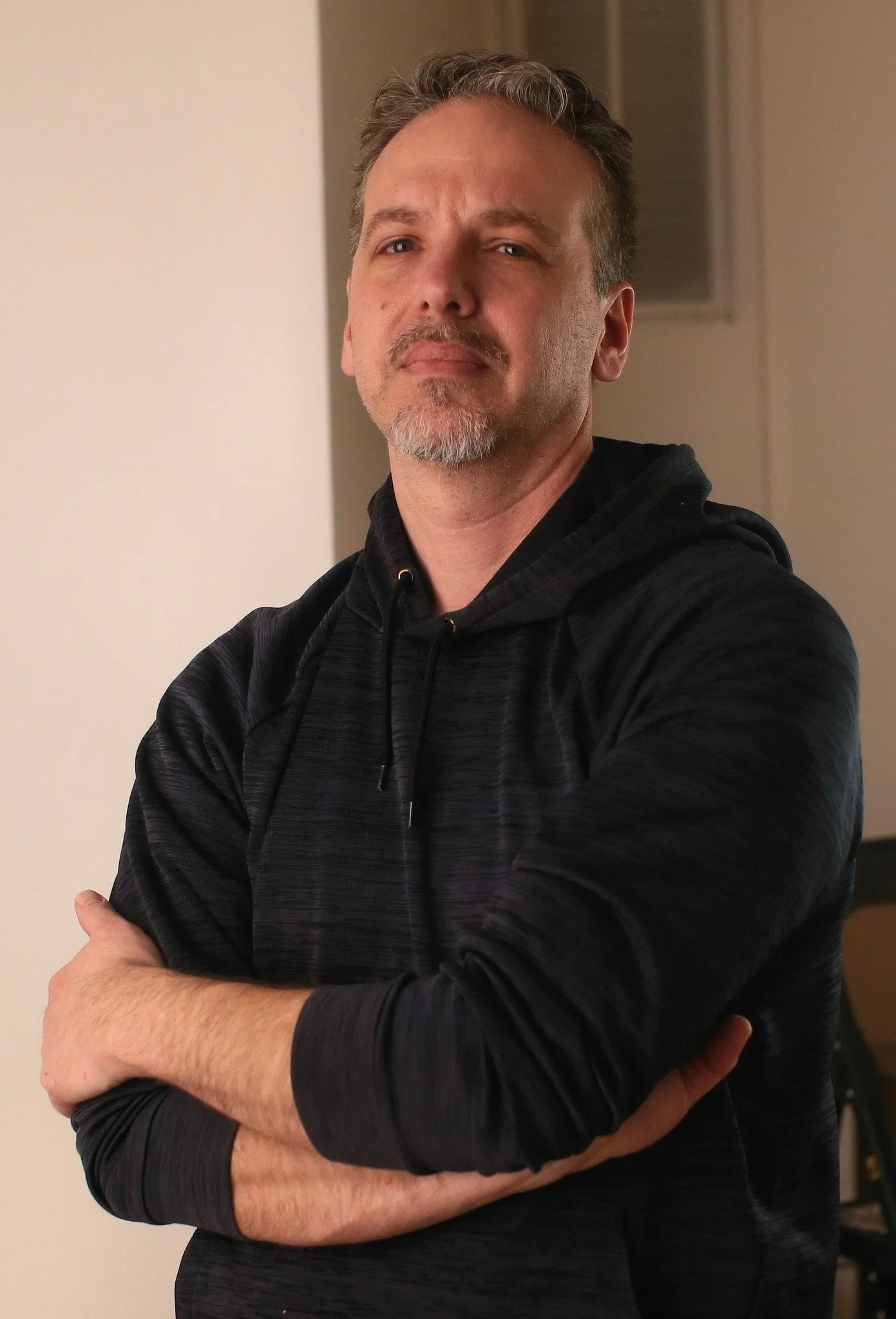
Mike Meyerson is the founder of FEELING CREATIVE?, and has been a horror nut ever since Alien and The Exorcist gave him nightmares as a boy. Currently located in NY’s Hudson Valley Region, is always looking to build the network, find a new cool trail to hike and a new horror movie to watch.
Read Mike’s other articles - HERE.