
Writing a screenplay, book or any creative medium can always feel like an impossible task. There’s the dreaded writer’s block, creative fatigue and where to actually start. For me, it’s always come easy putting pen to paper, and I understand that’s rare. My brain spills out so many ideas on the daily I eventually got to the point of: what do I do with them?
So I did what I thought was the easiest and most cost-effective route: Self-Publishing. Oh boy, how I was wrong.
Step 1: Planning Out Your Book
I want to start this first step with a big old asterisk: I’m not a professional writer. Outside of an education and background in Film & Television, all I knew was pre-production, production and post. So when I set myself the goal of finally developing one of my ideas into a novel, I knew, like pre-production, planning is key.
It’s so easy to get into the weeds early on and start rambling off sentence after sentence, but everything has to mean something. Readers have a finite amount of time, so don’t waste it by giving them the impossible task of reading a million words that don’t move the story along in any way.
I started out with my core idea. It’s a Crime Noir detective novel, so I knew twists, clues and an overarching case were going to be my backbone. With that in place, I could start planning out my world, the characters within it and build a somewhat bible of dos and don’ts. This really helped me stay on track, make each character feel distinct and give them a purpose.
Then came the fun part: I love gripping chapter titles! For me, they help frame the entire book. Now, having my bible and plan, it was fun to chop up the main story and flesh out each section, ensuring each act transitioned into the next.
Step 2: Writing, Rewriting and Writing Again
Once my plan was down, you may be thinking you’re set up for success and the idea is bulletproof. Well, I hate to be the bearer of bad news: writing the book from start to finish doesn’t mean you’re remotely done.
Having multiple read-throughs and drafts are mandatory to a cohesive story. My first go at the book was ROUGH. It felt barebones. Despite being a quick read, many of the emotions and actions of the characters would change on a dime. This meant there was no breathing room, no time to linger on an idea or plot point.
That’s when I decided to take each chapter one by one, expanding on the groundwork set and making it flow more smoothly. As I said in the opening of this article, I didn’t pad out or add stuff for the sake of a longer book. I chose to add more description to what was there, as well as adding brand new chapters that helped support ideas already set out.
You can imagine, having an intricate plot with twists and turns, you need to make sure everything makes sense and you don’t sideswipe your readers.
By the time of publishing, I think I had around four drafts, each improving on the last.
Step 3: Formatting and Preparing for Publishing
This step I wish I took way more seriously. Take it from me, do not rush your book out the door. It can be frustrating to work months, maybe years, on a book and you want it out in the world. But hold off and make sure you do it right.
The first port of call after having a satisfying manuscript is to make sure it’s formatted correctly. As a first-time writer, this is where I really struggled. I love to read, I read all kinds of books from nonfiction to fiction, so understanding how my book should look was important to me. That’s where I discovered Reedsy. This is not an ad in any way, but this tool helped so much with making my words look official. It was easy to use, could be used on any device and, better yet, completely free. I was blown away by my finished product and couldn’t have done it without Reedsy.
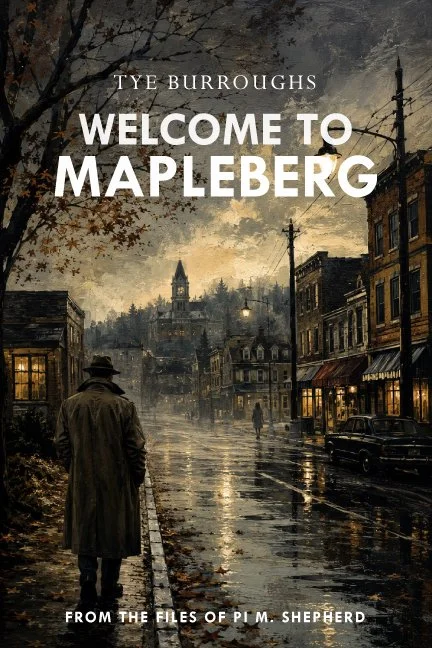
By this point, you have a formatted manuscript and you’re feeling pretty confident that you can publish. But one saying is synonymous for a reason: “Don’t judge a book by its cover.” Well, I can say that although it’s somewhat right, having a good cover is SO IMPORTANT.
I was never in this to make money, giving my book away for free was the route I was willing to take, but you can’t skimp out on a good cover. Amazon, Google Books, all of these digital storefronts are filled with countless AI-generated covers. So if you want to stand out, hire an illustrator.
I managed to get mine on Fiverr, but even then, I wish I had set aside a larger budget and got a cover a little bit more distinct and authentic. After discovering Reddit, commenters are quick to dismiss AI covers, so don’t fall into this trap.
Step 4: ARC and Reviews
I had no idea what an ARC was… I wish I did.
ARCs are Advance Reader Copies, so in short, you send your book to be reviewed by avid readers in the hopes they enjoy and review your book. Like I mentioned previously, it’s a never-ending void of self-published books out there and not enough time in the day. So make sure you get some honest feedback and reviews before even publishing your book.
I learnt that an ARC is primarily a couple of months before you decide to make your book live, so keep this in mind. Yes, you can get reviews and send out free copies after you’re published, but having hype surrounding your launch window is never a bad thing.
Step 5: Storefronts
Kindle is love, Kindle is life.
Since purchasing a Kindle, my reading habits have changed tenfold. When publishing, I knew I wanted my book on Amazon and, more importantly, Kindle Unlimited. This would mean readers could pick it up for free, as annoyingly, Amazon makes you set a minimum spend at a dollar.
There is something to keep in mind, though: you are tied into an exclusivity period with Amazon, so if you were hoping to have your book everywhere, enrolling in KDP Select might not be your thing.
Step 6: Finally Clicking the Button
By this point, you have a kick-ass cover designed by a human, a strong story you spent solid time developing, advanced review copies sent to multiple readers and you’re all set up with socials and storefronts. Now comes the relief: you can hit “Make Live.” Exhale.
You’ve only just started.
You heard me correctly. Now comes marketing, the soul-crushing part that every creative hates. If you want your book to do well, you need to make sure it’s being shown off in all the right places. You need to make sure it’s discoverable, with maybe a website or author page. Having a home base to link to will really help with sharing and promoting the book.
But marketing isn’t easy, especially when you’re trying to keep things cheap. Social media will quickly become your number one weapon, but you have to be careful. Don’t go in promoting straight away. Not only does this look desperate, but no one knows you yet.
Set a foundation of who you are as a writer. Collaborate and comment on other new writers you enjoy. Build credibility around your name. Hell, maybe even guest post on a creative blog website… hold on.
This step can be tough, trust me. I had no idea how much work goes into selling your work. Having a bad comment or lack of traction can be soul-destroying, but, trying not to be overly cheesy, don’t give up.
Things can build over time. Don’t let all your hard work be for nothing. Learn from the feedback, build on this experience and give it another go. Writing is the fun part, so for me, I couldn’t wait to put pen to paper again.
Conclusion
If you made it this far, thank you for reading. This process of writing my first book has been really eye-opening. I learnt so much each step of the way and, in all honesty, I’m probably missing steps I haven’t even learnt yet.
If you’re a new writer or thinking about publishing your book, please give it a go. If no one reads it, don’t be disheartened. It would be so rare to get overnight success, so just stick with it.
If you’re interested in my work please do visit: TyeBurroughs.com/welcome-to-mapleberg to learn more about me. You can also pick up my first novel ‘Welcome to Mapleberg’ over on amazon.
A huge thank you to Feeling Creative for letting me guest blog on their site!
Author Bio:
Hi there, I’m Tye Burroughs, a self-published author from the United Kingdom. Growing up, I was always a creative soul, with a hundred and one stories constantly swirling around in my head. I’ve had a fascination with detective stories, “whodunit” mysteries, and the shadowy atmosphere of Noir fiction, the secrets, the twists, and the characters hiding something just beneath the surface.
Welcome to Mapleberg is my first book, and it marks the beginning of my journey as an author. I decided to bring my love of mystery and detective fiction to life by putting my own personal twist on the genre, creating a story filled with intrigue, atmosphere, and unexpected turns.
I hope you enjoy the journey into Mapleberg as much as I’ve enjoyed creating it.
Follow on: Reddit
Recommended Reading: The Marketing Moves Most Indie Authors Skip and My Top 3 Mistakes as an Indie Author
