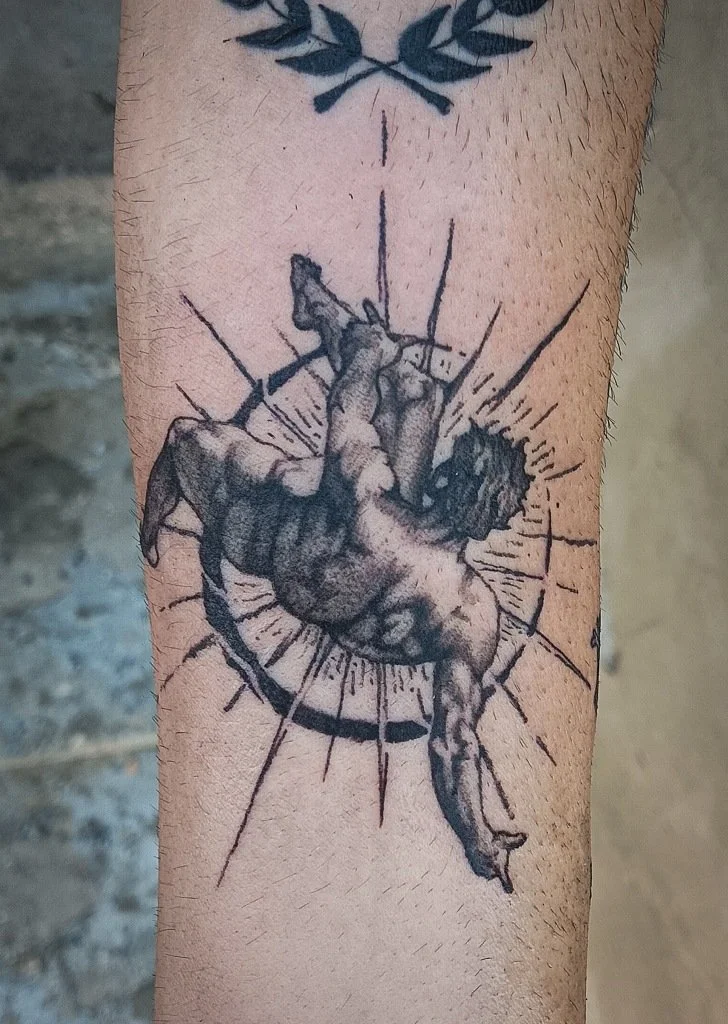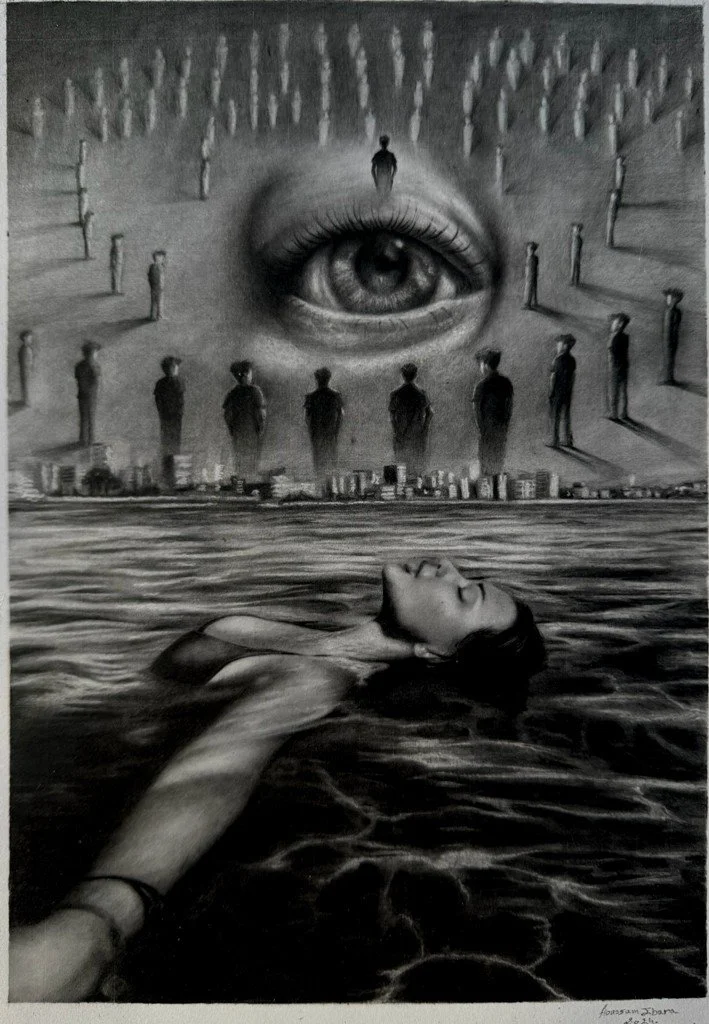
Artist Spotlight: Houssam Mahmoud Gebara
There’s a moment before every piece begins, whether it’s on skin or canvas, where nothing is defined yet. No lines, no structure, no clear outcome. Just a quiet pull. That’s where my work starts.
I move between two worlds: fine art and tattooing. At a distance, they seem separate, one belongs to galleries, the other to the body. But for me, they come from the same place. Both are ways of translating something internal into something that can be seen, felt, and lived with.
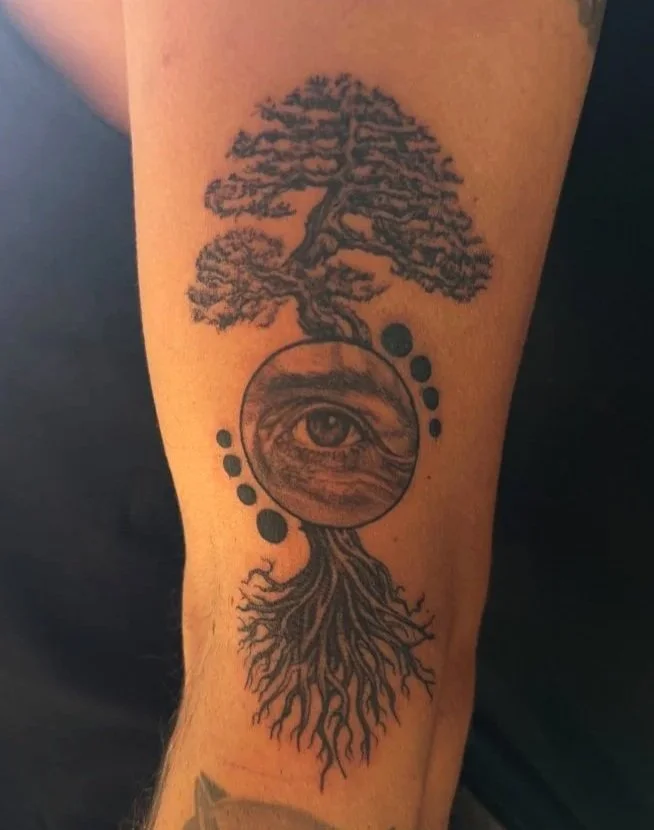
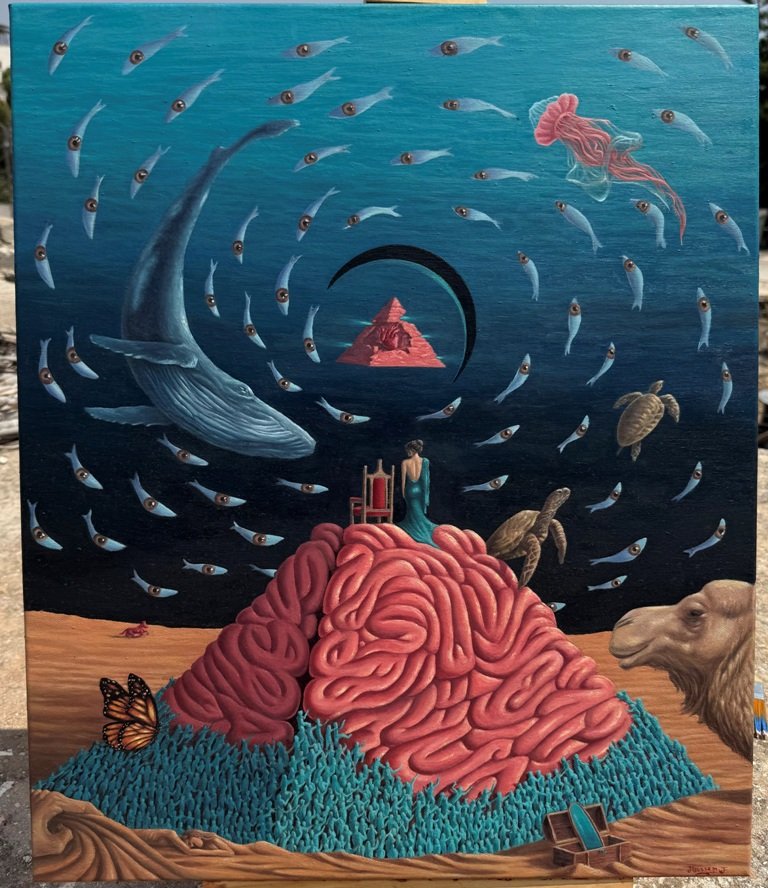
Painting is where I go inward. It’s not just a visual process, it’s an internal one. Before anything appears on the canvas, something has already shifted inside. A feeling, a tension, a question, sometimes something I don’t fully understand yet. The act of painting becomes a way to face that, to sit with it, and slowly give it form.
I don’t start with a fixed idea. I start by listening. Shapes come, disappear, reappear in another form. The process is layered, just like the inner work behind it. There are moments of clarity, and moments of confusion. Sometimes the painting resists, sometimes it opens. But every stage reflects something happening within me at the same time.
In that sense, the canvas becomes more than a surface. It becomes a mirror. Not a literal one, but something that reveals what is usually hidden. What I paint is not always something I can explain. But it’s something I recognize when it appears.
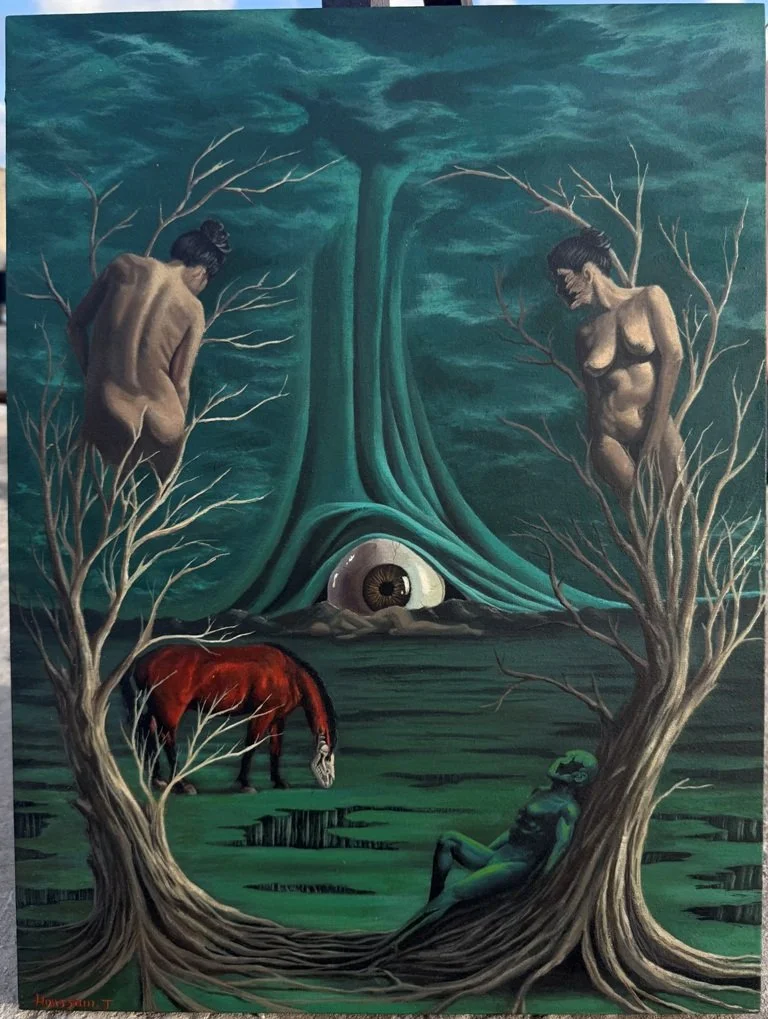
Tattooing carries that same essence, but in a different form. It brings the process into reality in a more direct way. It’s no longer just about me and the work, it involves another person, their story, their presence.
Tattooing, especially, carries a different kind of responsibility. It’s not just an image anymore. It becomes part of someone’s body, their story. It lives with them, changes with them. That transforms the process into something more intimate, more grounded. I’m not just creating something to be seen, I’m creating something to be lived with.
There’s a deep level of trust in that exchange. The person gives you their skin, and with it, a part of their identity. You have to be fully present for that. Technically, but also mentally and emotionally. It’s not a place for distraction. It’s a place for awareness.
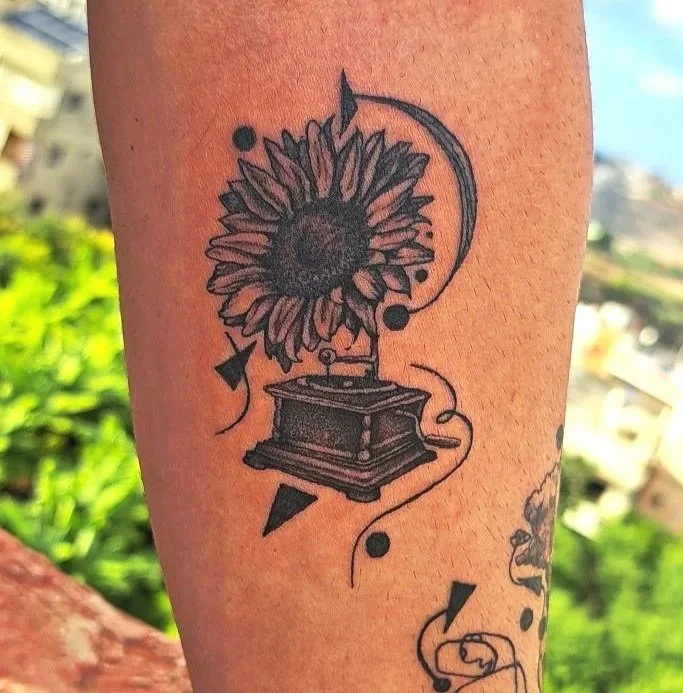
Even though the mediums are different, the foundation remains the same. I don’t separate realism from surrealism. Reality, to me, is only a surface. What interests me is what exists underneath it, the emotional, the subconscious, the invisible.
That’s where surrealism becomes necessary. Not as a style, but as a language. It allows me to express things that don’t have a direct form. Even when something looks realistic, there’s always a shift, something slightly off, something that suggests there is more beneath what you see.
Creativity, for me, doesn’t come from forcing ideas. It comes from entering the right state. A state where you are quiet enough to notice what’s already there. I don’t feel like I “own” what I create. It feels more like I receive it, then shape it.
The discipline is in showing up. In doing the work even when nothing is clear. In trusting the process even when it doesn’t make sense yet. Over time, things reveal themselves, not all at once, but in fragments that slowly connect.
Bridging fine art and tattooing isn’t about combining two different practices. It’s about recognizing that both are expressions of the same inner movement.
The canvas allows me to explore that movement freely.
The skin brings it into reality, into permanence, into life.
And somewhere between the two, the work becomes whole.
About The Author:
Houssam Mahmoud Gebara is a Lebanese tattoo artist and painter working between realism and surrealism. His work moves between skin and canvas, exploring the connection between inner emotion, subconscious imagery, and the human form. Working mainly in black and grey realism in tattooing while experimenting more freely with color in painting, he approaches art as a process of listening rather than forcing ideas, allowing each piece to emerge naturally from intuition, feeling, and inner reflection. Self-taught and deeply driven by personal vision, his work blends technical precision with emotional depth, creating pieces that feel both intimate and timeless.