
How Well Do You Remember Your 5th Birthday Party?
William Josephs Radford on Transparent, the Final Chapter in a Grief Photography Quintet
How well do you remember your 5th birthday party?
Too early?
What about your high school graduation?
Perhaps you recall these events vividly: who was there, what you wore, the weather, the atmosphere.
But what about day-to-day life? The quotidian moments outside of special occasions. The unremarkable everyday. The undocumented.
It’s easy to refresh our memories when there are countless records of these significant events — the ones that a parent is expected to attend. But have you ever stopped to wonder whether it’s the moment itself that you remember, or simply the photograph? And where were these people outside of those photographs?
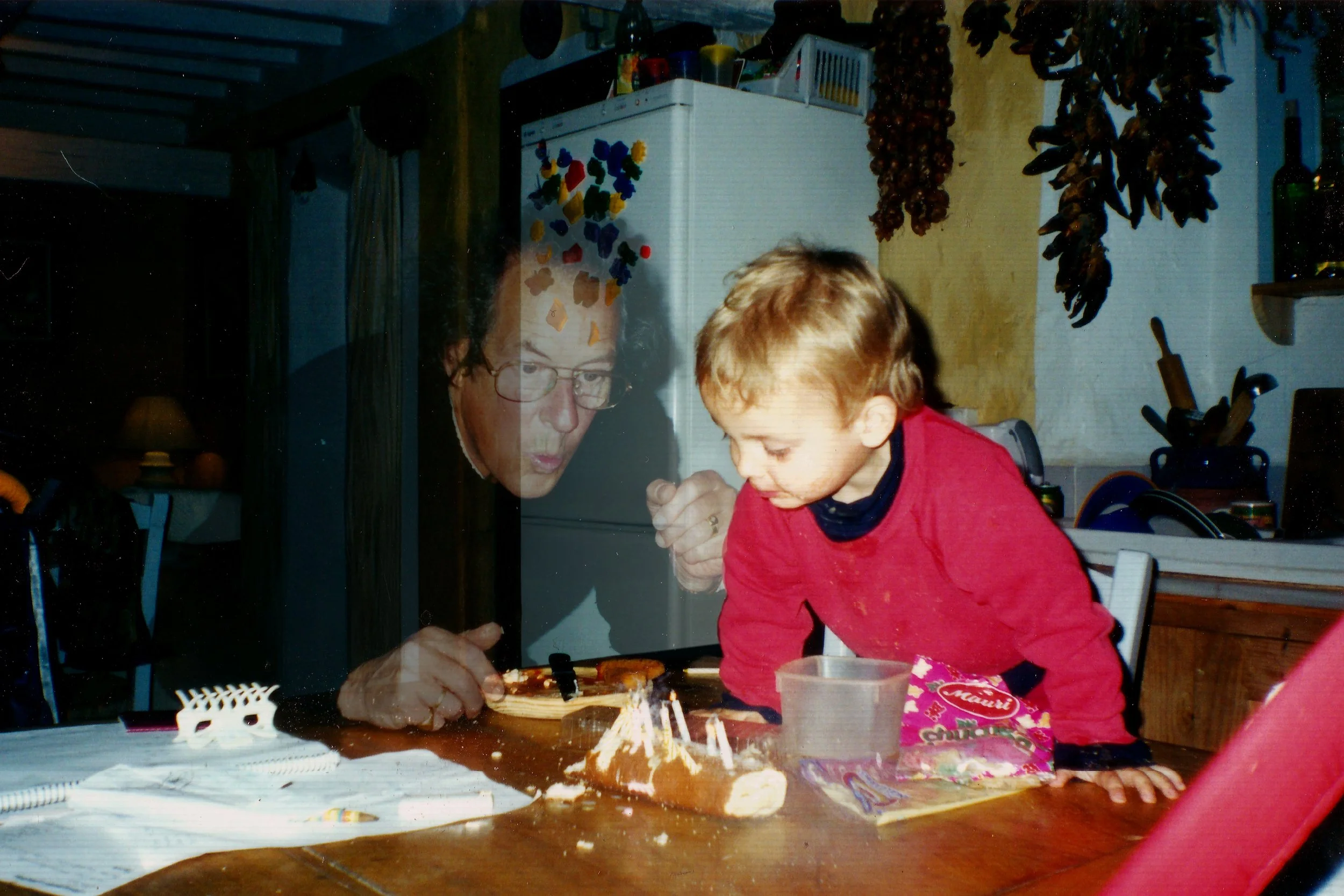
These are some of the questions I aim to explore through my latest project, Transparent. The fifth and final chapter in a quintet of projects produced following my father’s passing in 2024.
Recently, my father’s passing has had the most profound effect on my work. I have always used photography as a tool for exploring my internal dialogue, but never more so than after losing him. I began using the medium as a form of therapy — a way of cataloguing my grief as I lived it, documenting the five stages as they unfolded.
It reached a point where I felt guilty for not picking up the camera, because it had become my way of remembering him.
White Knight was created in the immediate aftermath of his death, using Vaseline on the lens as a metaphor for his fading memory. The work centered on the transition between the physical and the spiritual — the feeling of someone becoming increasingly distant while still remaining present.
This was followed by Gradient Loss. After a career spent working predominantly in bright, bold colour, shooting in black and white felt like a relief. The work became an exploration of the existentialism of depression through experimental self-portraiture, using lens masking and ghosting techniques to accentuate the divided headspace of being a happy-go-lucky waiter by day while quietly mourning underneath.
During trips back to Spain, I began Residual Noise, pushing my camera’s ISO to its limits so that the resulting grain became an analogy for memory itself — fading, distorting, and becoming less defined as the distance between childhood and the present continues to widen.
As a step towards recovery, I began taking better care of my physical health, waking earlier and building what I called a Mourning Routine. This led me to photographing the sky from my apartment window as a daily ritual and personal homage.
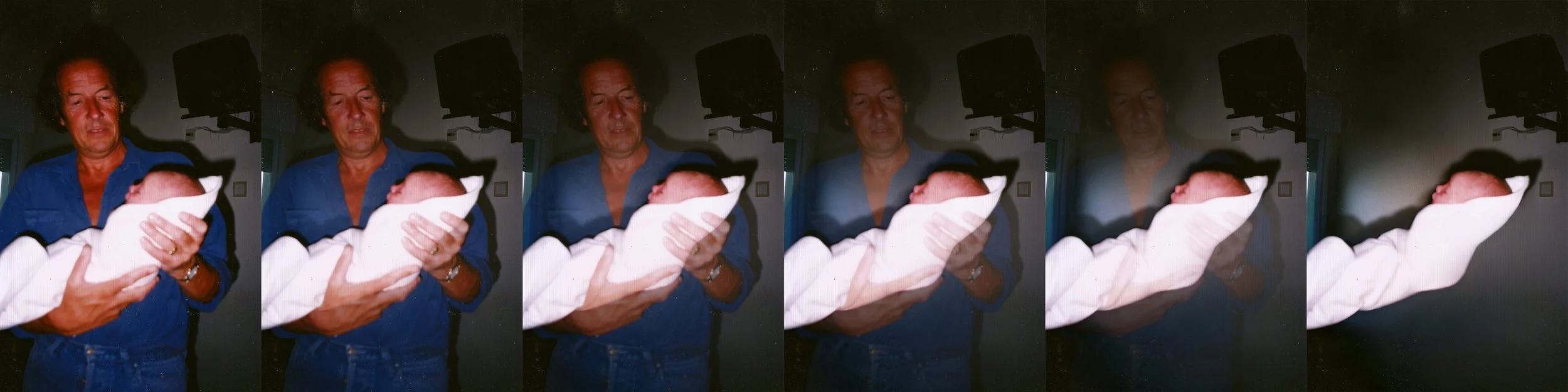
Transparent became the culmination of this process: an investigation not only into my father’s absence, but into the way memories are formed, preserved, and altered over time.
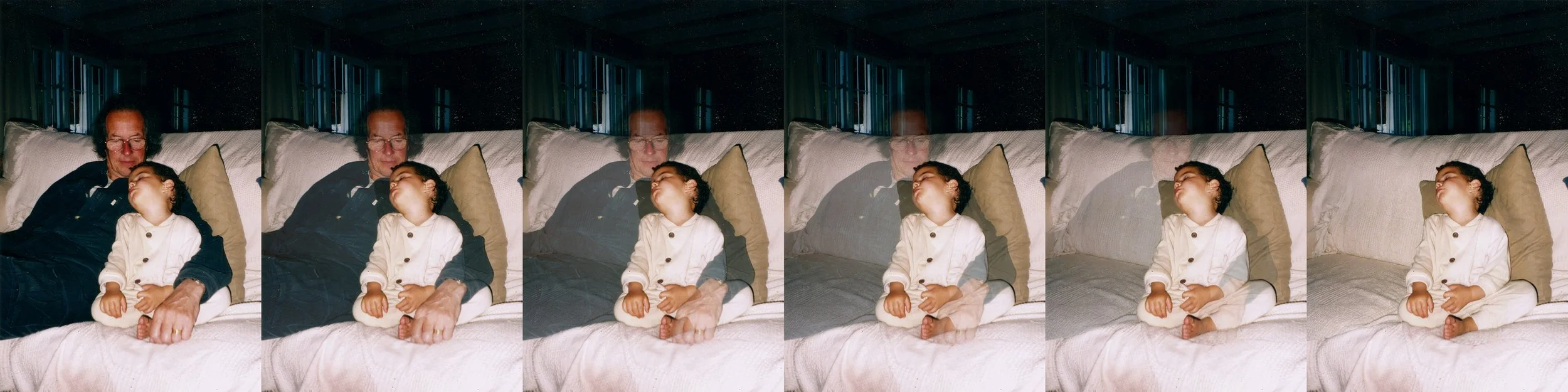
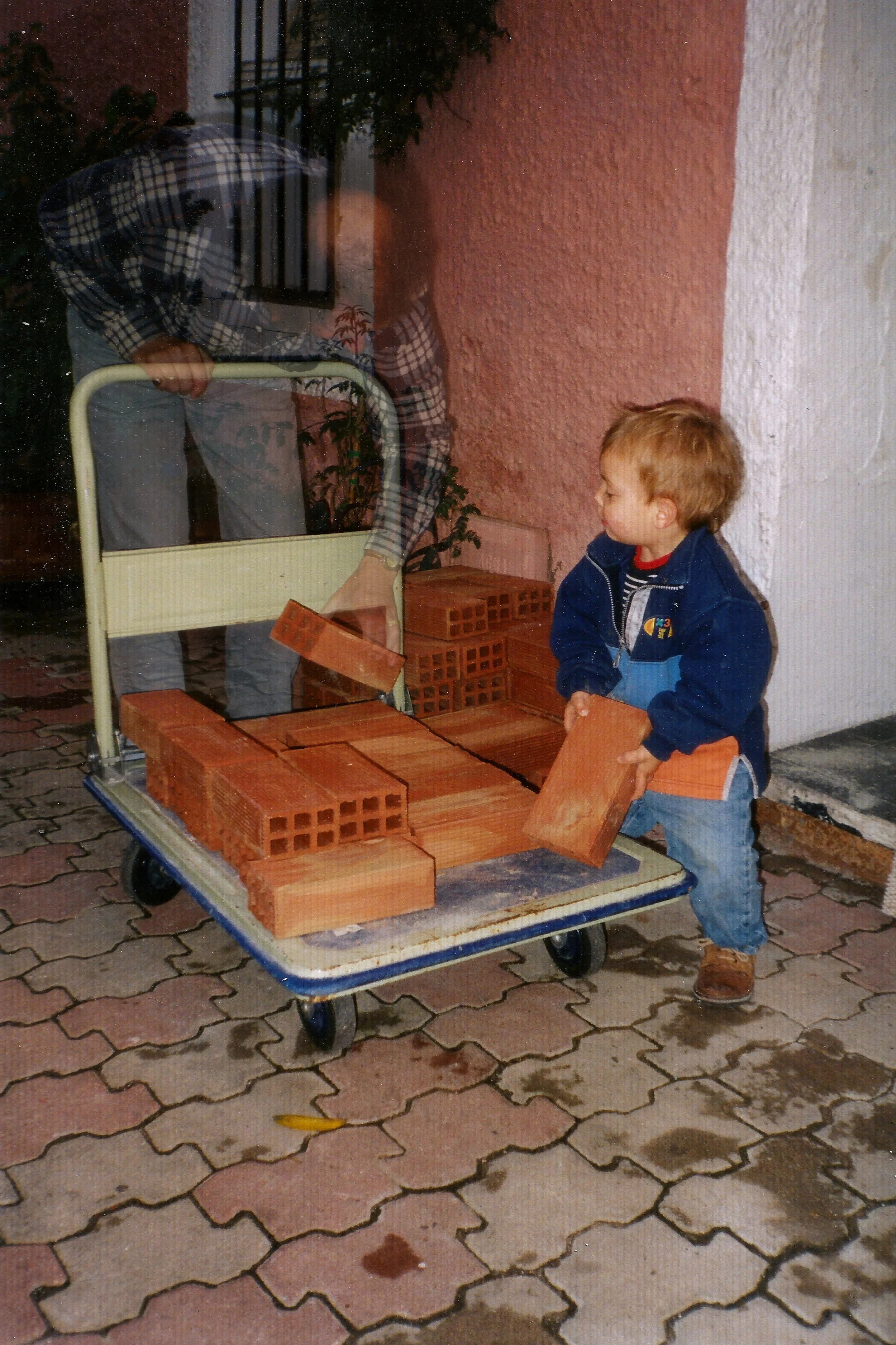
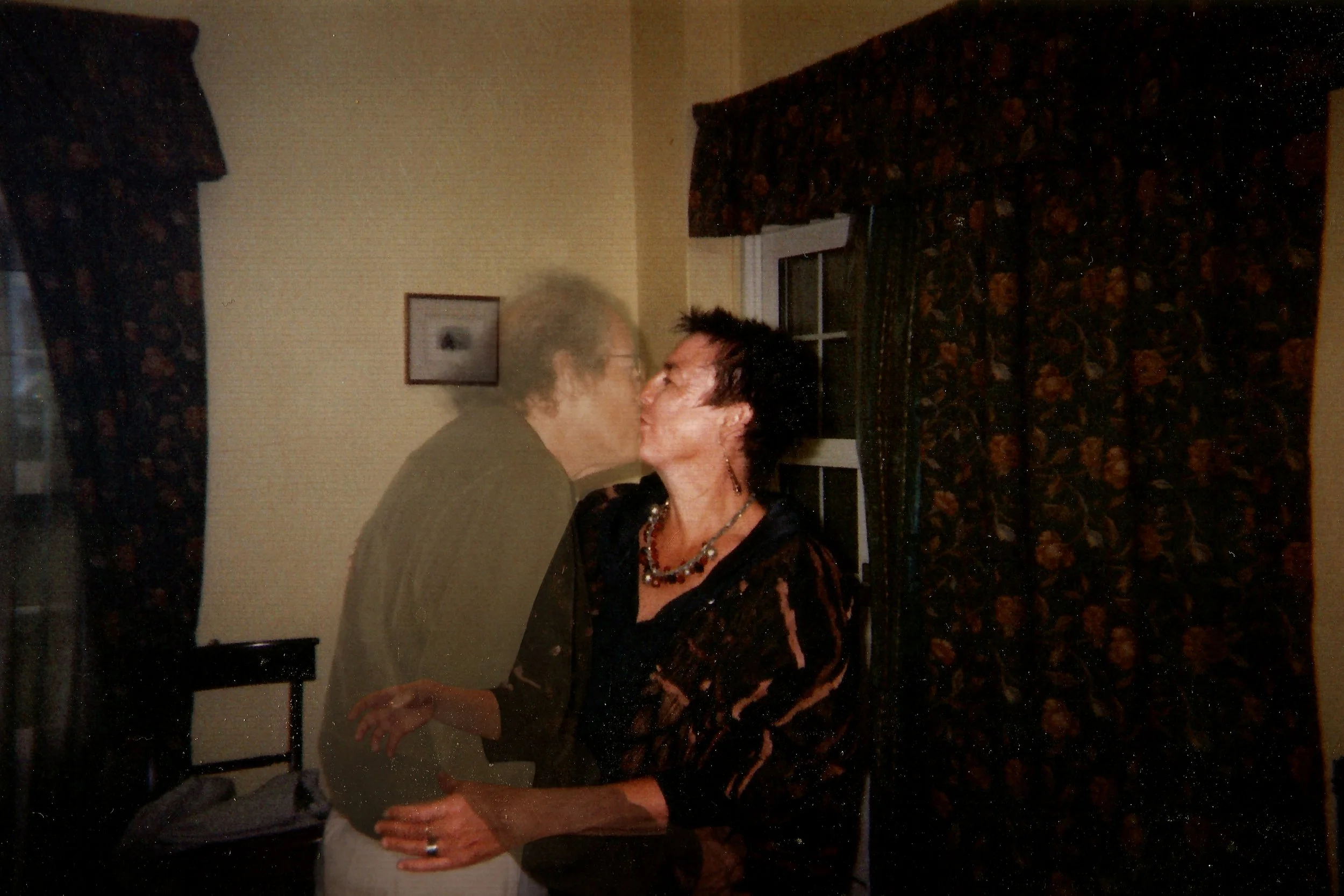
The project began by looking through our family albums, specifically searching for images of my father. The longer I looked, the harder it became to ignore the fact that he wasn’t present in very many of them.
After my parents’ divorce, when I turned 18, my father’s presence gradually dwindled to the occasional meal at his favourite restaurant. Before this, he spent the majority of his time working or navigating his affair. I don’t say this to tarnish his reputation or paint him in a negative light. I loved him greatly, and he was a wonderful father — fully present during family meals and holidays.
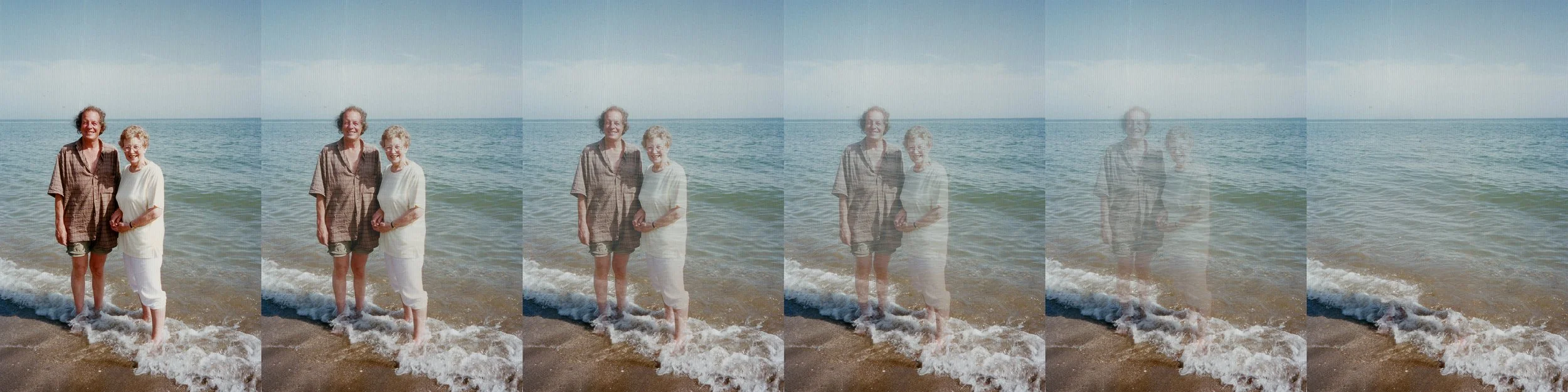
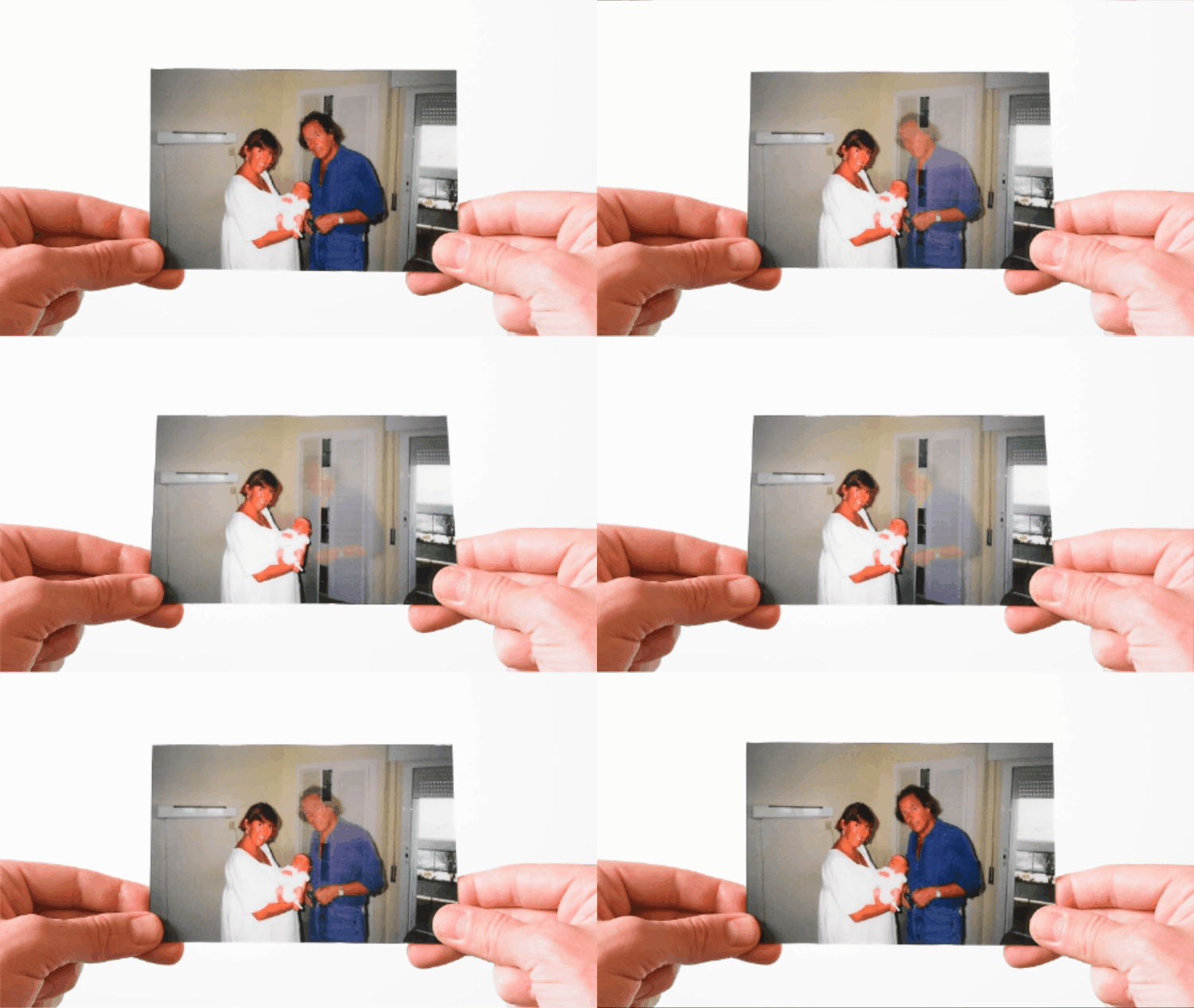
I scanned all the images and spent six months painstakingly removing him from each one, reconstructing the space pixel by pixel as if he had never been there. The process was both therapeutic and emotionally challenging — a period of reminiscing, reflection, and re-examination.
Working with Photoshop and AI for the first time in my career, the process was extremely time-consuming. Often, I would spend hours filtering through variations, constantly battling with different models. Sometimes I would sample other parts of the image or use the paintbrush tool to roughly block in what I wanted before asking Firefly to generate the final result.
I was extremely thorough and took as few deviations from the original images as possible. One instance almost drove me insane, however.
Trying to stay as true to the original image as possible, I noticed one of the plants in the background was a purple wandering Jew. The number of times it produced a little Jewish man or woman sitting in a plant pot was genuinely laughable.
That being said, a couple of the images were incredibly easy to produce. Simply selecting him and writing the prompt “REMOVE” was all I had to do for the photograph of him and my grandmother standing in the sea.
Alas, the other images required far more persuasion.
Working in small areas, back and forth — two steps forward, one step back. Although the intention was to produce the images at the same scale I scanned them (6 x 4 inches), I wanted them to be high enough quality that they could be enlarged and exhibited in a gallery without being dismissed as AI slop.
I began the process feeling like an amateur wrestling with AI to achieve the results I wanted. But as the project progressed, it began to feel more like I was a curator, selecting the tiny iterations that came together to form each piece.
I ended up making several passes over each image. The first time around, I was still grappling with the process and was more liberal with blending the surrounding scene to accommodate his absence.
Initially, I planned to print the images and physically alter the space he previously occupied, showing how the space someone leaves behind can change in their absence. Because of this, I wasn’t overly concerned with making the image perfectly match the original, as I would only be working with the version where he had been removed.
I also considered using a projector and physically occupying the space myself, as a commentary on inheriting some of his responsibilities and, subsequently, his place within the family.
However, once I had the idea of producing them as lenticular prints, it became clear that I had to revisit each image and ensure they aligned perfectly, making sure the space around him had not changed.
So, returning to the questions from earlier: how well do I remember my 5th birthday?
Not very well, I must admit.
In fact, I think it’s safe to say I have no recollection of it beyond the photograph. If the image didn’t exist, would I remember it better, or would I have forgotten it completely? Perhaps the stories told by those who were there become the memory instead.
I find it fascinating how malleable these memories are, constantly evolving as we grow.
Usually, I don’t like imposing too much meaning on my work. I much prefer allowing the viewer to interpret it as they will. In this case, however, I see so many potential narratives being teased out: the idea that a person never fully disappears after they die, or the parallels that can be drawn with Stalin’s practice of airbrushing people out of photographs — raising questions around indoctrination and the erasure of history.
About William Josephs Radford:
Born in Spain and based in the UK, William Josephs Radford is a conceptual photographer whose work uses symbolism and visual metaphor to turn psychological and social themes into constructed imagery. His projects explore childhood, addiction, loss, identity, and burnout, with each body of work built around a distinct technique that becomes part of the narrative. His photography has been exhibited internationally, including in Arles, Barcelona, Paris, and Rome, and has received awards from the Fine Art Photography Awards, Boynes, 1839 Awards, and others.
See more at JosephsRadford.com or on Instagram / Facebook
