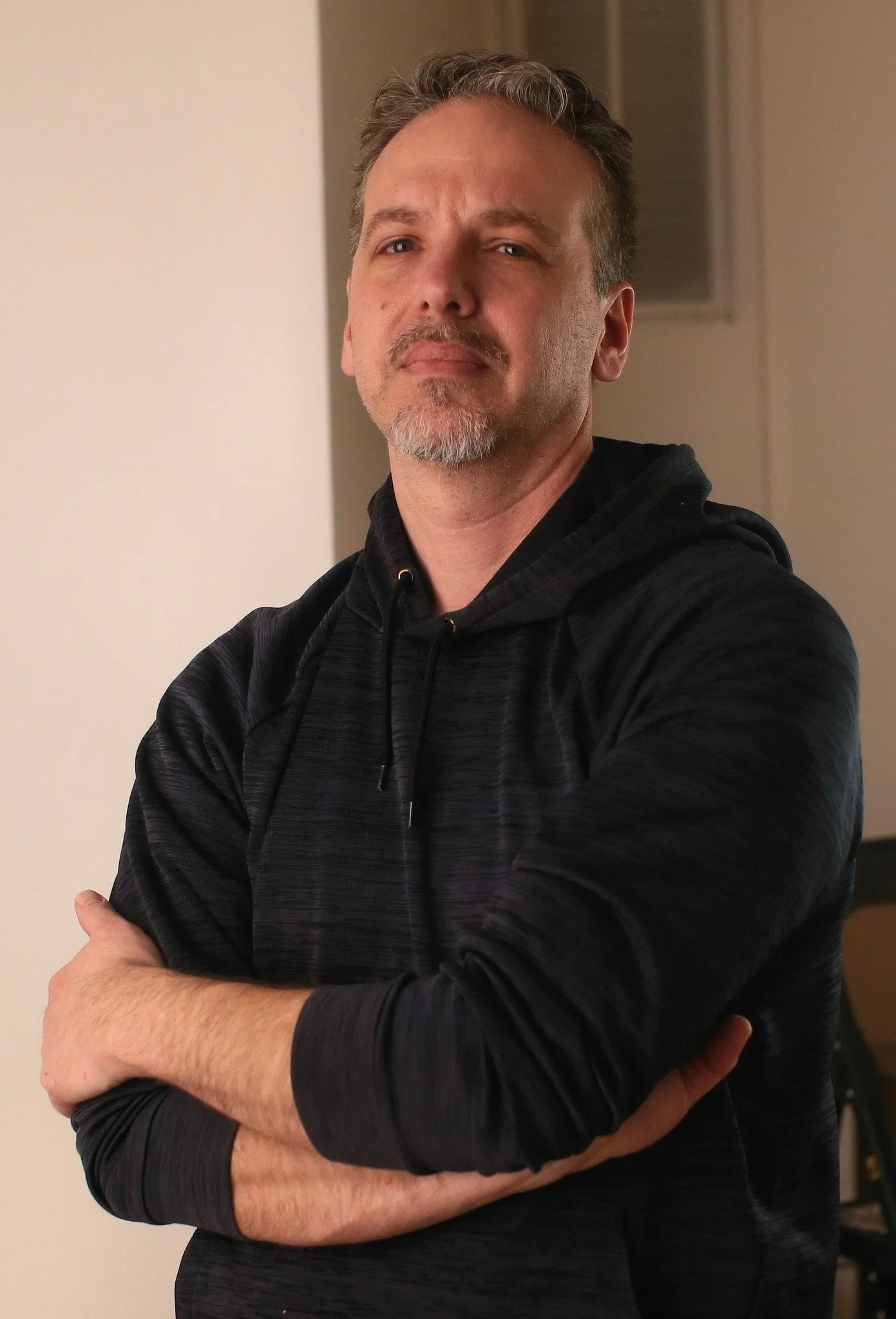
Undertone (2026): Great Concept, Underwhelming Execution
Spoiler Alert! I’m not a movie critic, so I’m not writing a spoiler-free review here. You’ve been warned.
Undertone is currently available on HBO/MAX if you want to check it out…feel free to come back and let me know what you thought.
I went in with mixed expectations. The festival buzz was real but the word of mouth was split, and split word of mouth on a micro-budget horror film usually means either genuinely divisive filmmaking or a film that tried something ambitious and only partially landed it. Undertone is the latter. There's real horror here. There's also a film that mistakes atmosphere for story and asks its audience to do too much of the heavy lifting.
Undertone arrives via A24, which these days functions almost as its own genre label. Their horror output runs a wide spectrum: on one end you have Hereditary, Midsommar, and Talk to Me, films that earn their slow burns and deliver genuine dread. On the other end you have films that lean so far into atmospheric restraint that they forget to actually be scary. A24 has essentially given a generation of filmmakers permission to prioritize mood over momentum, which produces brilliant films when the filmmaker has the discipline to pull it off and frustrating ones when they don't. Undertone lands closer to the latter, though not without redeeming qualities.
The Story Behind the Film
Before the review, the production story is genuinely worth knowing because it adds context to what you're watching.
Director Ian Tuason wrote and filmed Undertone inside his own childhood home in Toronto on a budget of $500,000. The story of Evy, a young woman caring for her comatose mother while running a paranormal podcast, was drawn directly from Tuason's own experience. He spent five years as a caregiver during a period he described as filled with grief and personal demons. The film is deeply personal in ways that aren't always legible on screen but absolutely shaped how it was made. These details on their own, should up the expectations for this film, because it comes from a real personal place of dread.
In February 2025, months before the film even premiered, Tuason went on record predicting he would sell to either A24 or Neon and named the dollar amount he expected to receive. Wow…love the optimism, but that’s a bold prediction before a festival premier.
When A24 won a hotly competitive bidding war following the film's premiere at the Fantasia International Film Festival in July 2025, the deal came in at a mid-seven figure number. He had called it almost exactly. After acquisition, A24 made two changes: they recast the voice role of Justin, replacing Kris Holden-Ried with Adam DiMarco, and shortened the title from "The Undertone" to Undertone.
It opened at number three domestically with $9.3 million on its first weekend and has grossed $22 million worldwide against that $500,000 budget. Tuason has since been announced as the director of the next Paranormal Activity film for A24, which suggests they have significant confidence in him regardless of how critics landed on this one.
All of that is legitimately impressive. The film itself is a more complicated story.
First, The Good.
Making a contained, single-location feature length horror film that is actually good, on a micro-budget isn’t exactly easy. The constraints are brutal: limited locations, small cast/crew, no CGI creature reveals (which is a good thing!), no expensive anything. Everything has to work through story, performance, sound, and tension alone. Undertone understands this and builds accordingly. One house. One lead actress, Nini Kiri, carrying the film as Evy. One hospice patient, her comatose mother, largely incoherent and bedridden. Everyone else exists only as voice actors, which is a bold structural choice that keeps the budget manageable and in theory keeps the horror invisible and everywhere simultaneously.
The sound design is where the film earns its highest marks. I watched this on my beloved 7.1.2 home theater setup and it delivered. The audio work is impressive for a micro-budget production, and the film's central thesis, that horror doesn't always need to be seen to be effective, is well-served by the technical execution. They also relied heavily on creepy children’s songs…which were, well…creepy. When the film works, which it does in scattered moments, it works mostly because of what you're hearing rather than what you're seeing (with a few exceptions).
There are a couple of scenes that genuinely gave me chills, which kept me invested enough. The director has real horror instincts. The way it was shot creates the sense that Evy is being watched and isn’t alone, building some level of creepiness. Bravo for that. It proves the filmmakers have the tools. The question is why they didn't use them more consistently. Was it purely the budget? If that was the case, I wish they found a few more dollars.
Abyzou: The Demon They Chose
Before getting into the film's problems, it's worth spending a moment on Abyzou, because the mythology here is extraordinary. Too bad the film didn’t dive in deeper.
Abyzou is a female demon from the myths and folklore of the Near East and Europe, blamed for miscarriages and infant mortality and said to be motivated by envy, as she herself was infertile. She appears across multiple ancient traditions under dozens of names. In the Testament of Solomon, a first-century text, she speaks in her own voice: "I am called among men Obizuth; and by night I sleep not, but go my rounds over all the world, and visit women in childbirth."
She is pictured on amulets with fish or serpent-like attributes, described as having a greenish gleaming face with disheveled serpent-like hair. In Jewish folklore she is identified as one of the followers of Lilith and attributed with the deaths of infants and the suffering of childbirth. Scholars have connected her to Lamashtu in Mesopotamia, Lamia in the Greco-Roman world, and Gello in Byzantine culture. Her very name appears to derive from the Sumerian Abzu, the undifferentiated primordial sea from which the world was created, and the same word appears in the Book of Revelation as the bottomless pit of Hell.
This is a demon with a genuinely terrifying mythology rooted in one of humanity's most primal fears: the loss of children, the vulnerability of new life, the feeling that something evil specifically targets the most innocent and the most vulnerable. For a film built around a comatose patient and a daughter who can't let go, the Abyzou mythology has obvious and rich thematic resonance that the film gestures at without fully inhabiting.
The backstory of why Abyzou is present, what she wants, and what her specific threat means for these specific characters is underdeveloped to the point where her presence feels generic rather than specific.
The Pacing Problem
My honest take: the first two acts are a slog.
Nothing really happens. For long stretches, watching Undertone just feels like you’re watching behind-the-scenes footage of a podcast recording session. The lead actress does fine work and her performance feels genuinely real, but the script gives her almost nothing to work with. There's just not enough reason to feel genuinely invested in Evy before the film starts asking us to be frightened on her behalf. In fact, she doesn’t seem all that frightened by what’s been going on either. Unlike a lot of tense horror movies where the audience knows something the characters don’t (which is fundamental in setting up suspense), while I was watching, I didn’t really know (or care) all that much.
I couldn’t help thinking about Inde Navarrette’s performance in Obsession. Sure, totally different circumstances around Nikki in Obsession, but that performance worked because the character was so perfectly played and well written, that the horror had somewhere to land and I cared about her in spite of what was going on in the movie. In Undertone the horror has a character to land on but does the audience really care? Not sure. Nini Kiri’s performance was good enough that I wanted to like Evy, but overall there just wasn’t enough to root for.
The flickering lights don't help. Flickering lights as a horror device are not inherently bad, but they're used repeatedly here without escalation, and more critically, Evy doesn't seem to be freaked out by them. True, she is a “skeptic” of the supernatural, and we (slowly) see her skepticism shift, but I never really felt that the overused flickering lights in the house bothered her. If the character on screen isn't frightened by something, why should the audience be? We take our emotional cues from the people we're watching. When she barely registers the flickering, we barely register it too.
The Cut-to-Black Problem
Kinda like the ending of The Sopranos, but that didn’t bother me as much.
The ending is where the film's ambitions can outrun its execution, and it's genuinely frustrating because a better ending could have fully redeemed this movie.
The film cuts to black, the audience only hears the ending. Maybe the idea being that the horror is so extreme it cannot be shown, that the audience's imagination will fill in something more terrifying than anything the filmmakers could render on a $500,000 budget and it fully leans on the scary sound design which is what carried the film anyway.
But…it’s a missed opportunity.
The Blair Witch Project built 80 minutes of completely unseen terror and then gave us one very simple image in the final seconds: a man standing in a corner facing the wall. It cost almost nothing to shoot. It was absolutely terrifying because of everything that came before it. The contrast between the invisible horror and that one concrete image landed like a physical blow. The ending terrified audiences when it was first released.
Undertone cuts to black having not fully earned that trust. The slow burn didn't accumulate enough dread. Abyzou wasn't developed enough for the imagination to fill in something specific and terrifying. The sound design is well done, but it cannot carry the full weight of an ending that asks this much of the audience. It just left me wondering if there was something missing.
One flash. One image. Even a few half-second glimpse of something would have been enough, actually it could have been great. A single shot like the corner scene in Blair Witch would have transformed this from frustrating to genuinely memorable. Instead: black screen, scary noises, credits. Wait, maybe there’s a shot in the credits somewhere…nope.
Did they not have enough budget left for a better ending? Were they committed to the audio-only concept at the expense of the audience's satisfaction? Were they hoping the audience’s imagination would fill in the blank black screen? Maybe a combination of all three.
The Verdict
Undertone is a respectable creation from a first-time director working under difficult constraints, shooting a deeply personal story inside his own childhood home for half a million dollars and walking away with a $22 million gross and the keys to the next Paranormal Activity. On those terms, Ian Tuason absolutely delivered, and bravo to him and his cast and crew for that.
But the film itself is a more mixed story. The sound design is impressive. The horror instincts are real but inconsistently deployed. The Abyzou mythology is fascinating and the film barely used it. The character at the center needed more to work with. And the ending needed one concrete visual to reward an audience that stayed through two deliberate acts. Just one great shot at the end could have elevated it from somewhat fun and mediocre to really good.
Too bad the slow burn just fizzled out…BUT, I am looking forward to seeing what Ian Tuason can do with a larger budget on his Paranormal Activity film.
About The Author
Mike Meyerson is the founder of FEELING CREATIVE?, and has been a horror nut ever since Alien and The Exorcist gave him nightmares as a boy. Currently located in NY’s Hudson Valley Region, is always looking to build the network, find a new cool trail to hike and a new horror movie to watch.
Read Mike’s other articles - HERE.
Recommended Reading: Essential Horror Directors Who Shaped the Genre